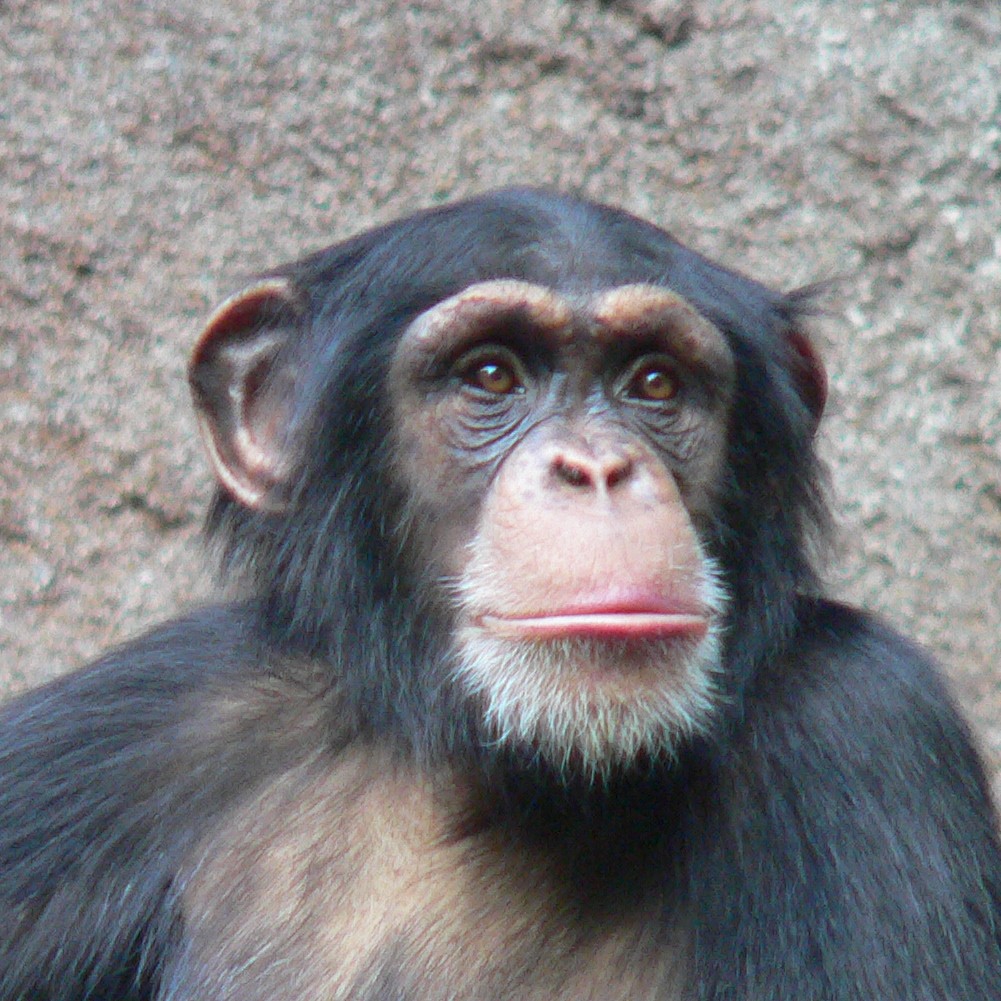
If you’ve spent much time watching corvids in person or online, chances are you’ve come across one doing a Fred Armisen-level impression of something else. Perhaps it was the Steller’s jay in your backyard tricking you into thinking there was a red-tailed hawk soaring overhead, or maybe you remember the trash talking American crow that invited itself to an Oregon elementary school and delighted children with some crass language. That corvids, like some parrots, starlings, bowerbirds, etc., can mimic is well understood, but have you ever wondered why? Why can a bird talk like a person but a chimpanzee, an animal who shares 98% of our DNA, cannot? The answer boils down to three things: vocal anatomy, the brain, and behavior.
In humans, as with virtually all other terrestrial vertebrates, sound is produced in the larynx aka the voice box. As air passes through the larynx it vibrates the vocal cords, producing sounds. Across different species this system is enhanced or reduced, resulting in the roar of a lion, the grunt of an alligator or that conversation you wish you could have avoided with your coworker. While birds also have a larynx, it doesn’t produce sound. Instead, birds (well, most birds) have a wholly unique structure called the syrinx which sits not at the top of the trachea as the larynx does, but at the bottom, right at the bronchial split. This unique forking anatomy allows some birds to lateralize their sounds, meaning making different sounds on the left or right side, sometimes even at the same time! The repertoire of parrots is further enhanced by their fleshy (for a bird) tongue, which can manipulate air flow and produce more human-like speech.1 It’s this level of vocal complexity and control that possess birds with the incredible vocal range we hear, whether they use it for mimicry or not. In fact, despite this potential, most songbirds do not mimic, and actually cannot learn new songs after their first year of life.
But while the syrinx explains why some birds can produce human speech sounds, it doesn’t explain why our closest primate relatives cannot, especially given the similarities of their voice box with our own. That’s where the brain comes in. While non-human primates have the correct hardware in their vocal tracts2, they’re missing the technology they need in their brains.3 Specially, in the cortical association areas in the neocortex (the part of the brain that’s responsible for our higher-order behaviors). They simply don’t have the neurological control required to mimic human speech (though they do mimic us in other ways). So why do birds?
Unlike in primates, vocal mimicry is a cornerstone of communication and signaling in certain birds. Whether they’re using it to advertise their quality as a potential mate, territory defense, or as a way to bond with partners or group mates, mimicry plays a key role in engaging with those around them. Though the specifics of that engagement may not always be clear. For example, despite persistent online assertions that Steller’s jays mimic hawks either to warn of their presence or to scare competitors, there’s zero evidence in support of either of these. In fact, a study from 2017 found that wild jays almost never do it when predators or competitors are around, and instead do it most often at the beginning of the breeding season in front of their mate.4 Which is probably for the best. After all, if corvids chose to really make a habitat of using mimicry to trick other animals we’d likely find ourselves at the top of their target list.
Literature cited 1. Beckers G, Nelson B, and Suthers R. 2004. Vocal-tract filtering by lingual articulation in a parrot. Current Biology 14: P1592-1597 2. W. Tecumseh Fitch, de Boar B. Mathus N, Ghazanfar A. 2017. Monkey vocal tracts are speech ready. Science Advances 2: DOI: 10.1126/sciadv.1600723 3. Dunn J and Smaers J. 2018. Neural Correlates of Vocal Repertoire in Primates. Frontiers: https://doi.org/10.3389/fnins.2018.00 4. Tippin T. 2017. Propensity of predator mimicry in wild Steller’s jays. Humboldt State University, MS thesis
Breeding season is often a hard time for the tender hearted among us. The joy of watching an animal construct a nest just to see their efforts cut short by predation is painful. Likewise, finding a dead chick is tough, and prompts many to ask how they could have prevented such loss and better protected them.
I appreciate the people that bring me these questions so much. That care so deeply they would put in the effort to seek out these answers from a scientist and spend their time doing what I suggest. These are good people.
But whether you’re asking how to protect birds from crows, or crows from other animals, my answer is always the same. As hard as it is to watch animals get eaten, it’s vital to remember that predation is what keeps wildlife wild. It’s what keeps ecosystems complex & beautiful.
When we get into the business of deciding that (native, natural) predators are bad, and attempt to take action against them, we are denying the very wildlife we want to thrive from facets of their identity that make them who they are. Prey communities are shaped by the predators that have historically hunted them, and vice versa. Whether it’s how cryptic the chick’s color pattern is, how many eggs the female lays, where they build their nests…not one corner goes untouched. It’s this very process that has made something so beautiful that we can’t stand to see it harmed. But for communities to function that death is essential.
Predation is the transfer of life and that life is a gift. It’s a gift that ensures the survival of another, and even if we don’t know that individual as well as the one we watched perish, it’s not for us to assert that it, or its offspring, deserves that gift any less.
On the other hand, finding a dead, otherwise unharmed, chick can feel less…purposeful. “Why was it out of the nest so early?” “I read to leave it alone and it died anyway…should I have stepped in?” “I feel so bad I couldn’t save it!”…These are common responses.
But while it’s true that baby birds do sometimes (rarely) accidentally get kicked out of the nest, it’s also true that it’s not always an accident.
Sometimes parents simply reject offspring for reasons that are not for us to know. And that is okay. Part of honoring their wildness is accepting that they know more than us about their own lives, and that if they choose to not to support a chick they have a reason. There are exceptions of course in cases of conservation concerns, but for most backyard circumstances it is okay to accept their choice without interfering. Even if it hurts.
So please, rather than shutting down those deep feeling you have for wildlife by intervening, lean into them. Teach your friends and neighbors and children to feel those deep feelings. Because it’s from that space that we can do best by wildlife, even if it’s the kind red in tooth and talon.
It’s from there that we can grow a culture of care and empathy that shows us that nature is a community and by thinking first of community and not of the individual, can we have the broadest reach. That planting native vegetation, and keeping cats indoors, and fighting to protect land and water, is the way to love wildlife. Not by choosing who deserves to eat and who does not.
That birds travel seasonally is perhaps one of the most familiar facts about the natural world. Whether it’s the arrival of technicolor spring migrants, or the din of waterfowl above our heads in the fall, it takes no formal training to recognize that something novel and beautiful has suddenly erupted into our lives. Their ephemeral presence offers an opportunity to ground ourselves in time and place and reflect on the shape of our lives since our last meeting. Or, if you don’t want to get that deep with it, there’s always Looney Tunes or any number of other children’s cartoons to remind us that some birds come and go with the seasons.
At the same time, for most of us living in the continental United States, that crows will be nearby to accompany us throughout our year is something we take for granted. Their predictability on our telephone poles and near our garbage cans is one of those quiet details not everyones thinks of often, but whose consistency surely calms us as so many other things feel unsteady. But at the intersection of these truths is an interesting question: if migration seems such an essential part of bird life, why don’t crows do it? Or do they?
Of the world’s ~ten thousand birds species, only 18% actually undertake annual long distance migrations.1 But there are other types of migration including short distance migration, altitudinal migration (short migrations from shorter to higher altitudes) and partial migration. Partial migration is when only certain individuals within a population migrate, while others are sedentary, and it’s this one that applies to crows. Because while crows in temperate Seattle may be quite comfortable year round, those that call higher latitudes “home”, say central Canada, would have a tougher time making it through the winter unscathed. So much like a wealthy aging relative, they snowbird it to more welcoming climates for the winter.
Until the last decade or so that’s really all we knew about about crow migration. Some did it, some didn’t, and that was that. But given the value of better understanding this behavior, as well as the technological advances that make it possible, western science has finally turned its eye to inspecting these patterns more closely. Because there are so many questions one could ask about this phenomenon. Why do some crows migrate and others do not? Do the same crows migrate each year or can they opt out? Do they return to the same place? How far do they fly? How do they survive the journey? How do they sleep?
In some cases the answers to these questions are surprisingly nuanced. For instance, birds living in the Central and Southern Canadian provinces will nearly always migrate hundreds of miles south into the US, which makes sense because Canadian winters can be especially harsh. But studies have shown that other crows make even shorter migrations, only about 350 miles between contiguous US states with similar climates.2 What motivates these shorter-distance trips remains to be seen. Likewise, whether migrating is a discretional activity is still in question. From a climate change perspective, that individual birds might be able to choose whether or not to migrate each year would have important implications in their ability to adjust to changing conditions. But in the studies conducted so far there’s been no evidence that crows pick and choose each year, rather it seems that you’re either a migratory individual or not, albeit this is based on low sample sizes.3 As a result, migrating crows show extremely high site fidelity; returning to the same breeding and winter sites each year.
As far as distances go, there’s huge variability there as well. In a study that looked at crows from both sides of the country, the average distance traveled by east coast crows was 287 miles, while west coast crows traveled an average of 366 miles.3 The longest migration on record is 1740 miles.4 One thing that’s for certain is that migration is a daytime affair. While most birds migrate at night, crows are among the minority that stick to business hours for their travels. The most compelling explanation for strategy is the “fly-and-forage” hypothesis. Look, even for the arguably most efficient fliers in the animal kingdom, flying is hard work and crows need a lot of calories to sustain flight speeds up to 37mph covering as much as 186 miles in a single day.2 To accomplish this, crows will make up to several pit stops during a marathon flight session, allowing them to refuel and prepare for the next leg. Importantly, although crows migrate both in groups and alone, when stopped they almost always make sure to dine with others. Traveling in the daytime probably helps facilitate finding other crows, and by extension, the local feeding grounds.
When it comes to sleeping, crows leave the fancy mid-flight naps to the swifts and the frigatebirds, opting instead to sleep at night in communal groups. In fact crows will sometimes abruptly change direction just to follow local birds to the nearest roosting grounds. In other cases though, crows have been know to travel routes that allow for stops at the same roosts year after year, underscoring why roost locations should be considered key pieces of habitat.2
So as it stands, crow migration can be summarized the same way as most other parts of their lives: we know some stuff, not everything, we’re probably wrong about a few things, and our best bet is to accept our role as eager pupil and celebrate the gifts of knowledge as they are granted to us.
2. Ward M.P. and Raim A. 2011. The fly-and-social foraging hypothesis for diurnal migration: Why American crows migrate during the day. Behavioral Ecology and Sociobiology 65: 1411-1418
3. Townsend A.K., Frett B., McGarvey A. and Taff C.C. 2018. Where do winer crows go? Characterizing partial migration of American crows with satellite telemetry, stable isotopes, and molecular markers. The Auk 135: 964-974
4. Brewer D., Diamond A.W, Woodsworth E.J, Collins B.T.,, and Dunn E.H. 2000. Canadian Atlas of Bird Banding, vol 1: Doves, Cuckoos, and Hummingbirds through Passerines, 1921-1995. Canadian Wildlife Service, Ottawa, ON, Canada
It’s no mystery that garbage is one of the most pervasive issues of our time. From oceanic microtrash to seeping landfills, people are trying to work out how to address the world’s garbage crisis with increasingly grand ideas. Corvids have long been associated with garbage, sometimes acting as agents of litter themselves, but one such idea asks if they might offer a solution.
A Swedish start up, Corvid Cleaning, is attempting to train corvids to pick up cigarette butts in exchange for food, as a means of combating the pervasive litter problem across their city. They plan do this through a machine that according to their website, they’ve already successfully ground tested with wild birds.
So, will this work and is it a good idea? In my opinion no and no, for many reasons. This whole idea rests on the premise that corvids are smart, (which they are,) but being smart and being motivated are very different. It’s not an issue of whether crows *can* learn it, but how you keep them engaged over time (the company hopes to save 75% of the city’s current cigarette clean-up costs). Having fed a lot of crows a lot of peanuts, I can tell you that the appeal of unlimited peanuts wanes drastically over time. While there might be an initial rash of participants, or at least a couple highly exuberant ones, there’s a serious question of meaningful sustainability without the introduction of a more desirable (and more expensive) food.
My skepticism here is born both from my experience with crows and the cold hard fact that this has simply never worked before. This isn’t the first time someone has tried this, but the 4th. The first was in 2008, when Joshua Klein delivered his infamous and highly misleading crow vending machine TED Talk. From there the Klein team debuted their Open Source idea for the Crow Box, a build it yourself machine that offered the chance to train wild crows to exchange found coins for food. While the no promises, DIY, community science nature of the project gets a more sound endorsement from me, to date, no one has had success with the final stage of the training process. The idea it seems, makes no cents. Next, in 2017, a Dutch start up called Crowded Cities pitched the exact same idea as Corvid Cleaning, though I assume their proprietary machine was a bit different. By December 2018 though, they tabled the idea, citing a lack of resources and an inability to, “get a clear picture of what the effects would be on crows and the environment.” That same year a French theme park, Puy du Fou, hired a falconer to train some captive rooks to pick up garbage as a stunt for the park. In that case it worked marvelously but of course the stakes are entirely different between wild and captive birds. And in between all those highly profiled efforts have most certainly been the odd successful backyard tinkerer. But what eventually plays out over and over again is that while wild crows can learn to do this, no one has ever been able to scale their success into something meaningful. And I don’t think they ever will.
For a moment though, let’s say that my skepticism here is invalidated; various corvids do consistently use the machine as intended. In fact, their intelligence and understanding of cause and effect renders them quite simply excellent at it. Without the appreciation for the purpose of their activities (cleaning up garbage) the project is liable to create two different kinds of cheaters: those that steal the food out from under the participants and those that resort to collecting their currency straight from the source, before it’s officially become garbage. I’m not sure how likely either of those two scenarios are, and in fact bearing that out is nearly worth keeping quiet and bagging this whole article simply to find out. But there remains at least one more point that compels me to keep going: I have never once seen a proponent of this idea fully tackle the very real health and safety issue at stake here.
At the smaller end of this question are the issues associated with the maintenance of the machine itself. How do they plan to keep pests and mildew out of the food hopper? Rats would be the most conspicuous problem, but it’s the smaller stuff that might prove the most challenging. In my own hard learned lesson on this, I’ll never forgive myself for infesting my sister’s kitchen with pantry months after leaving behind a forgotten bag of peanuts. And of course like any high calorie food, nuts are liable to spoil especially when unsealed and exposed to the environment. I don’t offer this in denial of the absolutely horrendous things I’ve seen crows gleefully eat, but if you are intentionally creating a crow cafeteria you have a higher obligation to the food you are serving. Especially if you offer on your website that, “Chances are pretty good that it’s possible to put the birds on a better diet and improve their overall health with this solution.”
Which brings us now to the most obvious issue: cigarettes are toxic. For example, direct ingestion of nicotine at a concentration of 0.054ml/kg causes rapid death in birds.1 While there’s no way a crow would ingest that much nicotine simply from handling a cigarette butt (even with its mouth), there’s urgent need to understand how repeated handling of cigarette filters might impact these wild animals. And truth be told, I have very little confidence that the people behind these butts for nuts ideas understand the challenges of executing that study, though I would welcome their inquiries.
Earlier I asked two questions: will this work and is it a good idea. I suspect that every iteration of person that has come up with this idea genuinely appreciates corvids for their intelligence, is concerned with the amount of litter created by people, and believes that they’ve hit on an idea that will solve a problem that needs solving. Where I think they go wrong, however, is condensing my question into a single query where whether or not it’s a good idea is simply an artifact of whether or not the idea works. It’s the Silicon Valley mindset applied to wildlife. Ian Malcom warned us against this, and here we are ignoring him yet again.
Which leads to me to what I think is the only good idea that might arise out of a machine that trades treats for garbage. Rather than exploiting wildlife, why not use the money and creativity being invested here to better train people? After all, humans like a good reward-based dopamine hit as much as the next animal. What’s the smallest amount of money that would encourage someone to dispose of their cigarette waste? That’s the start-up I’d rather see. Or better yet, pay people living wages to act as care takers for our communal spaces. Some problems don’t need a grand solution, they simply need our humanity.
Literature cited
Ridpath MG, Thearle RJP, McCowan D, and Jones, F.J.S. 1960. Experiments on the value of stupefying and lethal substances in the control of harmful birds. Annals of Applied Biology 49: 77-101
It’s September 8th, 2020 when I step out my front door in Eastern Washington into a landscape that looks like the aftermath of a Martian dust storm. The video I am recording captures my bizarre, sepia-colored surroundings as I try to put words to the experience of having your world an entirely different color than it was the day before. Like any inconsequential casualty in a disaster movie, my usual sense of self-preservation has been abandoned in favor of standing in harm’s way, mouth agape with my phone outstretched to the sky. After a minute, I realize my error and head back inside where I, and millions of other people on the West Coast spent the next several weeks hiding from air that can kill you.
My life takes now place in an orange filter (c/o intense wildlife smoke) and I don’t like it.
It’s also 20 degrees cooler than it’s supposed to be. That’s how thick this stuff is. pic.twitter.com/eXMjKe8yQR
That year, wildfires would go on to burn a total of 10.2 million acres on the west coast, cause $19.8 billion dollars in damage and directly kill at least 37 people. Over the last 30 years, fire severity and duration have increased and it’s impossible not to notice. Decades of wrongheaded fire management coupled with increasingly hotter, drier summers have meant that the 2-3% of wildfire starts we fail to suppress burn under the very worst conditions, pumping the air full of the kind of fine particulates that are irritating at best and deadly at worst. Unsurprisingly, the public health community has been swift to respond, with hundreds of studies examining the outcomes of smoke inhalation on humans. But while I and many other people were able to escape indoors during the worst of it, crows were unanimously stuck in a sepia haze…breathing. One has to ask; how do they cope? How does any wild animal cope?
Among those wondering was Olivia Sanderfoot, an imminent PhD graduate from the University of Washington. While there, she spent the majority of her time asking different questions about how smoke impacts wildlife, especially birds. In pursing her own research, Dr. Sanderfoot made a striking realization: despite the fact that nearly every birder, biologist and person were all wondering about how animals deals with smoke, there were only a few research studies. So with the help of her graduate lab, including myself, she resolved to collect and synthesize what papers were available into a comprehensive review. Published just this week, I am eager to share what we found.
As of the time our article was accepted, there have been only 41 English language studies examining the impacts of smoke on wildlife. Of those, less than half (44%) examined in situ (free ranging) animals dealing with real smoke events. Most were controlled studies where animals were intentionally exposed to smoke to learn about its impacts on their health or behavior. We found that from insects to sugar gliders a variety of different animals had been studied, but only 7 papers focused on birds (and sadly none on crows). Birds are of particular interest not only because, crows, but also because birds have a more efficient respiratory system than any other vertebrate. While this usually offers many advantages, it also quite literally makes them the canary in the coal mine—their high sensitivity to air quality acting as an important bioindicator in addition to the obvious consequences to welfare and conservation.
Although we had hoped to find clear answers to exactly how wildfire smoke impacts animal health, we only found 10 papers that addressed health outcomes specifically, and only 4 that ultimately looked at survival. Still, there are many more papers examining this question either in domestic animals, or animals models that are used as proxies for humans. When taken together with those findings, it’s clear that smoke isn’t good for animals, resulting in anything from carbon monoxide poisoning, to respiratory tissue damage, higher blood acid levels, stunted growth, compromised immune systems, and even death. Beyond direct health effects, exposure to smoke can may also reduce reproductive success. For example, researchers monitored the red-knobbed hornbill, a sort of toucan-like bird native to Indonesia, suggested that smoke might have contributed to a decline in the bird’s nesting success.
Smoke can induce behavioral responses among animals as well. Animals may become confused, agitated, vocal, lethargic, or quiet. For example, Bornean orangutans rest more during and after smoke events, Bornean white-bearded gibbons sing less, and sugar gliders extend the duration of torpor. Meanwhile pinecone lizards flick their tongues more, Psammodromus lizards start running, and many species of bats rouse from their torpor. Some birds are harder to detect like bald eagles, bushtits, killdeer, osprey and marsh wrens, while cedar waxwings, western tanagers, red breasted nuthatches, and yellow warblers actually become easier to detect as particulate matter (smoke) increases.
When taken together, it’s clear that wild animals are sensitive to smoke, and that smoke can have dramatic impacts on their health and behavior. But perhaps the most important finding of our review is that the predictability of these consequences for any future wildfire event remains almost completely out of reach. Because the thing about smoke is that it’s not all created equal. Smoke can have vastly different consequences to health depending on what’s burning (just think of the carcinogenic difference between cannabis and cigarette smoke), not to mention the impact that concentration and duration of exposure can have. And unfortunately, most existing studies haven’t undertaken the kinds of robust studies of air quality that are needed for this kind of future predictive power. Still, knowing this, and having a framework of existing knowledge and methodology, means that future studies are poised to finally start building the foundation we need for sophisticated, predictive modeling.
Until then, we can expect that smoke events like the kind we experienced in 2020 will continue to haunt our changing planet, and while some humans can safely nest alongside their air purifiers, many more, and all our wildlife, are at the mercy of an airscape they cannot retreat from. For now, this is our reality but it need not get inhospitably worse. Just has humans are capable of bullheaded, catastrophic damage, we are also capable of a profound capacity to change, improve and heal. It’s time to take bold, industry/system level steps towards changing our climate future, if only we can find the will to do so.
One of the most common audience queries that follow my public corvids presentation is, “Who’s smarter, a raven or a ___ ?” The blank can been filled in by any number of animals, but most people want to know either how various corvids scale against each other, or how corvids like ravens compare against other animals known for their intelligence, such as primates, dolphins, or elephants. Inevitably, people are somewhat disappointed by my answer. As I’ve written about previously, trying to rank animals in this way is a precarious exercise. As an animal behaviorist, I of course think exploring the cognitive abilities of animals is fascinating and worth doing, but ranking them in the absence of any kind of consideration of why different animals display some cognitive skills and not others makes intelligence seem like some kind of evolutionary race. Instead, like all things, the possession of higher order cognition is simply a byproduct of what happened to work in the reproductive favor of a particular species, and should not be interpreted as a reflection of value. Even if we weren’t concerned about the ethical implications of these comparisons, the second issue with them is that they’re not very meaningful because different species have been presented with different tests which makes cross-species comparisons a bit apple and orange-y.
But while we should guard ourselves against the temptation to make intelligence a linear scale by which all life can be measured, we can acknowledge that a study by Pike et al. 2020 has made some incredible progression in solving that second issue.1With their new testing paradigm, suddenly our apples and oranges are not so hard to compare after all. So let’s explore what’s interesting about the cognitive abilities of ravens and what exactly this study has shown us about what they have in common with some of our closest primate relatives.
Photo: Thomas Lersch
Before diving into the details, we should take a moment to understand how animal behaviorists define intelligence* and how we are attempting to understand why corvids, primates, parrots, etc. have a mastery of higher-order cognitive skills that other animals do not appear to possess. In my field, the definition of intelligence is often described as the ability to flexibly solve problems using cognition rather than instinct or trial and error learning. Within that definition, “flexibility” and “cognition” are the keys because they strain out the behaviors that require things like insight, foresight, empathy, causal reasoning, etc. from those that are guided by simple, immovable mechanisms that can be carried out with little thought. Consider, for example, a bridge. Both humans and ants can build them; but whereas ants build them only in specific contexts and by the collective power of hundreds or thousands of individuals executing a simple task, humans can build them in a great many contexts because we understand and can manipulate complex properties of the physical world. The fact that both animals can accomplish bridge-building with such vast difference in our cognition warrants an interesting question: “Why did advanced cognitive abilities evolve in the first place?”
Although many explanation exist, the two I want to spend time on are the social intelligence hypothesis and the ecological intelligence hypothesis. The ecological intelligence hypothesis asserts that it is the harshness or complexity of the environment that drives advancing cognition (ex: the availability of novel foods that requires some problem solving to eat), while the social intelligence hypothesis suggests that it’s the demands of long lasting and complex social lives that most contributes to the intelligence of some species. While both ideas have supporting evidence, of most interest to the proponents of the social intelligence hypothesis is that social complexity (ex: the maintenance of long-term bonds that may include absences) is shown to correlate with relative brain size (specifically the neocortex) in mammals and birds. Of course, size isn’t everything, but those species still share other non-sized based brain features such as high neuronal connectivity, density and modularity. That birds such as corvids and parrots share these features with some mammals is especially striking given that birds and mammals diverged some 300 million years ago, and the resulting evolutionary differences in our brain architecture are evident.
When it comes to actually testing cognition, there are two main umbrellas of inquiry: social cognition and physical cognition. Social cognition refers to things like the ability to follow another individual’s gaze, learn a task from someone else, and interpret intentions. Physical cognition refers to things like object permanence (that objects continue to exist even though they can’t be seen), relative numbers, properties of tools, etc. Among corvids, New Caledonian crows have demonstrated remarkable physical cognition (they can infer an object’s weight by how it behaves in the wind!2), but because they’re not especially social corvids3, they have not demonstrated remarkable social cognition. Common ravens on the other hand, have social cognitive and potentially even physical skills that we believe rival that of primates. But because we’ve only tested corvids using a single cognitive paradigm at a time, we’ve been limited in our comparisons. Which is what makes the study by Pike et al. so unique. Theirs is the first to retool the Primate Cognitive Test Battery (which is the collective name for a suite of different cognitive tests that are routinely given to test primate intelligence) to assess the abilities of common ravens among nine physical and six social skills.
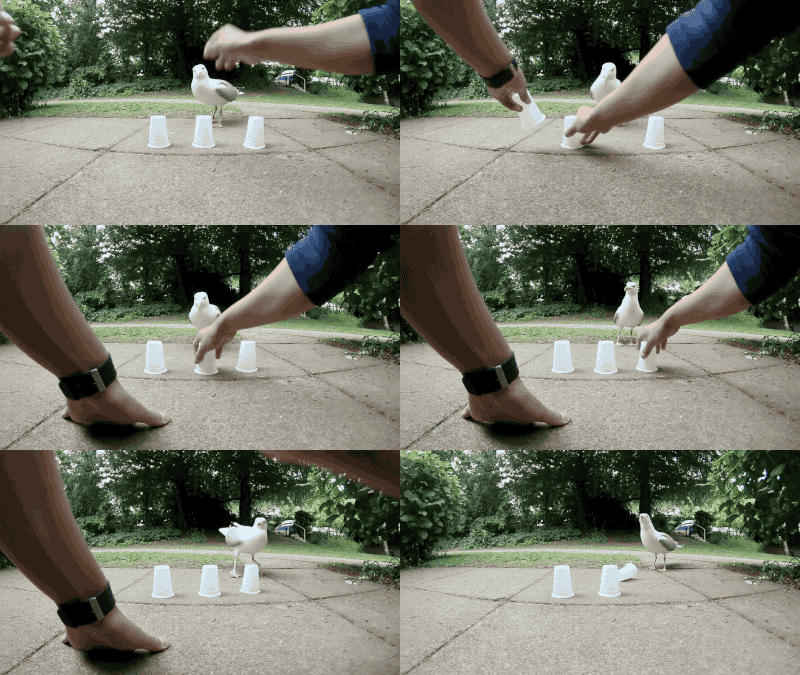
The nine physical skills were designed to test the eight study subjects’ understanding across three main themes: space, quantities and causality. Among the space tests the researchers were interested in evaluating how well ravens can understand object permanence and follow a moving object that is concealed (picture the classic shell game, but without the grift). For the quantities tests, the researchers presented ravens with things like a large and small pile of food to see which they would choose. Finally, for causality tests, they did things like let the ravens see them place a peanut in a cup, and then shake that cup vs. an empty one before allowing the bird to make a selection of which cup they wanted. Among the social skills, the researchers tested social learning, communication and theory of mind (the ability to think about the mental states of yourself and others). Each of these 6 total tests evaluated things like the being able to follow gaze, learn by instruction, and interpret intentions. Of course, all these tests were far more detailed and controlled than I am presenting them here; if you’d like a more detailed breakdown, you can read my personal, unedited, notes on the paper here.
Given their complex social lives and the abundance of data on raven social intelligence, the researchers expected to find that their subjects would perform better among the social tests relative to the physical ones, but that’s not what they found. To their surprise, the ravens actually performed similarly in both cognitive realms. This suggests that ravens possess a general intelligence and that the two realms may be linked enough in the brain that you can’t really disassociate one from the other. Still, across the 15 specific tests, ravens did better at some than others. For example, given their lifestyle as scavengers, it’s perhaps not surprising that among physical tests they performed the best at qualitative skills like assessing what pile of food was the biggest. Impressively, ravens were able to match adult-level success at many of these executive-order tasks starting at only 4 months old, which is younger than we typically see in parrots and even many primates. As for direct comparisons to primates, while ravens did significantly worse at spatial tests, they performed similarly to primates in quantitative and theory of mind tests, and only slightly worse in causal reasoning and communication. All in all, it seems ravens pretty closely match the performance of great apes across both social and physical cognition tests.
That said, there are some caveats to consider. First, these tests were administered by people, so there’s just no getting around the possibility of unintended influence. For example, previous studies have shown that ravens begin following the gaze of their flock mates around eight weeks old, by only start to follow the human gaze after fifteen weeks. So it’s possible that the birds’ responses to people among some of the social tests were more muted because they weren’t actually interacting with a fellow bird. Alternatively, they may have performed more poorly at some tasks because they viewed the experimenter as a competitor rather than as a neutral observer. There was also quite a bit of individual variation, and only a small number of birds were tested, so the researchers hesitate to make sweeping claims that the performance of these eight birds are representative. And when it comes to comparing ravens and primates, we’re back to our bridge dilemma because of course behavioral ability does not imply that the same complex cognitive mechanisms are at work.
Still, while these considerations are important, there’s no getting around that these birds demonstrated an incredible performance in both social and physical cognition tests. Put another way, an animal that diverged from mammals 300 million years ago, whose cortical architecture is significantly different, can play the shell game and scheme on their rivals just about as well as our closest relatives. So while I’ll continue to exercise restraint in answering, “Are ravens smarter than a ____ ?,” I have no doubt that these animals are as complex and enchanting as so many of us suspect them to be.
Footnotes:
*To understand the topic at hand a discussion of cognitive intelligence and its definition is necessary, but it’s also worth learning about and unpacking why our judgement and language around intelligence as applied to people is increasingly considered harmful. Here are some resources to do that:
S Pike, MJ Sima, CR Blum, E Herrmann and R Mundry. 2020. Ravens parallel great apes in in physical and social cognitive skills. Scientific Reports 10, 20617
SA Jelbert, R Miller, M Schiestl, M Boeckle, LG Cheke, RD Gray, AH Taylor and NS Clayton. 2019. New Caledonian crows infer the weight of objects from observing their movements in a breeze. Proc. R. Soc. B 286: 20182332
Holzhaider JC., Sibley MD, Taylor AH, Singh PJ, Gray RD, and Hunt GR. 2011. The social structure of New Caledonian crows. Animal Behaviour 81: 83-9
Watching a crow eagerly eye me for a peanut, I can’t help but wonder what it’s thinking about. Is it thinking the same thing as its flock mate, or is it having its own experience? Is it aware of me? Of itself? The conscious experience is such a fundamental part of humanity, it’s nearly impossible for most of us to envision life without it. And by extension, its hard for us to imagine that animals don’t experience consciousness too. But the fact remains that scientifically investigating consciousness, especially in non-human animals, has been slow and contentious. Among birds, this research has been all the more elusive. Which is why a study looking at subjective consciousness in carrion crows by Nieder et al. (2020)1 made an enormous splash this past fall, and resulted in a lot of misleading headlines. So why has consciousness been so difficult to study and how did this team attempt to do it?
An American crow, a relative of the carrion crow
First, let’s take a look at what we mean by consciousness. As it turns out, descriptions of consciousness get technical in a hurry, and they don’t all agree, which I suppose makes sense considering the philosophical and scientific challenge of asking, “how does an ethereal mind interact with the physical world?”2 It’s a tough question and one that can land you in an Inception-like hall of mirrors without careful consideration. So it’s critical to parse just what kind of consciousness a study is attempting to measure before making any effort to interpret their results. For the team behind this study, the focus was to determine if crows possess “subjective consciousness,” or the subjective experience of physical stimuli; in other words, the ability to have individually-specific experiences of external properties (AKA “qualia”). For example, you and I might look at a stop sign and quickly agree that it’s mostly red, but our respective experience of that redness could be quite different. A computer, on the other hand, probably does not experience qualia when detecting that an object is red, though whether or not this will soon be possible is a matter of great interest in AI circles. In addition, the study’s authors include in their definition the ability to access and report the experience of that subjective experience. For those with a background in psychology, you’ll recognize these two components as what Ned Block calls phenomenal and access consciousness.
At this point it’s helpful to step back and appreciate how much of the organismal world operates without any conceivable form of subjective consciousness. There are many a successful species that most definitely move through life by simply responding to various stimuli, without ever needing to take stock of their perceptions of those stimuli. Plants for example, react to noxious stimuli, but that doesn’t mean they have a subjective experience of pain. Even much of our own world operates without subjective experiences. Breathing for instance, happens probably 19,995 times a day without you noticing it. Highway hypnosis is another prime example. How is it that you can arrive safely at a destination you realize you don’t fully remember driving to? Because while you may not have had a subjective experience of the entirety of the drive, you were still accurately responding to the stimulus of the wheel in your hand, the pedal under your foot, and the various stimuli that presented themselves on the road.
But while it’s easy for most of us to accept that caterpillars and jellyfish probably move through life in this Simon-says kind of way, it becomes substantially more difficult to imagine that animals who look or act more like us don’t possess some from of consciousness. In fact, there are many ethologists who argue that they do, with varying levels of support.3 But the fact remains that it is difficult to demonstrate this because we cannot ask animals about their experiences and perceptions. We might, however, be able to leapfrog the inconvenience of working with nonverbal subjects by going directly to control center itself: the brain.
Among primates, including humans, the brain neurons that are responsible for representing what an individual perceives (i.e subjective experiences) are in the neocortex, which is part of the mammalian pallium.4,5 Until relatively recently, replicating such studies in birds was ignored, because bird brains are unique from mammalian brains in some key ways. As a result of these differences, we used to believe that birds had no equivalent to the mammalian neocortex, and were therefore incapable of flexible, complex thought. Now we understand that the circuits of the avian pallium are functionally organized in a similar way to the mammalian pallium, and furthermore that the avian pallium contains a staggering density of neurons.6,7 This is especially true among the corvids and parrots, which like non-human primates, can have as many as 1-2 billion neurons in their pallia.8 Given this organizational similarity, we’ve been able to show that birds do in fact have an analog to the mammalian prefrontal cortex, the part of our brain the allows us to process thoughts, feelings, and decisions. The question now is whether this avian analog, called the nidopallium caudolateral, also houses neurons that allow for subjective consciousness.
If any part of that was lost on you, we can summarize it as follows: the reason you and I can experience the exact same stimulus (the color green, the prick of a needle, the sound of C-sharp) differently, is because we experience subjective consciousness. Philosophical/religious discussions aside, the experience of consciousness is regulated by the brain, and we believe we’ve identified the brain areas and neurons that control this in humans and some primates. The goal of this study was to look to the analogous area of the bird brain where these neurons are housed in the primate brain, and see if they could demonstrate a neuronal basis for subjective consciousness in birds.
In theory that sounds simple enough (lol), but how exactly did they use neuronal activity to identify the experience of subjective consciousness? The fundamental “trick” of this study is that they exploited a stimulus that can give rise to two different percepts. Think of the classic optical illusion of the rabbit-duck. Whereas what you see first is a rabbit looking to the right, I see a duck looking to the left, and this difference is evidenced by the respective activity in our brains. This study used that same concept only instead of optical illusions, they used light.
The classic optical illusion of the rabbit-duck
By implanting electrodes in two carrion crows’ brains and training them to report if they saw a light, the researchers could investigate their subjective experiences by reducing the intensity of the light to near perceptual threshold levels and asking the crows to indicate whether they had seen it. Importantly this training wasn’t as simple as, “peck if you saw a light.” Instead, after the light was presented, there was a pause, after which the bird was shown either the color red or blue. Depending on whether the bird thought it saw the light or not, which color it was then shown informed how it was supposed to indicate its perception to the researchers. If the light had been detected, seeing the blue color meant it would only get a treat if it stayed still, whereas red meant it needed to move. If that light hadn’t been detected, then seeing blue meant it needed to move, while red indicated that the bird should stay still. Without this step of making the birds wait to find out what motor response indicated their answer (and earn them a treat) the study would only have revealed the neurons associated with preparing the correct motor response. Instead, they were able to look at the neuronal activity related to the immediate impact of the stimulus, and then to the activity related to processing this information into a perception.
What they found is that like primates, crows exhibit a two-stage process, where neuronal activity during Stage I mostly reflects the intensity of the physical stimulus, followed by a second spike in activity that reflected their perception. The patterns of activity in Stage II were so consistent, that the researchers could predict whether the crows would say they saw the light or not by looking at this activity alone. Most importantly, while the responses of the two birds were the same if the light intensity was bright and unambiguous, when shown faint lights, the two birds responded differently. Meaning that despite being shown the exact same stimulus, the two birds had different subjective experiences of whether they had seen it or not. There were also instances of false positives, where the birds indicated that they had seen a light that wasn’t really there. In these cases their brains behaved during Stage II just as they did when they had actually seen a bright light. This is important because it further demonstrates that the brain activity the researchers were measuring correlated with the crows’ subjective experience, rather than as a result of the intensity of the stimulus itself.
What this shows us is that carrion crows have the neurological substrates that support subjective consciousness, and it indeed appears that they have individual experiences of stimuli. It does not show us, despite many articles to the contrary, that they are “self-aware” or engage in metacognition (the ability to “ponder the contents of their own minds“). Still, these findings makes crows pretty unique among animals, putting them in a category shared only by primates. Furthermore, it underlines that despite the differences between mammalian and avian brains, the two are are remarkably functionally analogous, at least with respect to some species. In fact some have gone as far as to say that this and other studies indicate that the continued assertion that birds do not have a cerebral cortex is outdated and wrong.8 Moving to the 30,000ft view, the findings of this study invite numerous questions about what such shared abilities say about the evolution of consciousness across species. Did it evolve independently multiple times or has is been present since before the evolutionary split between birds and mammals some 320 million years ago? Either way, if I was a betting person, I would wager that the list of animals in possession of subjective consciousness will only continue to grow as we find new ways of exploring these once out of reach questions.
~Many thanks to Dr. Andreas Nieder for helping me parse the methods and findings of this fascinating and complex paper.
Literature cited
Nieder A, Wagener L, and Rinnert P. 2020. A neural correlate of sensory consciousness in a corvid bird. Science 369: 1626-1629
Glatterfelder JB. 2019. Subjective consciousness: What am I? In: Information—Consciousness—Reality. The Frontiers Collection. Springer, Cham. https://doi.org/10.1007/978-3-030-03633-1_11
Boyl M, Seth AK, Wilke M, Ingmundson P, Baars B, Laureys S, Edelman DB, Tsuchiya N. 2013. Consciousness in humans and non-human animals: recent advances and future directions. Frontiers in Psychology 4: https://doi.org/10.3389/fpsyg.2013.00625
Dehaene S. and Changeux JP. 2011. Experimental and theoretical approaches to conscious processing. Neuron 70: 200-227
de Lafuente V. and Romo R. 2005. Neuronal correlates of subjective sensory experience. Nature Neuroscience 8: 1698-1703
Shanahan M, Bingman VP, Shimizu T, Wild M, and Güntürkün O. 2013. Large-scale network organization in the avian forebrain: a connectivity matrix and theoretical analysis. Font Comput Neurosci 7: doi: 10.3389/fncom.2013.00089
Olkowicz S, Kocurek M, Lučan RK, Porteš M, Fitch WT, Herculano-Houzel S. and Němec P. 2016. Birds have primate-like numbers of neurons in the forebrain. PNAS 113: 7255-7260
Herculano-Houzel S. 2020. Birds do have a brain cortex-and think. Science 369: 1567-1568
Whether you want to finically support the blog, or simply get more corvids in your life, my etsy shop is the perfect way to do either. With corvid themed stickers and magnets designed by artists like Madison Erin Mayfield and Laurel Mundy there’s a corvid for everyone on your list. Orders will ship over the weekend, and my hope is that even with Covid mailing delays, all orders will arrive well in time for gift giving season. I hope you check it out!
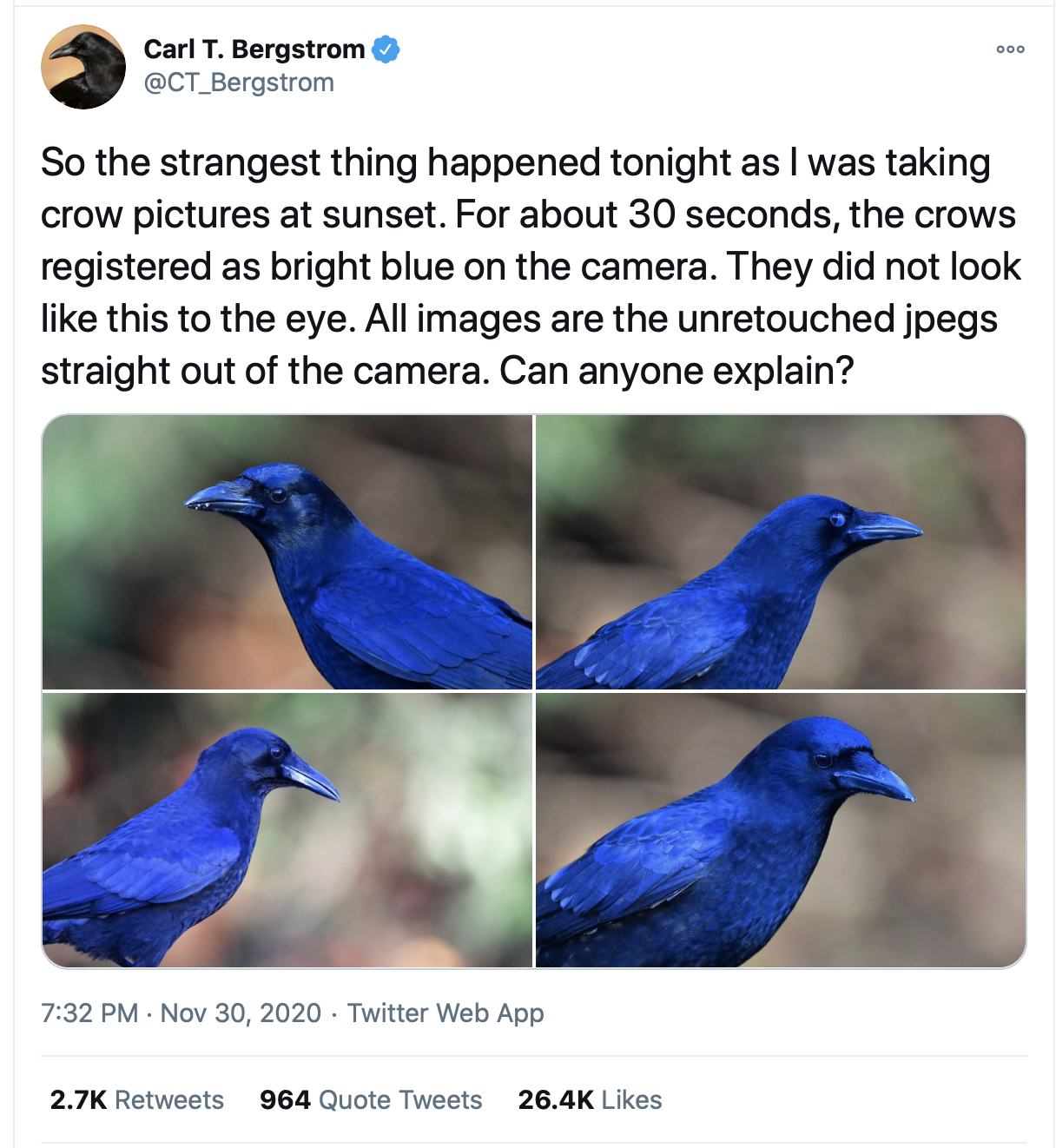
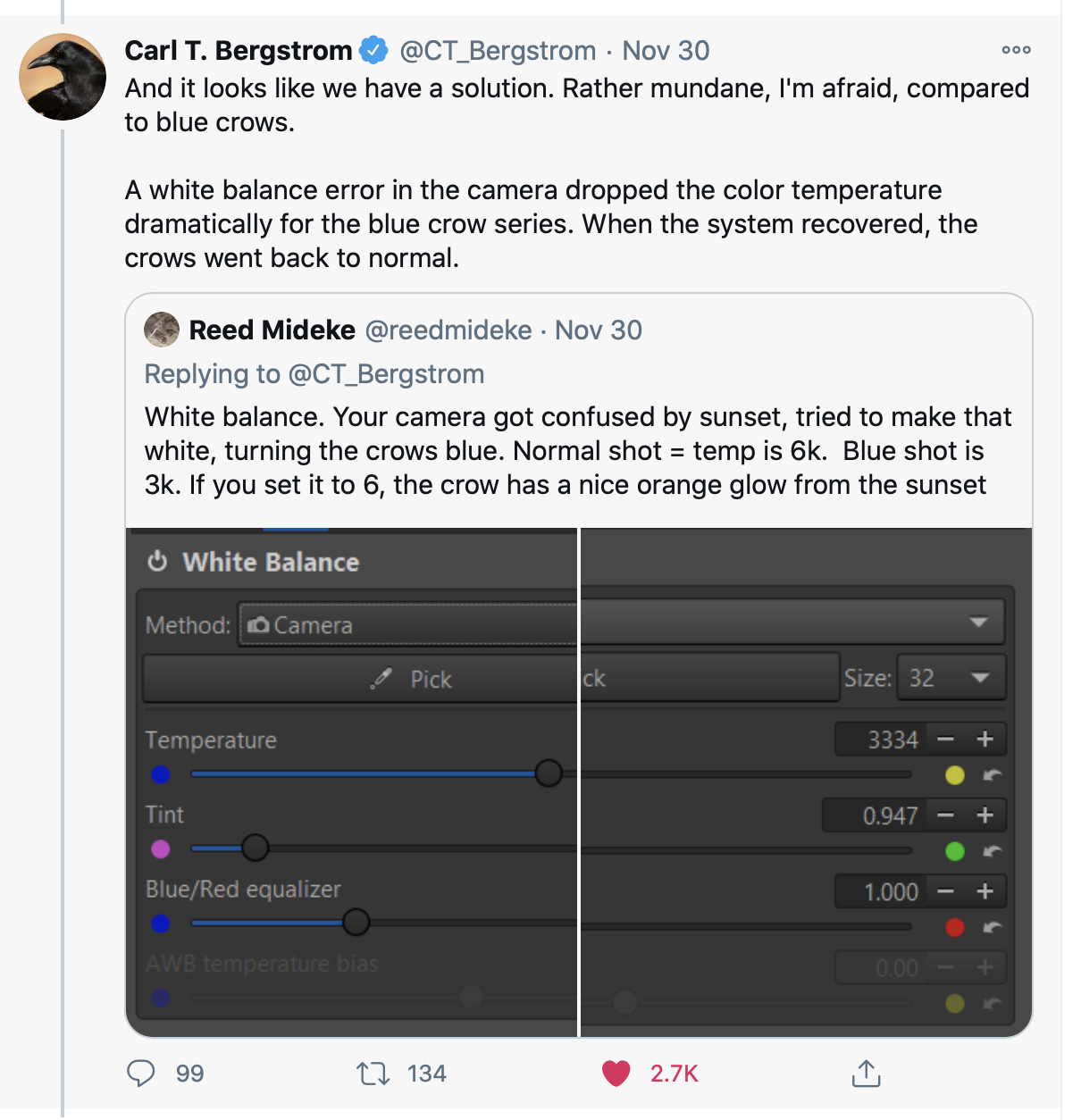
Recently, a marvelous set of blue crow photos from Carl Bergstrom had the internet’s corvid fans doing a collective double take. In addressing what could be responsible for such spectacularly odd images, many people’s first instinct was to wonder if these photos might be revealing the hidden ultra-violet lives of crows. After all, as a group, passerines (aka songbirds, of which crows are part of) are well known for their abilities to express themselves and see beyond the visual spectrum available to people. But while, “can crows see in UV? Is their perception of the feathers adorning their flock mates different from our own?,” feel like simple enough questions, a google search after their answers results in an almost unprecedented silence from the otherwise vast body of crow knowledge that exists beyond your search bar. Sure, you can find the occasional popular science article that talks about the visual systems of birds and maybe includes a photo of a crow, but these articles never provide citations and most speak simply in generalizations about passerines, not about crows specifically. The reason for this knowledge gap is that while the visual systems of birds is generally well studied, there are over 10,000 species of birds and not all of them can be the darling of every field of research. So while crows take a disproportionate share of our scientific attention, relative to many other species, not much has actually been done on their visual systems; what does exist is spread out and sometimes hard to find. But this is a question that comes up time and time again so let’s take a moment to harness what has been done, and offer the best possible answers to these questions that science currently has to offer.
Before we get to the heart of our questions though, let’s take a beat to review the more technical aspects of vision, and why our visual experience of the world is different from our dogs’ or possibly crows’. Vertebrate eyes work fundamentally via the same 5 step process: Step 1) light enters eye through pupil, Step 2) the cornea bends the light that passes through the pupil, Step 3) the light then passes through the lens which focuses it on the retina, Step 4) rods and cones of retina detect light and color and, Step 5) cells in retina convert this into impulses which go to brain. But while the general process is conserved across most species, the details of each of these steps can vary in life altering ways. Crucial to this discussion is that fourth step that involves the rods (which are motion sensitive light detectors) and the cones (which are contrast sensitive color detectors). Depending on the classes of cones a species possess, an animal can be either dichromatic (most mammals), trichromatic (primates and marsupials), or tetrachromatic (birds and reptiles), which translates to different levels of color vision. 1 While we are able to detect red, green and blue light, most birds have a fourth cone that allows them to more acutely detect short wavelength colors near the ultraviolet range. The ability to simply detect UV isn’t enough though (in fact humans are sensitive to UV light), you must also have the ability to transmit that part of the spectrum. While our eyes filter it out, rendering it invisible to us, birds have special oil droplets in their cones that allow for the passage of UV light, while limiting its damage.2 Among birds, that 4th cone (called the short-wave sensitive 1 or SWS1) can be further divided into two variants: the violent-sensitive variant (VS birds) or the ultra-violet sensitive (UVS birds) variant. Without getting any more technical, suffice it to say that UVS birds have a much keener visual experience of the UV spectrum, relative to VS birds, though both can detect UV light.3
The function of this “enhanced” vision is many fold.4 For one, it allows for greater contrast of the environment, rendering what may look to our eyes as a flat wall of green vegetation, as a much more dynamic plane, enhancing a bird’s ability to fly through dense foliage. Like insects, UV sensitivity is also important among many types of nectarivorous (nectar drinking) and frugivorous (fruit-eating) birds. Many fruits, for example, are coated in a UV-reflecting waxy substance that helps advertise their availability to would be seed dispersing birds. And finally, descriptive UV patterns in feathers opens an entire world of visual signaling that is otherwise completely hidden from us. Given the ways we might image crows would benefit from exploiting any one of these possibilities, it makes sense that they would possess the kind of rich UV experience that many other birds are known for.
Which brings us, finally, to the rub. While it’s true that most passerines are what we call UVS birds, corvids, like flycatchers and most raptors, are VS birds, meaning their visual system is biased toward the violet-spectrum and they are not considered especially sensitive to UV light.3,5 The low UV-detection abilities of corvids and many raptors, appears to offer a lifeline to smaller passerines, which exploit these visual differences in their plumage, allowing them to remain conspicuous to potential mates, while staying inconspicuous to their potential predators.6 Given this finding, we would expect crows not to, for example, show a great deal of UV detail in their feathers, and the research seems to bear this out. A study of large-billed crows found them to be so weakly iridescent, that the authors proposed their violet-blues hues may simply be an artifact of chance, and play no functional role.7 Likewise, unlike many other passerines, crows don’t seem to communicate aspects of their identify via secret codes in their feathers. A 2007 study, for example, confirmed that American crows, fish crows, and Chihuahuan ravens are sexually monochromatic from an avian visual perspective, meaning there’s no UV signaling of “male” or “female” hidden from us in their feathers.8 These birds were among only 14, of the 166 North American passerines sampled, for which this was true.
Despite these findings though, the role of UV in the lives of crows and other corvids hasn’t been rendered completely immaterial. When presented against high contrast backdrops (green foliage), fish crows are more adept at picking out UV reflecting berries than matte black Vaccinum berries. On the other hand, when both are presented in front of a backdrop that offers no contrasting advantage to the UV reflecting fruit (sandy backdrops) they pick out both berries equally.9 And while the UV spectrum may not be super useful to crows for coding information, that doesn’t mean the feathers of corvids don’t carry any weight. Common magpies, for example, convey all sorts of information from sex to age to territory status in their iridescent tail feathers.10 Taken together, these findings seems to suggest that there is a lot more to unpack with respect to the role of UV in the lives of corvids than, well, meets the eye, and species-specific studies may be necessary to fully parse the potential nuance.
In the mean time, while the errant photo of a blue crow may be eye catching, it’s probably not revealing an otherwise visually hidden secret, like that time a ghost showed up in the background of your vacation photo. Instead, blue crows are probably just an artifact of the photographer’s white balance gone awry in the golden hues of a fine day.
Literature cited
Bowmaker JK. 1998. Evolution of colour vision in vertebrates. Eye12, 541–547
Lind O, Mitkus M, Olsson P, Kelber A. 2014 Ultraviolet vision in birds: the importance of transparent eye media. Proc. R. Soc. B 281: 20132209.
Ödeen A, Håstad O & Alström P. 2011. Evolution of ultraviolet vision in the largest avian radiation – the passerines. BMC Evol Biol11: 313.
Withgott J. 2000. Taking a Bird’s-Eye View…in the UV: Recent studies reveal a surprising new picture of how birds see the world. BioScience 50: 854–859.
Brecht KF, Nieder A. 2020. Parting self from others: Individual and self-recognition in birds. Neuroscience & BiobehavioralReviews 116: 99-108.
Håstad O, Victorsson J, Ödeen A. 2005. Differences in color vision make passerines less conspicuous in the eyes of their predators. Proceedings of the National Academy of Sciences 102: 6391-6394.
Lee E, Miyazaki J, Yoshioka S, Lee H, Sugita S. 2012. The weak iridescent feather color in the Jungle Crow Corvus macrorhynchos. Ornithol Sci 11: 59–64.
Muir DE. 2007. Avian Visual Perspective on Plumage Coloration Confirms Rarity of Sexually Monochromatic North American Passerines. The Auk 124: 155–161.
Schaefer HM, Levey DJ, Schaefer V, and Avery ML. 2006. The role of chromatic and achromatic signals for fruit detection in birds. Behavioral Ecology 17: 784-789
Nam HY, Lee S, Lee J, Choi C, and Choe JC. 2016. Multiple Structural Colors of the Plumage Reflect Age, Sex, and Territory Ownership in the Eurasian Magpie Pica pica. Acta Ornithologica 5: 83-92.
There are few animals that generate the kind of enthusiasm and following that ravens, crows, magpies and other birds in the corvidae family do. Their presence in our lives is so significant, they appear in the creation stories and fables of nearly all peoples. Today, our love for these birds has given rise to what feels like an entire industry of books, jewelry, artwork, and of course literal fan clubs, some of which serve many tens of thousands of followers. This community is not only fun to be a part of, but is doing important things to improve the reputation of corvids among those individuals or communities who might consider them a nuisance.
There are a couple of common ways though that, in our attempt to uplift corvids, our fandom sometimes trivializes the traditional beliefs of Indigenous North Americans, primarily through cultural appropriation and erasure. If it’s a new or esoteric term to you, cultural appropriation is the act of copying or using the customs and traditions of a particular people or culture, by somebody from another and typically, more dominant people or society.1 Here are three small steps the non-Native community (of which I am a part) can take to more respectfully celebrate our love of corvids, and the people for whom they traditionally hold deep cultural meaning.
#1 Don’t use the term “totem” or “spirit animal,” choose an alternative
In every place and time that humans and corvids co-occur, people have made culturally important meanings, stories, and symbology about these special birds. As a united group of corvid fans, it may therefore be tempting to sample from these practices as a means of creating community. One common way I see this manifest is in the use of terms like spirit animal to describe someone’s connection to a particular corvid. Like animism (the belief that all material possesses agency and a spirit) the term itself appears to have been an invention of anthropologists, but its intent is to refer to Indigenous religious practices. Co-opting this practice as our own, no matter how well-intentioned, devalues cultural traditions that are not ours to claim.
A quick Etsy search of the term demonstrates just how far we’ve allowed the abasement and monetization of this practice by non-Indigenous people (i.e wine is my spirit animal t-shirts.) Even in cases where our use of cultural appropriation doesn’t feel objectively derogatory (it might even feel honorific), its adoption by non-Indigenous people is the kind of cultural cherry picking that has long frustrated Indigenous communities.
“Dear NonNatives: Nothing is your spirit animal. Not a person, place or thing. Nothing is your spirit animal. You do not get one. Spirit animals derive from Anishinaabe and other tribes deeply held religious beliefs. It is a sacred, beloved process that is incredibly secret.”
To ignore those frustrations and claim that our use of this religious practice is either benign or born out of respect, is to prioritize the needs and feelings of ourselves above those for whom literal and cultural genocide remain contemporary battles. In other words, it’s an act of racism. Of course, Indigenous peoples are not a monolith, and you may find individuals that feel no harm from non-Natives using this term, or even grant you specific access to it (though beware of plastic shamans.) In these cases, I offer that it’s harmless to decline using it despite any special permissions, while adopting it risks hurting and alienating the broader communities for which this or similar terms are sacred.
Fortunately, there are many alternative ways to express kinship with corvids that do not rely on cultural theft. Here are a few of my favorites: muse, soulmate, best friend, fursona, daemon, icon, desired doppelgänger, secret twin, and familiar.
#2 Recognize the diversity of Indigenous nations
Pretty regularly, I see infographics pass through my social media feeds depicting either a photo or some kind of Indigenous-esque looking art and a sound bite about a “Native American” story about crows or ravens. While the intent here is obviously to celebrate a shared love of corvids, the means of doing so makes no effort to actually learn the story or, importantly, from whom that story originates.
There are 574 federally recognized Indigenous nations in the United States. There are even more when you include non-federally recognized tribes (ex: the Duwamish on whose lands much of the Seattle area is built.) While there is certainly shared knowledge and traditions, it’s important to recognize that these are independent nations with their own creation stories and traditions. For example, the story of Raven stealing the sun to bring light to earth is a Haida, Tsimshian, and Tlingit legend.2
Attributing them as simply “Native American” stories erases their cultural heritage by treating all Indigenous peoples as a monolith with unified cultural traditions. This is especially pernicious when these stories are told in the past tense, as if the people from whom they originate are gone. Putting in the effort to research where specific stories come from, and how and where that community exists now, is an important step to recognizing and respecting different tribal identities.
For the same reason, another important practice is to research on whose land you currently enjoy the corvids you watch or photograph.
As Larissa Fasthorse explains, “Always know whose land you’re standing on. Who are the original people of that land? You need to find that out. You need to know those people, and, where are they? Are they still there? If not, why? Where have they gone? Start to learn, start to educate yourself. Whose land are you profiting from and how can you start to pay that back in your own way.”
So the next time you see an interesting legend about corvids, do some research to learn about the actual people behind that story. Beware of sharing memes that make no effort to do that work. That’s generally a sign that they were not written by someone of that cultural heritage and are more interested in gaining likes and shares than honoring other people. Know on whose ancestral land your corvid watching takes place, and seek out print or digital resources to learn about those people.
While the line between cultural appropriation and cultural appreciation can be fine, a willingness to seek out knowledge beyond what caught your initial attention is the best way to ensure you’re not engaging in cultural cherry picking. There are several great resources to starting doing this including Whose Land, which is an Indigenous-led project. You can also find more local resources that may serve you better, including the websites of individual tribes.
#3 Buy books and artwork directly from Indigenous sellers
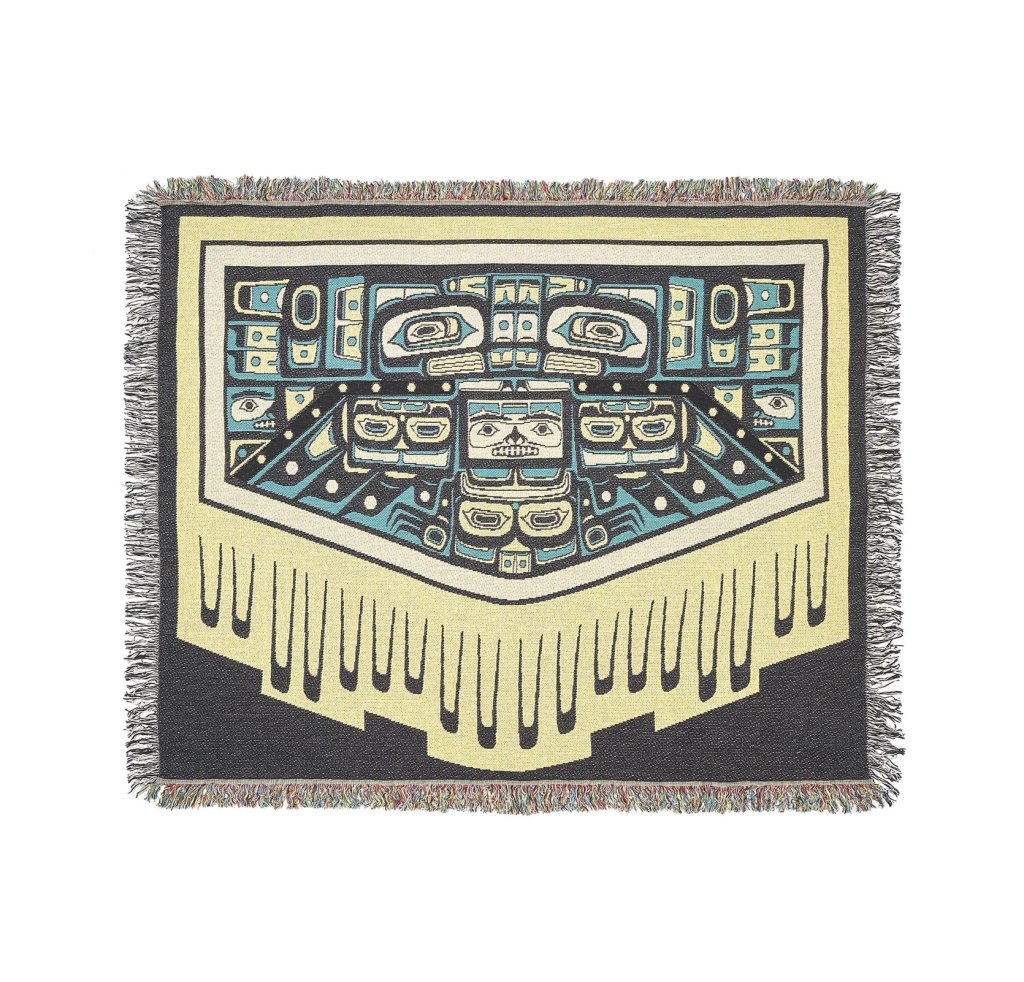
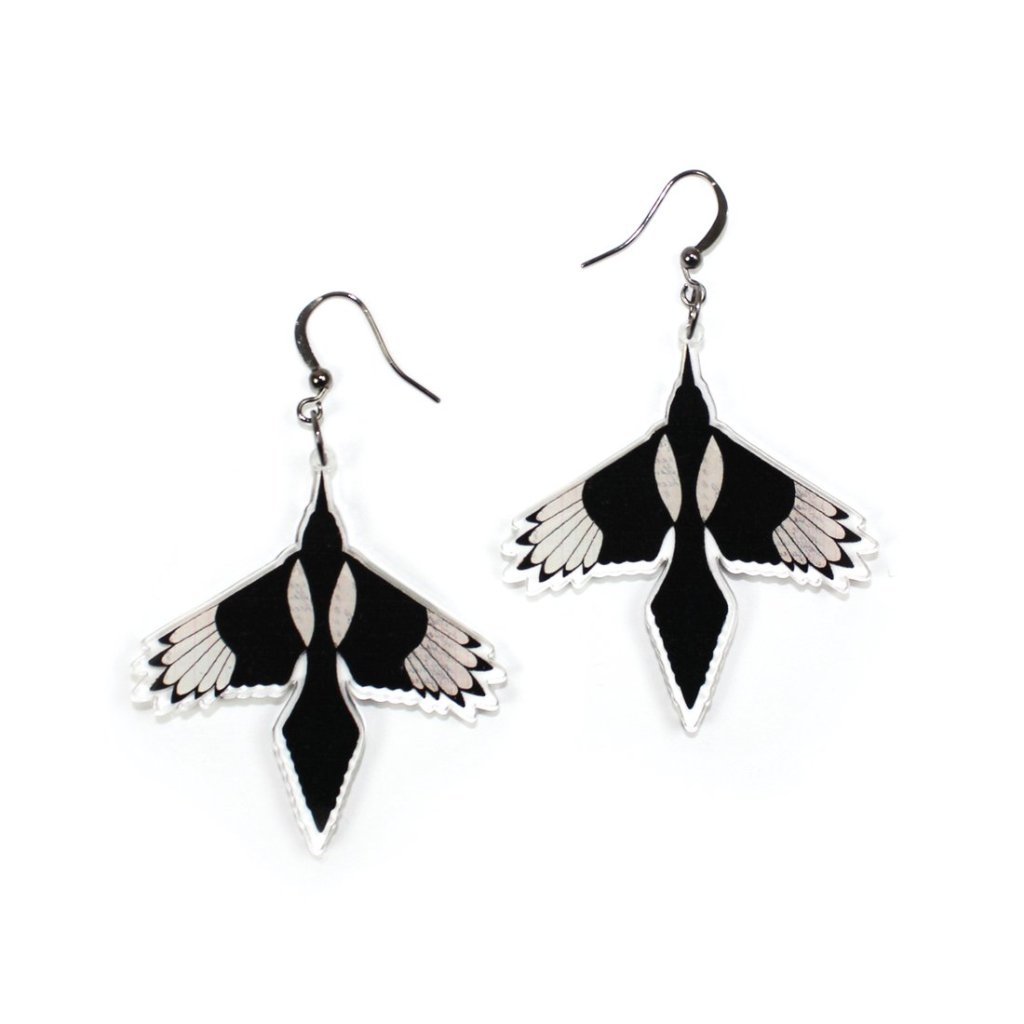
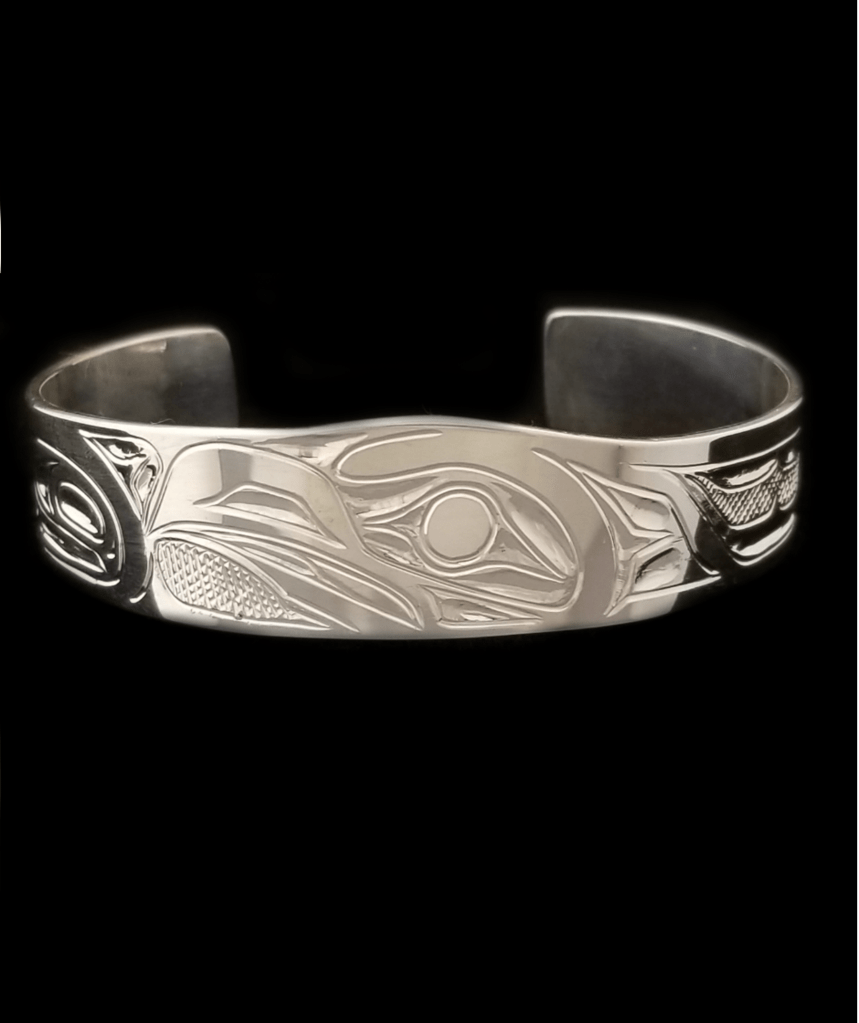
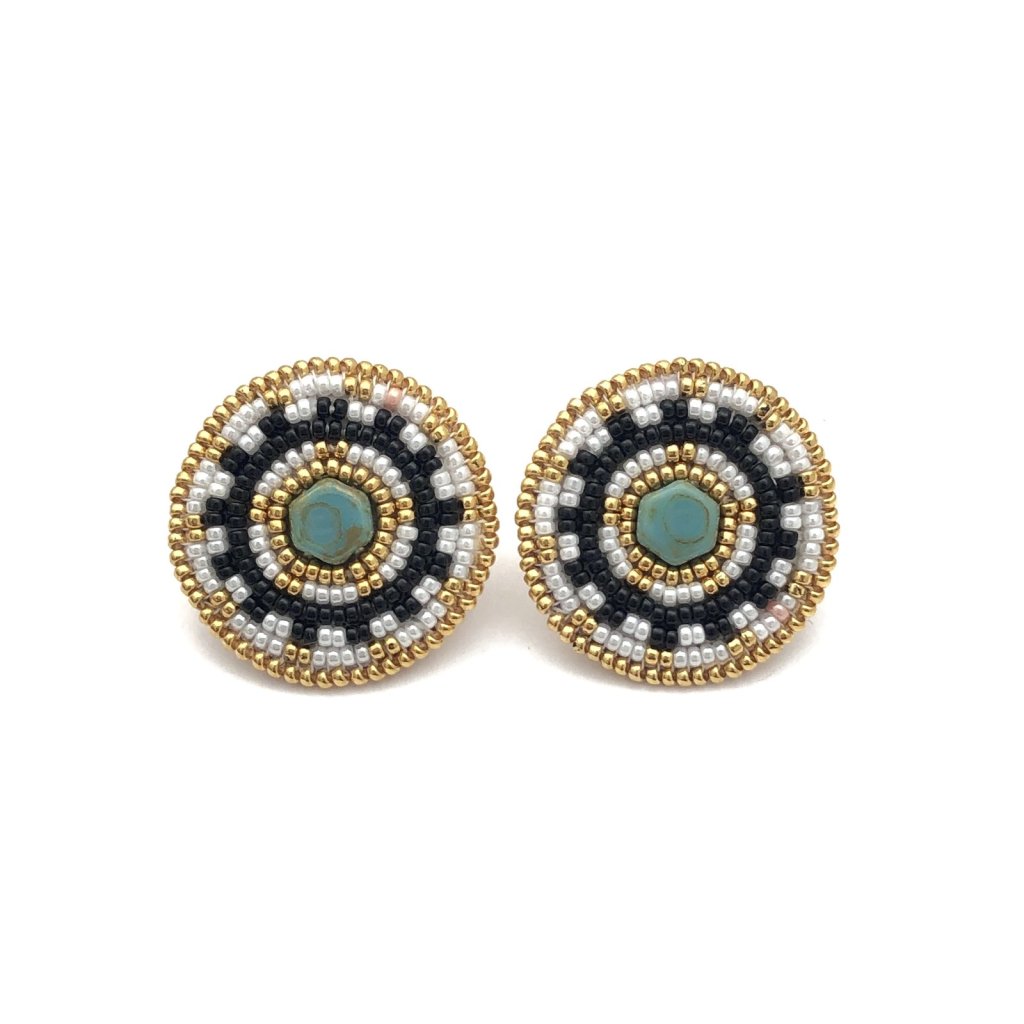
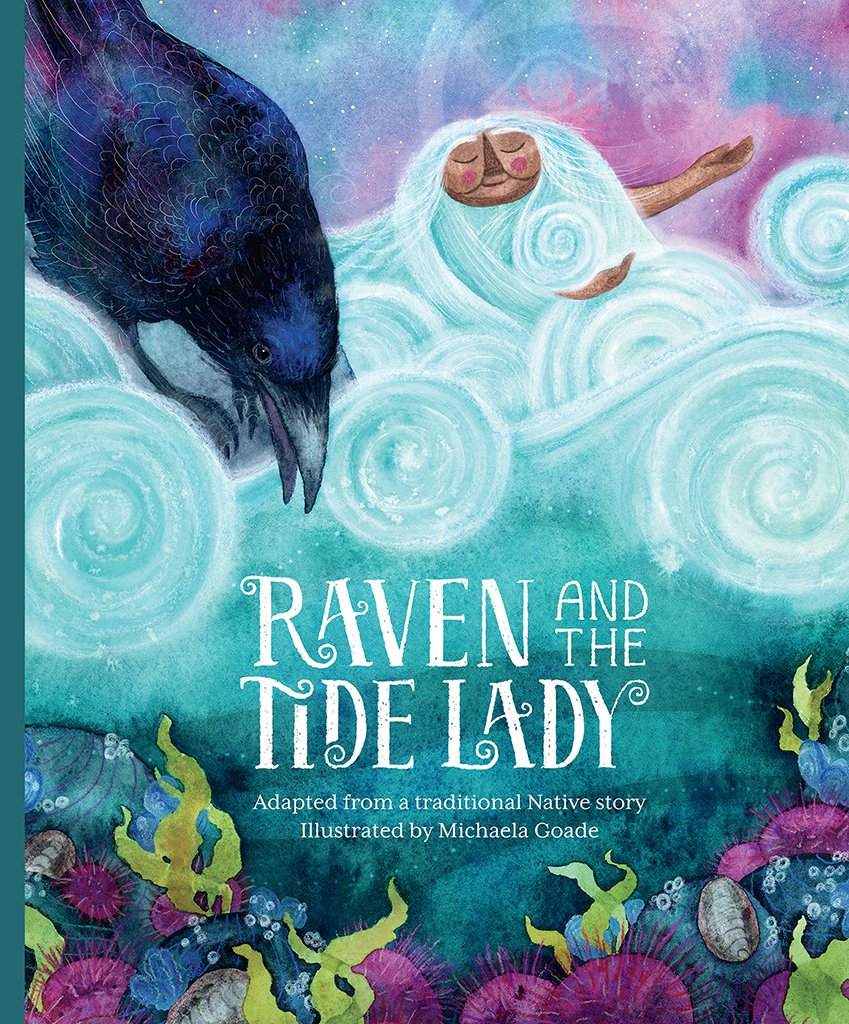
Be it from Navajo, Tlingit, or Haida origins, Indigenous depictions of corvids are unequivocally beautiful. It’s only natural that corvid lovers might wish to enjoy such artistry in jewelry, paintings, sculptures, or books. As long as it’s not in the pursuit of a costume or other forms of identity theft, purchasing and displaying Indigenous art is encouraged, especially when you can use it to draw more attention to the artist. Sadly though, the number of Indigenous creators are far out-numbered by non-Native people looking to profit off their culture.
For example, the Alaska Department of Commerce and Development estimates that 75-80% of what is branded as Native art, was not actually made by Alaska Natives, resulting in the redirection of millions of dollars away from Alaska Native communities.3 So before swiping that credit card, make sure that the creator of that piece has the cultural heritage to claim ownership of it. As the Indigenous led Eighth Generation collective puts it, make sure it was created by “inspired Natives” and was not “Native-inspired.” Don’t be afraid to ask shop owners or gallery curators this question directly. That’s not only an easy way to find out, but it signals to that purveyor that sourcing directly from Indigenous creators is something their customers require. Buying directly from Indigenous artists is an even better option.
As always when buying from artists, expect the price to reflect that the piece supports a livelihood and don’t attempt to barter. The goal shouldn’t be to simply obtain a beautiful object, but to celebrate and support the person who took great care to craft a sharable piece of their identity.
Reconciling the ongoing pain caused by centuries of brutality, land theft, and cultural erasure will not be an easy process. It’s uncomfortable, for example, to realize that while your intent was simply to love on corvids, something you’ve done or said is being called out as anti-Indigenous. But it’s essential that we are willing to engage with that discomfort because it’s through that process that we learn and initiate positive change. Inviting Indigenous voices into your spaces is the most important way to start or continue that effort. Please look for the following individuals who are but a drop in the list of fantastic people you can find. And if you appreciated this article, please consider making a donation to one of the individuals or organizations listed below.













 corvidresearch.blog