Author Archives: corvidresearch

Are you playing #CrowOrNo yet?

Crows, ravens, magpies, even blackbirds or other non-corvid species can be tricky to distinguish from one another if you’re a beginning or even experienced birder given the right angle or blurry photo.  While some of it is a matter of learning key field markers, a big part of effectively learning to distinguish these species is an eye for the subtle differences in portion or appearance that comes with practice.  I believe learning these skills is not only fun, but makes us more informed corvid lovers and birders.

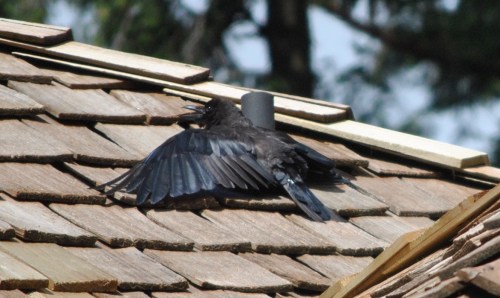
To that aim, I’ve started a weekly #CrowOrNo “quiz” on my Instagram (@corvidresearch) and Twitter (@corvidresearch) accounts.  Every Wednesday at 11:30 AM PST, I’ll post one photo and it’s up to you to decide whether or not it’s really a crow.  At the end of the day I’ll share the answer and any tips or tricks that would have helped to discern the true species.  Play, share, or simply spectate.  Whatever you’re comfortable with is fine for me, as long as you’re enjoying the process and learning more about these wonderful animals!  Check out the photos below for examples from past weeks.  I hope to see you there!

Oh, and have photos you think would make good fodder for the game?  Send them my way!

Update: The game is also now available on the Corvid Research facebook page!


6 Comments

Filed under Birding, Corvid trivia, Just for fun

Invitation to hear me speak

Salutations lovely blog followers!  This is just a quick note to explain my absence over the last couple of months, and invite you to see what it’s all been for.

For whatever reason (ambition, insanity, desire to please, capability, or the combinations therein) I took on a little more than I could chew this quarter.  Teaching, taking courses, taking my qualifying exams, submitting a paper and, as a cherry on top, taking my general exam (i.e the dissertation proposal).  I love my blog, and you folks and the aspects of crows that I can share with you are constantly on my mind.  At the end of the day though, my priority is my graduate work and sometimes the blog needs to take a backseat.

I do not tell you this in the hopes you’ll understand, I tell you this because I already know you understand.  But I also know you follow the blog because you are passionate about crows and to that end, I want to invite you to see the presentation of my dissertation proposal this Monday, Dec 5th.

While this talk is intended to impress my faculty committee enough that they approve me as a PhD candidate, it is given to a room of largely first year students, and is therefore designed to be inclusive of all backgrounds and knowledge levels.  Crucially, this seminar is also open to the entire community, so you won’t find any awkwardness strolling in as a member of the public and not as a UW student.  I hope to see you there!

invitation

For a map to Kane Hall click here.

12 Comments

Filed under Uncategorized

New research on the cause of the AKD outbreak

Since the nineties, Avian Keratin Disorder has been an increasingly common disorder among Alaskan and PNW crows, chickadees (~17% of northwest crows1, ~6% of black-capped chickadees2) and a handful of other species, that causes gross deformities of the beak such as elongation, curvature or crossing.  I’ve written previously about the details of this disease before, but at that time there was little progress in determining the underlying source of the outbreak.  While AKD can be caused by a variety of things, at the scale it’s being observed now scientists questioned if there was a more consistent underlying factor.  Since AKD can cause discomfort or even death (primarily through the inability to feed or preen) understanding what might be the source of this outbreak has clear management and conservation implications.

DSC_1648

An AKD-afflicted American crow in Seattle, WA.

Among the initial suspects were environmental contaminants such as heavy metals, organic pesticides, and toxic environmental pollutants like PCBs, PCDDs, and PCDFs.   Blood work done on afflicted Northwestern crows, however, showed no significant difference in the 30 blood elements tested compared to unaffected adults or juveniles3.  Fortunately, new research may finally be shedding light on what’s going on.

Disease can be an easy thing to rule out if you know what you’re looking for, but new to science pathogens can evade traditional diagnostic techniques.  To account for this, a team of USGS and university scientists conducted a sequencing study comparing pooled RNA of healthy and AKD positive chickadees, crows and nuthatches in attempt to identify a candidate pathogen2.  Their work appears to have paid off, revealing evidence for a new picornavirus (a family of viruses previously known to science) they are calling poecivirus.  Whereas 100% of AKD-affected birds (23 subjects) tested positive only 22% of the 9 control individuals did.

black-capped_chickadee_in_homer_alaska_c_martin_renner-768x432

Alaskan black-capped chickadee with severe AKD. Photo c/o Martin Renner

Given these small sample sizes, it’s too early to throw our hands up in complete relief of having identified the cause of the AKD outbreak, especially since there’s still much to be done in understanding the potential relationship of this new virus to the environment.  Nevertheless, these findings offer some insight and hope that scientists are on the right track.  With more dedicated work we may soon have a much better understanding of this novel pathogen, its link to AKD, and management options moving forward.

Literature cited

1.  Van Hemert C, & Handel CM. 2010.  Beak deformities in Northwestern crows: Evidence of a multispecies epizootic.  The Auk 127: 746-751.  doi: http://dx.doi.org/10.1525/auk.2010.10132

2. Zylberberg M, Van Hemert C, Dumbacher JP, Handel CM, Tihan T, and DeRisi JL. 2016. Novel picornhttps://wordpress.com/post/corvidresearch.wordpress.com/3363avirus associated with Avian Keratin Disorder in Alaskan birds.  mBio 7 doi: 10.7589/2015-10-287

3. Van Hemert C, Handel C. 2016.  Elements in whole blood of Northwestern crows (Corvus caurinus) in Alaska USA: No evidence for an association with beak deformities.   Journal of Wildlife Diseases 52:713-718 doi: http://dx.doi.org/10.7589/2015-10-287

13 Comments

Filed under Birding, Corvid health, Crow curiosities, Crow disease, Crow life history, Ecosystem, Uncategorized

How crows cope with storms

Provided the forecast for possibly historic weather conditions, people all over the PNW are preparing themselves for heavy rain, wind, and the falling trees, debris and power outages that may follow as a result.  For many (though sadly not all) people, these preparations may be as simple as a trip to the grocery store and a commitment to stay within the safety of their homes for the weekend.  But what becomes of our wildlife?  How might they weather the predicted 60mph winds and stay warm enough to survive such conditions?

Despite their delicate reputation, birds are well adapted to survive even intense weather.  This is perhaps unremarkable, given that survival is really the name of the game and that stochastic weather conditions are an inevitable part of an animal’s life. To prepare for such weather events, some research suggests that birds and other animals are sensitive to the pressure drops that anticipate severe weather and increase their food intake as a result1. Since foraging may be altered or inhibited during bad weather, this kind of preparation goes a long way to keep birds sated.  For this reason, making sure feeders are kept stocked or offering high nutrition items such as bird friendly corn bread is the best way you can aid your feathered companions in advance of a storm.

Precisely what a bird does during the height of the storm comes down largely to its life history, such as whether it is a cavity nester and rooster, and whether it’s migratory or residential. For cavity nesting and roosting species such as woodpeckers and chickadees, natural and artificial cavities like bird houses can make good retreats.  Birds that do not already make use of cavities such as crows or hummingbirds, however, will find refuge in the dense vegetation of conifer trees or shrubs.  While the exteriors of trees and shrubs may take a beating, their interior microhabitats can be substantially drier, warmer, and more stable, providing a suitable space for birds to wait out the worst of a storm in safety. Migratory birds on the other hand can simply fly around areas of heavy wind.  As a last resort they may even take shelter in some odd places, like a public restroom.

stork-image

A marabou stork finds refuge from hurricane Matthew in a bathroom at the St. Augustine Alligator Farm and Zoological Park. Photo c/o Gen Anderson/via AP

Even if the crows are getting blown around a bit, their hold on a perch is at little risk of giving way.  Since crows are passerines (aka perching birds), their feet lock around a perch at rest, meaning that rather than taking energy to hold on, it actually takes effort to let go.  This keeps them well secured even in windy conditions.  Lastly, their feathers keep them  protected from the rain and cold temperatures that may accompany a bad storm.  Although crows will articulate their feathers for certain kinds of behavioral displays, puffing their feathers also traps insulating air and with it, heat.


dsc_0865-1

A crow puffs its feathers on a chilly morning

So if you find yourself worried about what may become of your crow neighbors over the weekend, take comfort that there is little to worry about.  These animals are adapted to sense and prepare for bad weather, find locations that offer safety, and have the physiology to withstand the kind of weather that makes us want to stay in bed.

Literature cited

23 Comments

Filed under Uncategorized

15 of the prettiest corvids from around the world

When most Americans think of corvids, the color palette that probably comes to mind is black, grey, blue, white and iridescent.  Together, these colors have certainly assembled a handsome collection of birds, but there’s an awful lot more pigments in the corvid family than that.  Even among those colors, some of the more topical corvids exploit them in dazzling ways.  Unlike American or New Caledonian crows though, these birds have not gotten their fair share of the corvid limelight and it’s time we change that.  The following is a sample of just some of the corvid diversity more folks should know about.  If you really want to have a little extra fun, ignore the scientific names and see if there are any birds you would group together in the same genus (reminder: Family>Genus>Species).  Then you can go back and look at the first part of the scientific name to see if you were right!

These photos were primarily sourced from some of the generous and talented photographers that can be found on Flickr.  Please click on their names to see more of their great work.

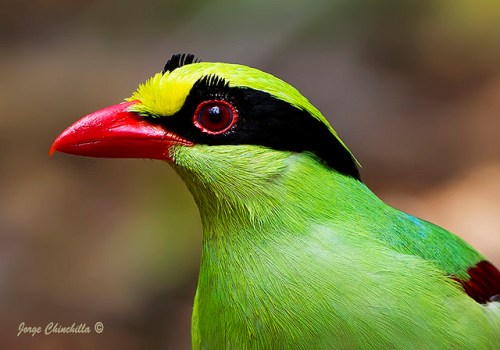
1. Common green magpie (Cissa chinensis).  Found in parts of India, China and Indonesia.  A flocking corvid often found low in the canopy where they can be very difficult to spot among the vegetation.  According to the International  Union on the Conservation of Nature (IUCN) their populations are considers stable and of least concern.

2. Taiwan Magpie (Urocissa caerulea).  Endemic to Taiwan, these are flocking corvids that feed mostly from tree canopies.  Their populations are stable.

magpie

Photo c/o Dave Irving

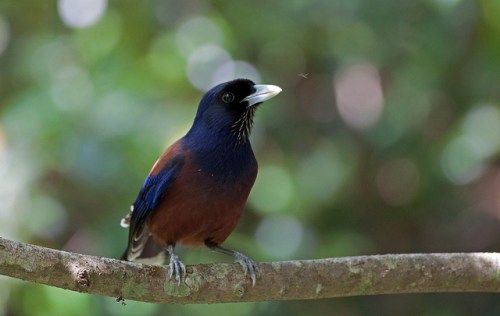
3. Lidth’s jay (Garrulus lidthi).  The only jay endemic to Japanese islands of Amami-oshima and Tokunoshima.  In the fall they can gather in groups as large as 100 birds where they feed mainly on acorns.  Habitat loss and predation have this bird listed as declining and vulnerable.

5637063965_f97ed950d3_z

Photo c/o Mark Curley

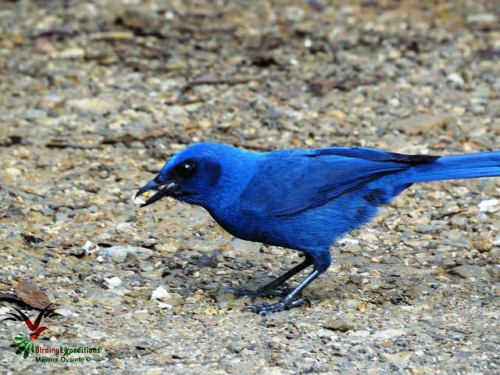
4. Unicolor jay (Aphelocoma unicolor).  Ranges intermittently from western Mexico to El Salvador and may have as many as 5 subspecies! They are considered of least concern, though populations are declining.

16443583870_bccb15d51e_z

Photo c/o Maynor Ovando

5. Green jay (Cyanocorax yncas). These jays can be found from southern Texas throughout central America and as far south as Peru.  Although they are a solitary breeder, they are very social in the non-breeding season.  Populations are increasing and they are considered of least concern.

5403740048_329060fb75_z

Photo c/o Wade Strickland

6. Spotted nutcracker (Nucifraga caryocatactes).  Native across Europe and Asia, theses birds are monogamous and generally hang out only with their mate.  Like the unicolor jay they are considered of least concern but trends point towards decline.

eurasian-nutcracker

Photo c/o Dave Irving 

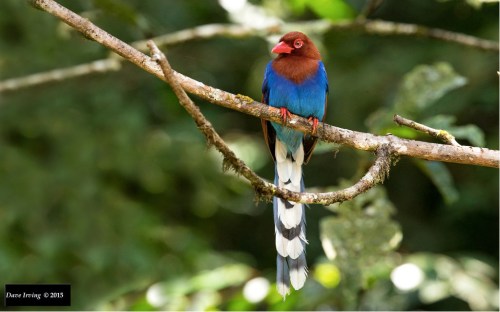
7. Ceylon magpie (aka Sri Lanka blue magpie; Urocissa ornata).  Another Sri Lankan endemic.  These birds can be seen in pairs or small flocks where they noisy work the tree canopy.  They are considered vulnerable and declining.

shr-lank-blue-magpie

Photo c/o Dave Irving 

8. Black-throated magpie jay (Calocitta colliei).  This bird is limited to northwest Mexico where it can be found in open woodlands chatting loudly and waiving their tails.  They are common and populations are stable.

black-throated-magpie-jay

Photo c/o Ahmed Eldaly

9. Turquoise jay (Cyanolyca turcosa).  Can be found in the humid forests of Ecuador, north Peru, and south Columbia.  Overall this species is poorly documented.  Right now it is considered a least concern species but it’s possible that’s due to lack of data.

untitled

Photo c/o Dave Irving

10. Rufous treepie (Dendrocitta vagabunda).  Found across India and southeast Asia.  These birds are generally wary of people but have been known to enter houses to look for geckos.  Would love to find one in my house!  Populations are stable and they are considered least concern.

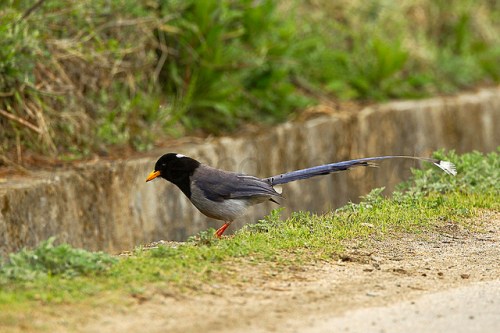
11.  Gold-billed magpie (Urocissa flavirostris).  Endemic to Taiwan, these birds keep their tails erect when on the ground, possibly to prevent the feathers from being damaged. Populations are stable and they are considered of least concern.

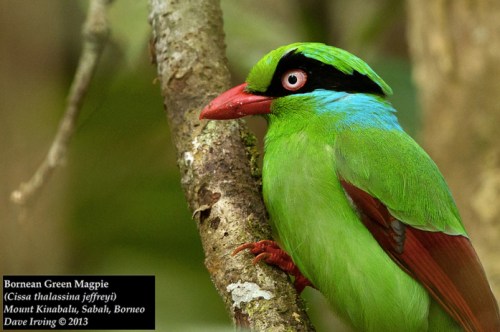
12. Bornean green magpie (Cissa jefferyi).  Found only in Indonesia and Malaysia, these birds look (and act) similarly to the common green magpie.  Relatively little is known about this species as they are hard to access high in the mountain forests.  It’s listed as of least concern.
neat

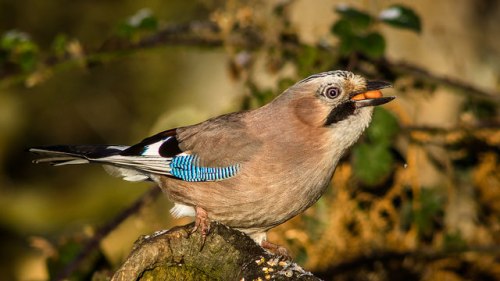
13. Eurasian jay (Garrulus glandarius) Found throughout Europe, Asia and Northern Africa.  This bird is common to most birders outside of North and South America.  Although these birds remain with their mates for extended periods they do not keep much contact throughout most of the year. Eurasian jays are in no danger of global population decline.

16285055912_facafd2544_z

Photo c/o Simon Forster

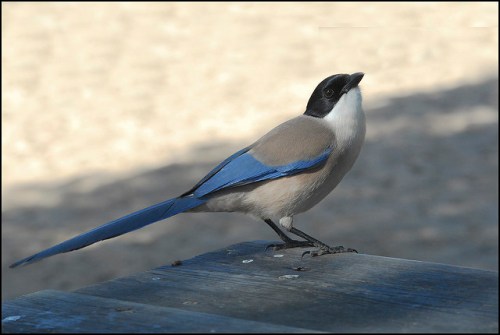
14. Azure-winged magpie (Cyanopica cyana).  Native across Asia and as far north as Mongolia and southern Siberia*. They form small family parties during the breeding season but amass into large groups during the nonbreeding season.  Populations are increasing and they are of least concern.

3316801943_fe8ba71c61_z

Photo c/o Crotach

15. Finally we have, literally, the beautiful jay (Cyanolyca pulchra). Found only in the Andes of Colombia and north Ecuador.  They can be found alone or in pairs but are not believed to interact in large social groups.  Little known about reproduction, social behavior or predators.  Populations are declining and near threatened.

beautiful-jay

Photo c/o Andrew Spencer

Did you pick out a favorite bird?  Let me know in the comments and I’ll try to dedicate a post to it!

Literature cited

*A previous version of this post incorrectly stated that the Azure-winged magpie spread as far west as Spain and Portugal.  Although this was true at the time the reference guide used to write the post was written, since 2002 these western birds have been splint into their own species called the Iberian magpie1.

1Fok KW, Wade CM, Parkin DT (2002). “Inferring the phylogeny of disjunct populations of the azure-winged magpie Cyanopica cyanus from mitochondrial control region sequences.”. Proc. Roy. Soc. B Biol. Sci. 269 (1501): 1671–1678.doi:10.1098/rspb.2002.2057.

All other species descriptions were based on: Madge, S. and Burn, H. 1999.  Crows and jays.  Princeton, New Jersey: Princeton University Press 1999.


12 Comments

Filed under Birding, Diversity

Why crows sunbathe

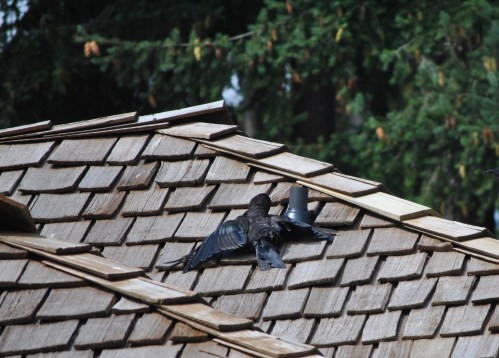
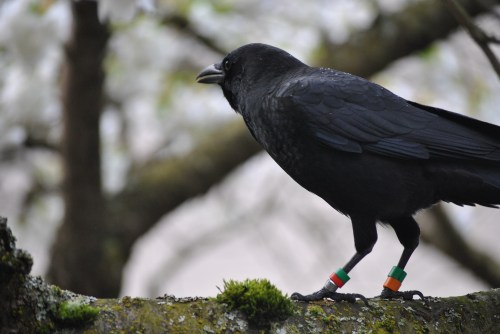
With its bill agape, I watch as the crow fans out awkwardly across the cedar shingles. Pressing the camera to my face I snap a couple photos, pleased to finally capture on film a moment I so often encounter in the field.  Unlike the crow, who’s keeping a watchful eye on the sky, I’m completely taken with my admittedly creepy behavior.  Until, of course, I hear the stiff “Excuse me, can I ask what you’re doing?” from the driver’s window as the homeowner’s minivan pulls up behind me.
DSC_4022

Fortunately for me, crow curiosity isn’t hard to come by and quickly the homeowner is as taken with watching this bird as I am.  “So, what is it doing up there?  I see them like this on my roof all the time” he asks after I give him my credentials.  It is a rather odd sight.  It’s nearly 90˚ and the crows is sitting in direct sunlight, mouth open, head cocked and wings outstretched like it’s injured.  Rather than escaping to shade, it’s joined by its fledgling and together they bake their bodies in the hot sun for a few minutes before gathering themselves and carrying on down to the grass to forage.

DSC_4013

Although the specifics can vary slightly, this general kind of posture can be observed across hundreds of bird species, even those you might not expect to have much opportunity for it like owls.  Often it’s used to dry wet feathers or warm up on a crisp winter morning but, given that they do it even when it modestly heat stresses them, it must have some other physiological benefits beside thermoregulation.

DSC_4024

There are a handful of other reasons that birds may sunbathe, but the big picture is that applying intense heat to feathers is critical to maintaining them in good condition.  For example, sunlight exposure has been shown to suppress feather degradation caused by the bacteria Bacillus licheniformis.1  Heat also helps control ectopatasites, possibly by making them more mobile and easier for birds to remove.2  Lastly, sunning may relieve discomfort caused by molting and promote vitamin synthesis.3

So, far from being a signal of distress or heat exhaustion, observing this posture in crows is like watching them ruffle around in a puddle. It’s a routine, and important part of their self care regimen. Plus, everyone knows a few minutes in the sun just plain feels nice.

FullSizeRender-4

Photo c/o Kathy Brown.  Find more of her great photos on Instagram @kat2brown

Literature cited

1. Saranathan, V., and Burtt, E.H. Jr. (2007).  Sunlight on feathers inhibits feather-degrading bacteria.  The Wilson Journal of Ornithology 119: 239-245

2. Blem, C.R., and Blem, L.B. (1993).  Do Swallows sunbathe to control ectoparasites? An experimental test.  The Condor 95: 728-730

3. Potter, E.F., and Hauser, D.C. (1974) Relationship of anting and sunbathing to molting in wild birds.  The Auk 91: 537-563

30 Comments

Filed under Crow behavior, Crow curiosities, Crow disease

Hate new things? So do corvids.

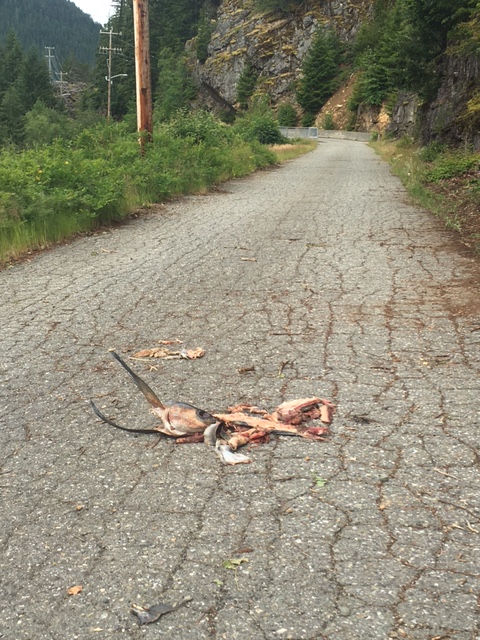
“There’s not a raven alive that wouldn’t eat that,” my colleague exclaimed as we finished spreading out the tuna.  It was a beautiful carcass.  Big, glistening head, bones and guts spread out over the asphalt, perfect bait to lure the ravens we were attempting to band.  As I wiped the blood off my shoes, I could hear the beating of raven wings above my head. Surely when we returned in a few hours it would be gone. Twenty four hours later it smelled considerably worse but was otherwise unchanged.  The ravens had inspected our offering and evidently rejected it. Where had we gone wrong?

IMG_4051

There are many possibilities, but a likely explanation is that our set-up was simply too unusual in its setting.  Perhaps if we had been working on the coast or at a dumpster, the carcass wouldn’t have seemed so out of place.  Here, however, high above a freshwater lake our bait was probably not something these birds had ever encountered.  Seeing such a strange carcass likely drove our ravens off to a more conventional and trusted source of food.

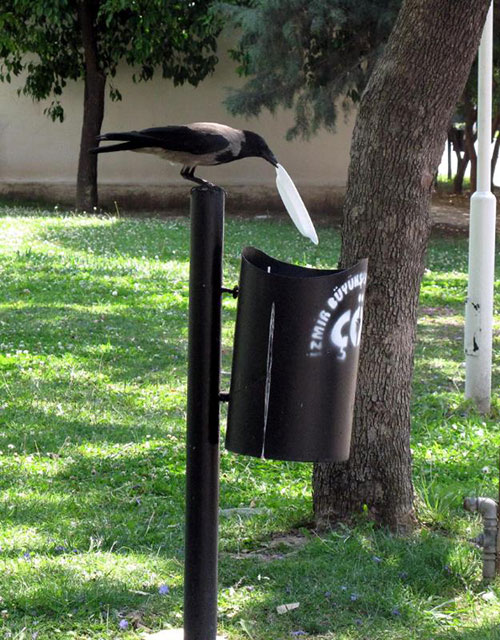
Contrast this with the behavior of an urban crow, and this level of cautiousness on behalf of our forest ravens might seem strange.  For example, watching a crow root seemingly recklessly through your garbage might give the impression that they worry little about new things.  In fact, corvids are notoriously neophobic1 (fearful of new objects) in contrast to many other bird species.  This may seem at odds with an urban corvid’s lifestyle. After all, the urban environment is constantly presenting them with new objects, many of which contain edible food.  An unnecessary fear could therefore be a costly inhibition to exploiting worthy food sources.  On the other hand, too little indiscretion could expose them to predators, poisons or other dangers.   So how do urban crows deal with this paradox and how might they compare with their rural counterparts?

fft22_mf4893230

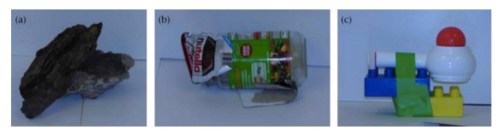
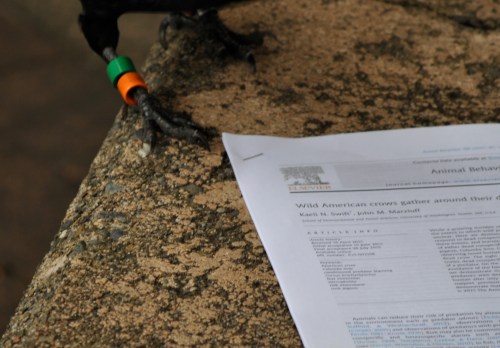
A study by Alison Greggor et al.2, recently published in Animal Behaviour set out to address this question.  To do so, they presented 5 corvid species (including jays, rooks, crows, magpies and jackdaws) and 7 urban dwelling non-corvids species (including blackbirds, finches, tits, robins, pigeons, etc.) in both urban and rural settings  with a novel object placed near a familiar food source.  The novel object was either a) natural objects, b) familiar pieces of litter or c) strange new object made to look unlike any animal or food packaging. Neophobia was measured by changes in latency to the food after the object was placed near it.

Study objects.jpg

They found that, in contrast to non-corvid species, corvids were more wary to approach food near any of the three novel objects, adding support to their neophobic reputation. Interestingly, there was no difference between urban and rural corvid’s willingness to approach the completely new object (object c).  Urban crows were however, faster to approach food near familiar litter (object b) than their rural counterparts.  They interpret these findings to suggest that urban living fosters context specific, rather than generalized reductions in neophobia.  This balance may best keep corvids out of trouble with respect to entirely new things while still allowing them to exploit items that look similar to other known anthropogenic food sources.

I guess next time we’ll stick with trail mix and old sandwiches to entice our wary ravens!

Literature cited

  1. R. Greenberg, C. Mettke-Hofmann (2001) Ecological aspects of neophobia and neophilia in birds.  Current Ornithology 16: 119–178
  2. Greggor, A., Clayton, N., Fulford, A., and Thorton, A. (2016).  Street smart: faster approach toward litter in urban areas by highly neophobic corvids and less fearful birds.  Animal Behaviour 117: 123-133.  doi:10.1016/j.anbehav.2016.03.029

4 Comments

Filed under Uncategorized

Goodbye, GO

Pinching a peanut shell between my fingers, I pulled my hand out of my pocket and laid the nut on the concrete between us.  GO cocked her head, catching the light on her left cheek and reflecting the deep blues that hid among her inky black feathers.  “Please don’t die before I graduate,” I whispered.  GO stared back at me a moment before galloping forward for her treat and making off.

DSC_2853.jpg

Try as I might, I couldn’t will her to understand my foreign tongue anymore than I could will her body to keep working indefinitely.  Today it finally stopped.  Today I say goodbye to my companion.

For those that follow my blog regularly, you’re probably familiar with GO.  Even if you’ve never seen mentions of her, you see her face every time you visit my site; she’s the bird staring back at you from my site’s banner. I first met GO while searching for banded birds to use as subjects in my early funeral experiments.  Her name actually comes from her band combo: Green/Red/Metal x Green/Orange.

DSC_2880

The location of her and her mate’s territory was ideal, and soon I was regularly feeding her as apart of the initial conditioning phase of the experiment.  Like most campus birds, she readily took to feeding and soon enough I could hear the soft rattling of her bands as soon as I approached the food site each day.  After the funeral event though, GO and her mate aggressively avoided the food and I wrapped up the experiment assuming that, like many of my other data points, she would be anxious to never have to see me or my ‘scary’ accomplice ever again.  But a few months later, while waiting for the bus I heard the familiar rattle of her bands and turned to see her looking expectantly down at me from a branch.  I offered her a peanut and she took it without pause.  I never went to the bus stop without a few peanuts in my pocket after that.  It’s been four years since then.

File_000

During the darkest days of writing my last publication I might have visited her 2 or 3 times a day, desperate for someone to shake me out of my writer’s block or my frustration with myself. Hearing her wing beats was like taking a Xanax; it was calming and reminded me why I was working 15 hours a day juggling field work and authorship duties.  I adored her, I wanted to know and understand everything I could about her, and I wanted to be part of the community that was using science to enhance people’s appreciation for corvids.  She wanted peanuts.  I don’t think her side of things was any more complicated than that but that’s never cheapened the relationship for me.   She wasn’t a pet or a human friend dressed in corvid clothing.  She was a wild crow, and it was wondering about how she existed in that wild, urban space that most inspired my work.  Still, I had always hoped GO would somehow be spared from the one thing I wonder about the most: death.

DSC_1758

For all the advances our team has made about the function of crow funerals we know almost nothing about what the birds are really thinking.  Like most other social animals, they do a great variety of things which makes getting at what they are thinking or feeling very difficult.  GO and her mate had presumably been together many years.  It’s hard for me to imagine this is lost on him, but I can’t say for sure.  All I know with certainty is how I feel about her loss and I know the thought of silence in place of the soft rattle of her bands or the whoosh of her wing beats as I approach our spot makes my heart ache.

DSC_2857.jpg

GO was at least 16 when she died. In that time she successfully raised many broods, contributed to two scientific publications, and undoubtedly befriended more people than just me. She embodied everything we love about crows: their deft skill at thriving among us, their bold demand of our time and attention, and the way they engender our curiosity and admiration.  She was my data, inspiration, stress relief, and eager companion.  I will never forget what this bird meant to me.  Miss you already my lovely ladybird.

***

FullSizeRender (3).jpg


26 Comments

Filed under Uncategorized

Crow curiosities: crows without tails

For the most part, crows come in the same general size, shape and color, but every once in a while individuals will deviate from this template in eye catching ways. These deviations can manifest as missing or elongated beaks, color abnormalities such as white plumage, or jarring metamorphoses into rudderless, flying orbs. 

DSC_0208

Tailless crows are fairly uncommon; in a typical year I’ll maybe spot a couple afflicted individuals. Although feather loss and replacement is a normal part of a crow’s annual cycle, crows don’t shed their tail feathers simultaneously so we can’t blame molting season for this odd appearance. Instead, a tailless crows most often indicates that the bird recently escaped a predator or other kind of threat. 

Similar to some lizards, many bird species can drop their tails defensively as a last resort to avoid being injured or killed. In fact, tail feathers require less force to detach in contrast to other feathers on a bird’s body. In addition, the force required to remove tail feathers decreases with how vulnerable a species is to predation.1 Tail feathers can also be broken, rather than completely lost. Although that might sound painful, unlike a bird’s beak which is full of nerve endings, mature feathers are dead structures like hair or fingernails. While a bird surely feels and avoids the sensation, it’s not painful. 

Tails are crucial to most birds not only for their visual appeal but also because they allow birds to steer and maneuver in flight. Without one a crow can still fly and land, but they’re not nearly as agile in the air and you’ll notice their take offs and landings are a bit awkward. Fortunately, the tail will eventually grow back though just how quickly is contingent on what happened to the feathers themselves. If the feathers were pulled out, so long as the follicles weren’t damaged they will begin to regrow immediately. If, on the other hand, the feathers were broken rather than pulled out, the crow will need to wait until its annual summer molt to replace them. 

DSC_0212

For crows fortunate enough to be brought into a wildlife care facilities, there’s also a secret second option to correcting a broken flight feather: imping. Although little known outside of rehab or falconry circles, imping is an age-old technique dating back to at least the 1240’s when it was mentioned in The Art of Falconry by the Holy Roman Emperor, Frederick II. The procedure involves trimming the broken feather to about one inch above the skin and then inserting a thin piece of wire, fiberglass, or wood (called the imping needle) into the empty feather shaft. A matching donor feather is then affixed to the exposed portion of the imping needle. Picture sheathing a double sided samurai sword, where the sword is the imping needing and the sheaths are the imbedded, trimmed feather shaft and the donor feather respectively. Historically, rust was used as a bonding agent but today vet safe epoxies are the standard adhesive. 

So the next time you see a tailless crow go ahead and give it a few extra treats. It’s not in any pain, but it’s been through something fierce. And to quite literally add insult to injury, it looks absolutely ridiculous.

Literature cited

  1. Moller, A.P., Nielsen, J.T., Erritzoe, J.  (2006).  Losing the last feather: feather loss as an antipredator adaptation in birds.  Behavioral Ecology 17: 1046-1056

28 Comments

Filed under Uncategorized

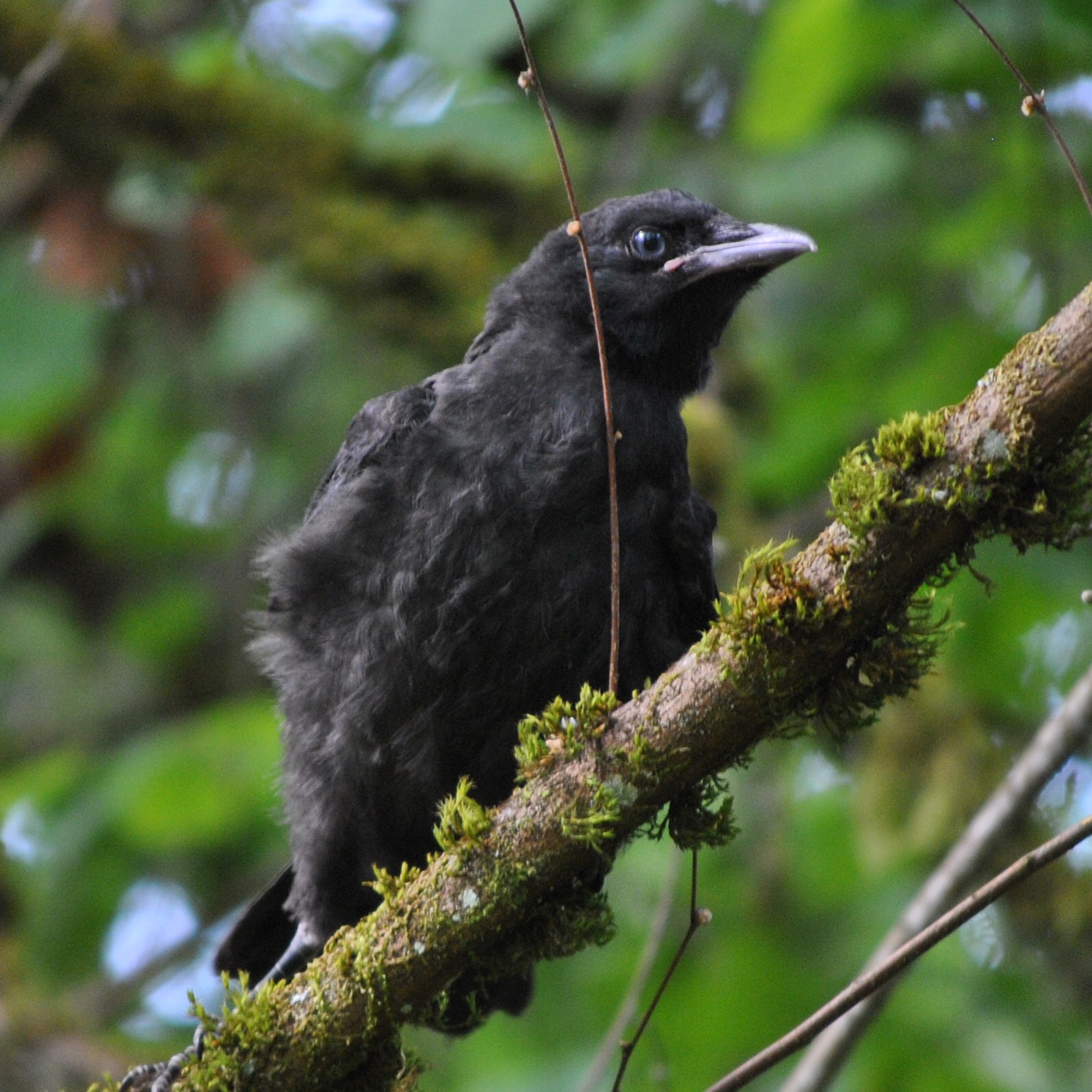
5 reasons to leave baby crows alone 

Those blue eyes, that awkward gate, their seemingly constant precariousness, they’re all calling to you to intervene. Here are 5 reasons second guessing that instinct might be in the bird’s best interest.

File_006

1) The vast majority don’t need your help. It’s totally normal for baby crows to be on the ground and flightless as long as they’re covered with feathers and appear otherwise alert and mobile. Even nestling crows are usually on the ground on purpose. Not because they are ready, but because their parents have intentionally rejected them for one reason or another. They will die and that’s ok. Part of coexisting with wildlife is giving them the agency to be wild. The story is different of course for species where the survival of individuals may mean the difference between population survival and extinction, especially because these situation are almost always driven by human activity.

2) It’s hard to tell when they’re stressed.  Recently, I saw a video on Facebook of a Steller’s jay fledgling in the care of a very well intentioned person.  She was giving it gentle strokes with her fingertips, each touch resulting in the young bird turning its head towards its back and opening its mouth.  The comment thread filled with ooo’s and awww’s and general comments of encouragement or gratitude for her actions.  For me it was like watching an alien attempt to care for a human child, the child recoiling and screaming while its caretakers congratulated themselves on how kind they were being.  Having handled baby corvids before, I know what that kind of posturing means, it means “I’m scared and stressed.”  To an untrained eye though, it may not look much different than the kind of gaping that means ‘feed me.’  Being stressed to death is a reality for young, or even adult animals, so any handling best be done by experts whenever possible.

DSC_3477

3) It’s illegal to rehab crows without a license. You can provide temporary care until you can get them to a licensed facility, but do not attempt to rehab them on your own.  Mistakes like the one I just described are a prime example of why the law seeks to protect animals by ensuring they are only raised or rehabilitated by experts.  For more information on how to handle them until you can get them to a facility visit my previous post.

4) Imprinted crows do not survive well in the wild.  Even if baby crows are receptive to being treated like a pet, doing so is both a legal violation and I would argue a violation of their right to be a wild animal with a healthy fear of people.  Of all my daydreams, at the top of the list is having a wild but imprinted crow that follows me around.  I even have a name picked out.  This fantasy of mine will forever remain just that, however, because it’s too dangerous to allow a crow to become that comfortable with people.  All it would take is one cranky neighbor with a pellet gun and it would be over.  Not to mention being imprinted on people, instead of crows, denies them access to skills and relationships with other crows that will help them survive into adulthood. 

5) It may do more harm than good.  The conventional wisdom suggests “well, worse case scenario is I try and rehab this baby crow and it dies, which it would have done anyway so really, nothing’s been lost.”  The more we study death in social animals the more we are beginning to realize there may be a cost to prematurely removing ailing or dead animals from their groupmates.  Being able to interact with their dead may serve an important role for social animals, and denying them this opportunity may have serious implications in their ability to process that death.  So be thoughtful about how slim the chance of survival is.  It might be that the kindest, most responsible action is no action at all.

27 Comments

Filed under Corvid health, Crow behavior, Crow curiosities, Crow life history, Crows and humans, Uncategorized