Author Archives: corvidresearch

5 corvid facts that will surprise you

With all the online crow trivia listicles that are already floating around it can be hard to come up with tidbits that are both factual and interesting.   I was up the the challenge though and am hoping I found at least one thing every reader didn’t know.  Let me know how I did in the comments section!

 1.   Avocados are toxic to crows.1

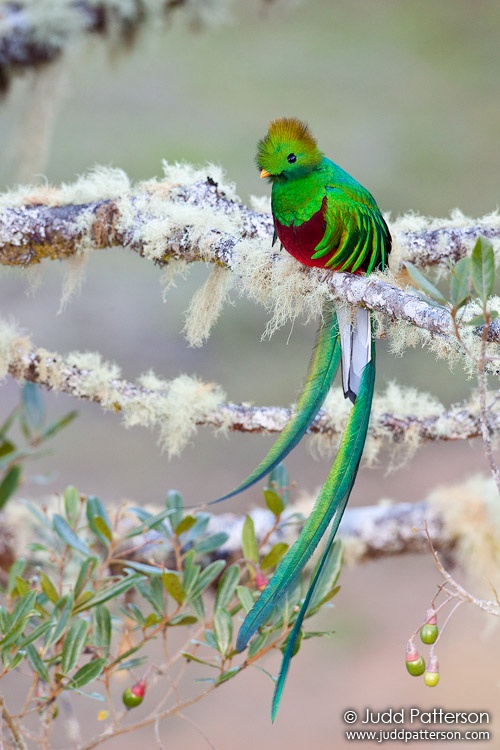
Well, really avocados are toxic to most birds, and many other kinds of domestic animals.  Avocados contain a molecule called persin, which the plant produces as a fungicide.  In birds, it can cause damage to the heart tissues, difficulty breathing, lethargy or even death.  The resplendent quetzal is a rare exception in that it can not only tolerate avocados, but is considered a crucial seed distributor of the plant.  So next time you’re considering sharing your Chipotle leftovers, make sure you didn’t order extra guac.
2.   Scavenging accounts for very little of a crow’s diet2

Scavenging, meaning the consumption of dead plant or animals material, is a crucial part of our ecosystem that is commonly the recipient of unfair prejudice. American crows often get thrown in with this lot, and while there wouldn’t be anything gross or insulting about this if it were true, it simply isn’t.  Whether you’re in the city or the wildlands, scavenging and active predation account for only a minority of a crow’s diet.  The bulk of their daily meal is made of human refuse, invertebrates and worms.  In the cities, about 85% of their diet is human refuse, whereas in exurban and wildland areas human refuse and invertebrates account for roughly equal proportions of their daily food (about 35% each).
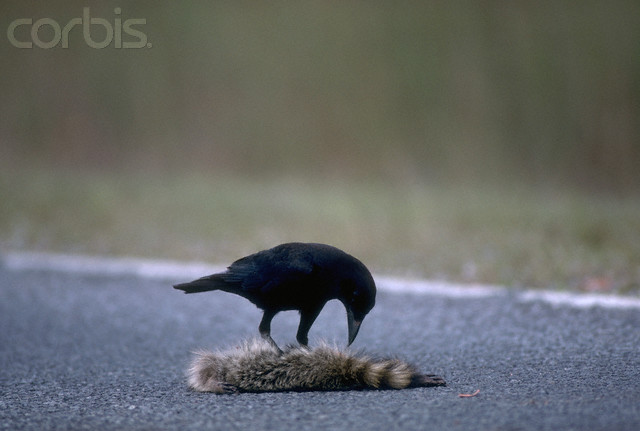
Photo: W. Perry Conway/CORBIS

This scene is not as common as many people think! Photo: W. Perry Conway/CORBIS

3.  There’s only three places with no native corvids3

New Zealand, the southern part of South America and the poles (ok so I guess technically 4 if you want to be a stickler about it).  Why this is remains largely mysterious, but it probably has to do with where and how these birds radiated out from their ancestral origins.

Global corvid distribution. They'll be our avian overlords soon enough I'm sure.

Global corvid distribution. They’ll be our avian overlords soon enough I’m sure.

4.  They have some of the best spatial memory of any animal4

Every year Clark’s nutcrackers and pinyon jays store tens of thousands of seeds to sustain them through the lean winter months.  If they fail to retrieve enough they’ll perish, so a good spatial memory can literally be the difference between life and death.  To deal with this mental load, these two species (and other food caching birds) have a huge hippocampus relative to the rest of their brain.  With the spatial memory part of their brain super charged they’re able to retrieve 20,000-30,000 seeds with 90% accuracy or better.  I can’t usually retrieve my cell phone what that kind of accuracy so I certainly tip my hat to them!

Photo: Minnesota Birder

Clark’s nutcracker.  Photo: Minnesota Birder

5.  They account for the largest songbird in the world.5

The common raven is marginally the largest songbird of the world with a 4.9ft wing span and weighing in at up to 4.5lbs.   An extremely close second is the thick-billed raven, which is native Ethiopia and has limited range in some surrounding countries.  In fact, the two are so close in size that there are conflicting reports of which is bigger depending which publication you look at3,5.  Scientists finally resolved this dispute, however, and came to the consensus that the common raven is larger for the 2009 publication of the Handbook of the Birds of the World.*
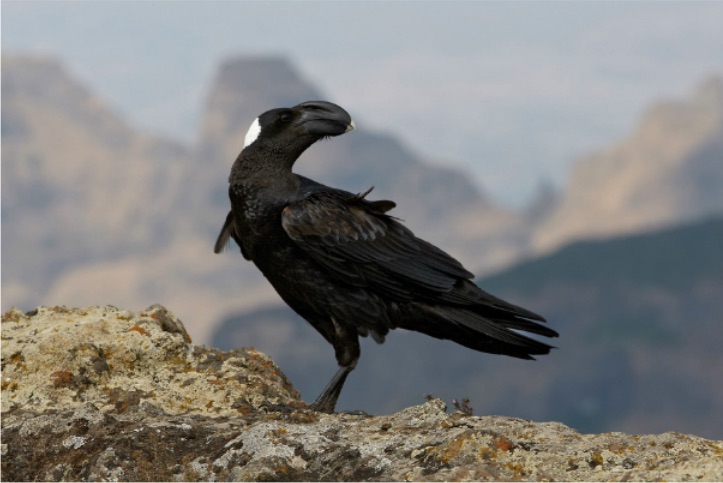
Photo: Ignacio Yufera

Thick billed raven.  Photo: Ignacio Yufera

*This section has been updated from a pervious version which incorrectly stated that the thick-billed raven was larger.

Literature cited

  1.  http://www.aspca.org/pet-care/animal-poison-control/toxic-and-non-toxic-plants/avocado
  2. Marzluff, J.M., McGowen, K.J., Roarke, D. and Knight, R.L.  2001.  Causes and consequences of expanding American crow populations.  in Avian ecology and conservation in an urbanizing world (J.M. Marzluff, R. Bowmanm and R Donelly, eds).  Kluwer academic Press, norwell, Ma.
  3. Madge, S. and Burn, H. 1999.  Crows and jays.  Princeton, New Jersey: Princeton University Press 1999.
  4. Marzluff, J.M. and Angell, T.  2005.  In the company of crows and ravens.  Yale University Press.
  5. dos Anjos, L., Debus, S., Madge, S., & Marzluff, J. (2009). Family Corvidae (crows). In J. del Hoyo, A. Elliot, & D. A. Christie (Eds.), Handbook of the birds of the world (Vol. 14, pp. 494e641). Barcelona, Spain: Lynx Edicions.
8 Comments

Filed under Corvid trivia, Just for fun

The science of crows and death

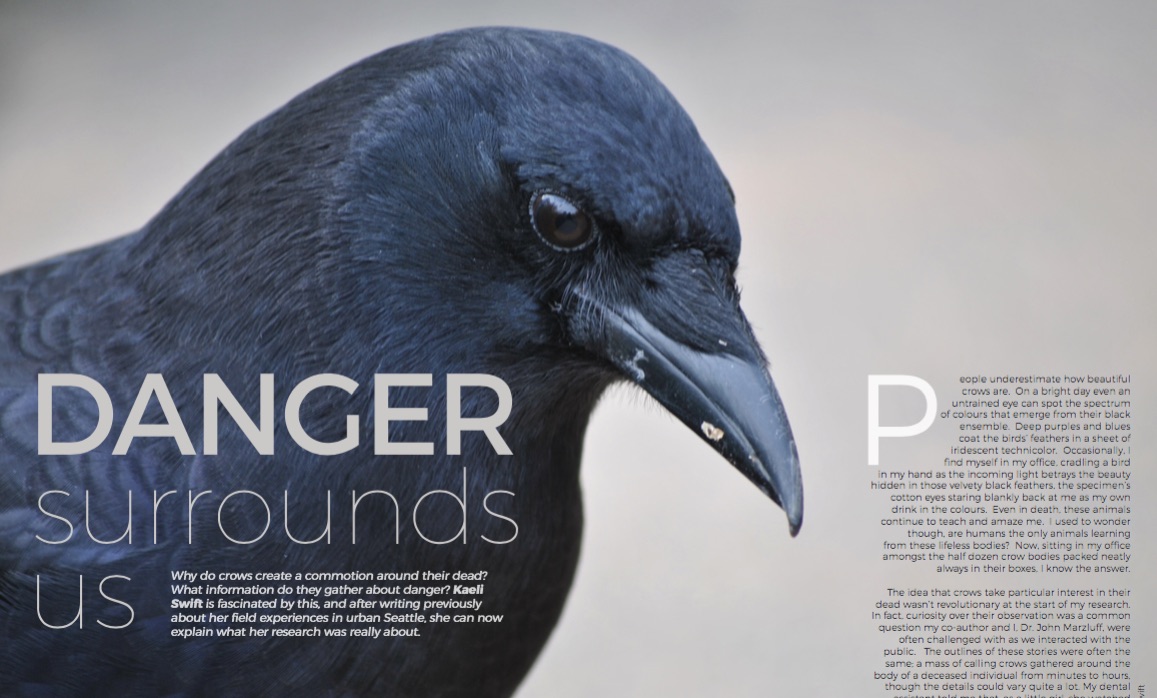
Curious to read my popular science take on our recent publication on how crows behave around their dead?  Check out my latest article for Biosphere.  Then check out all the other awesome authors and contributors to my favorite popular science publication.  You won’t regret it.  (And congrats to GO for making the article cover!  She’s such a gorgeous bird…)

Read the full article here

Biosphere

6 Comments

Filed under Crow behavior, Kaeli in the media, New Research, women in science

Crowtography

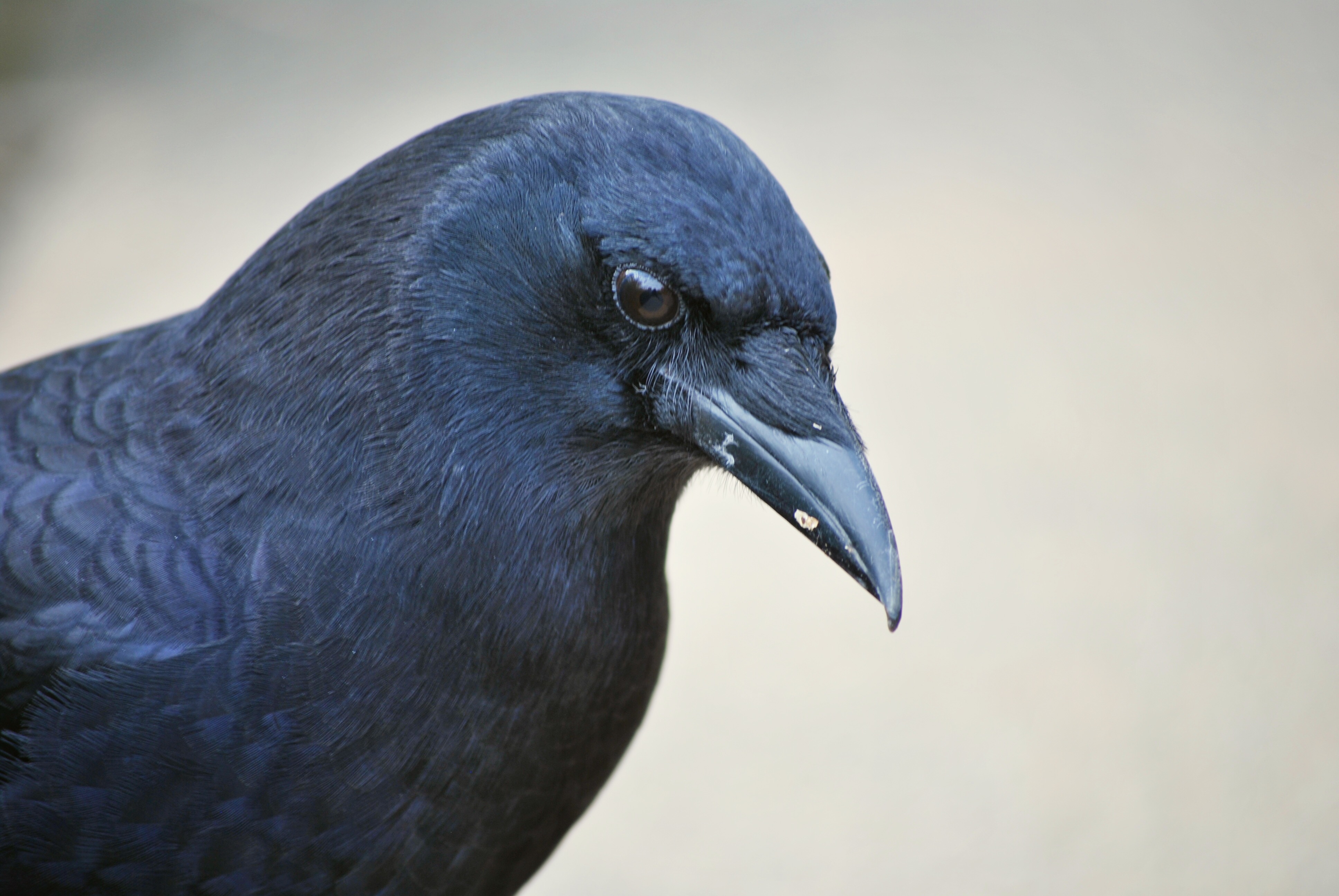
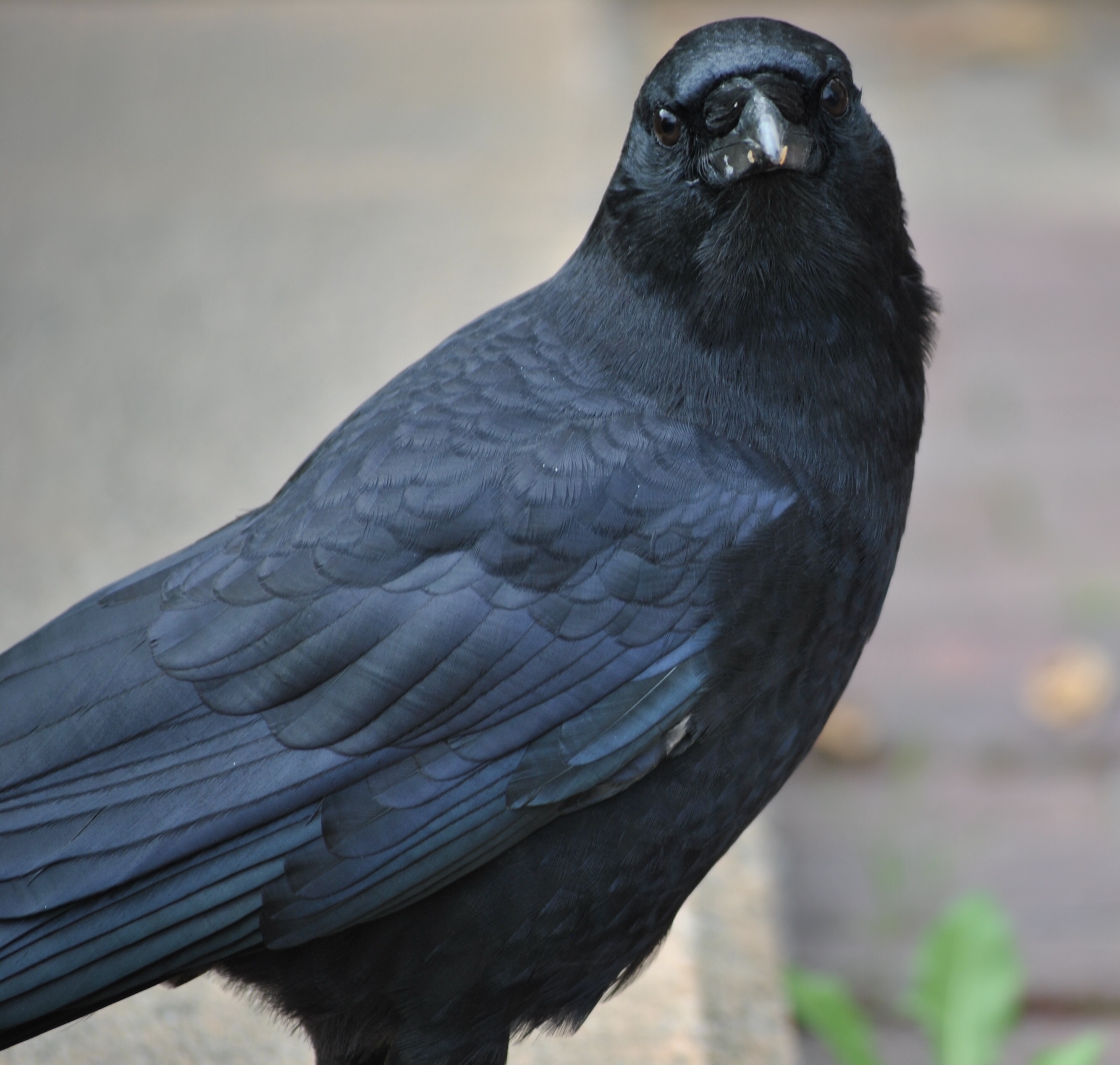
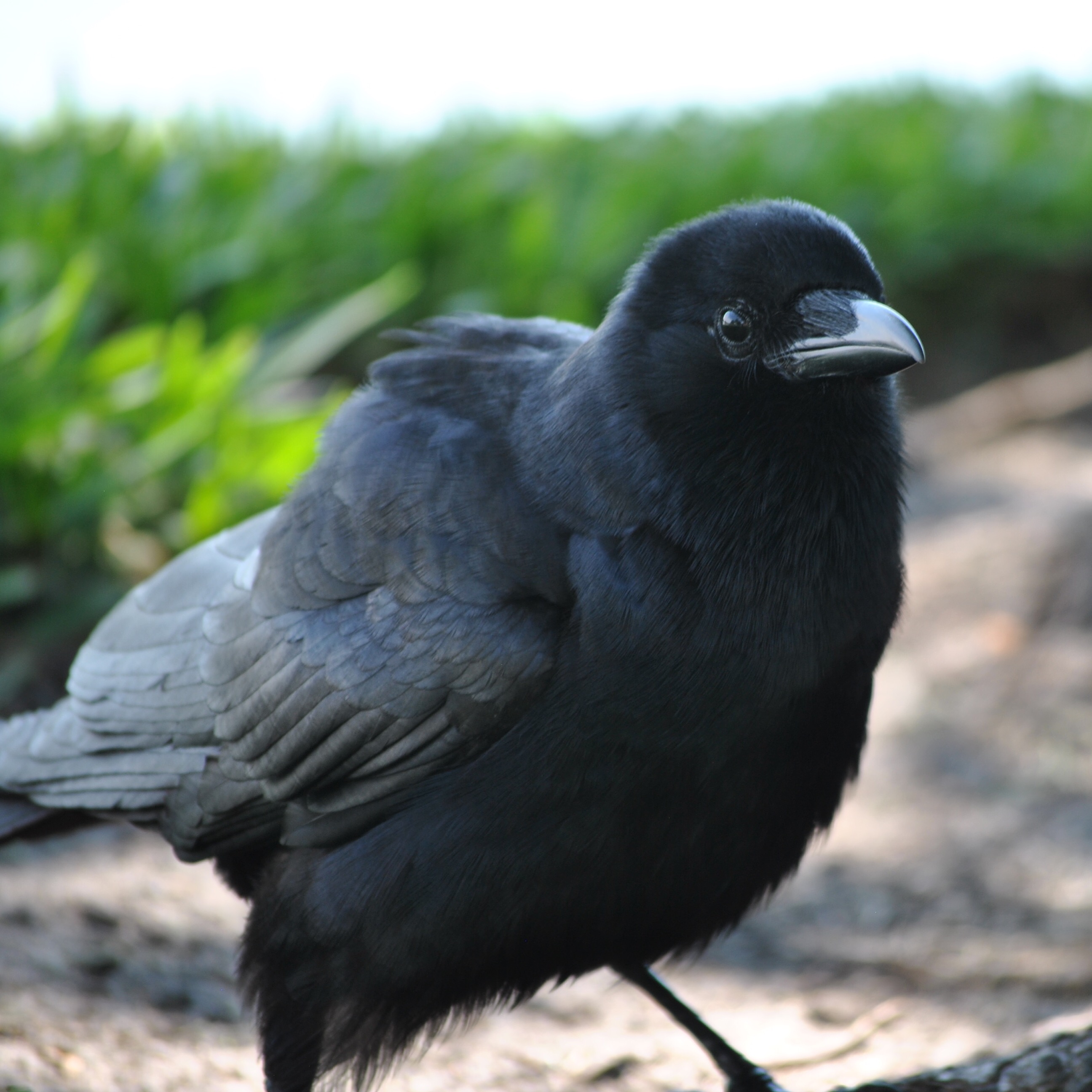
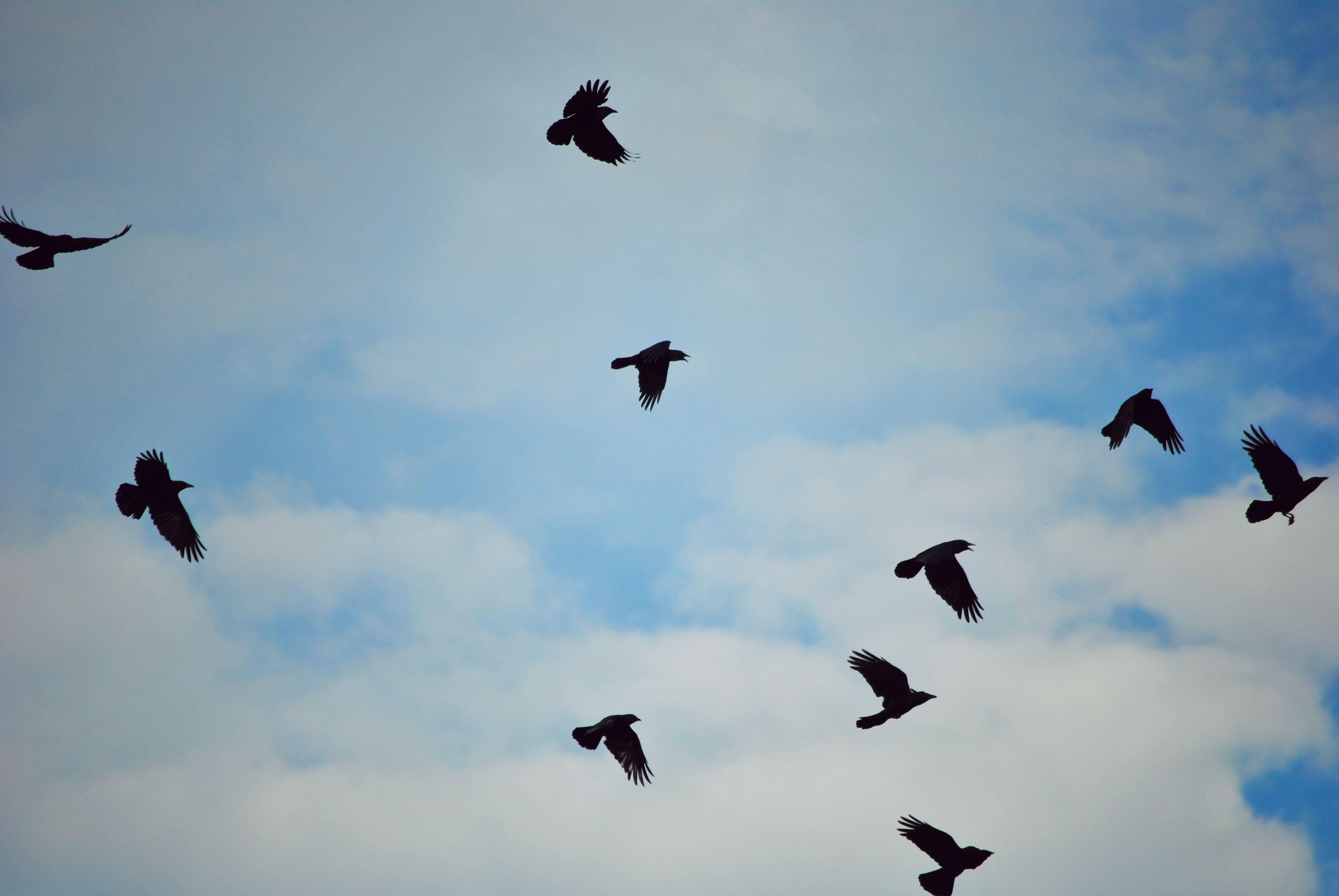
People underestimate how beautiful corvids are.  In my field experiments, I’m so often wrapped up in taking the data with as much efficiency and focus as possible, that it makes it hard to step back and really take a bird in.  So it’s in the quiet moments outside of my fieldwork that I make time to really see these animals.  To do nothing more than watch as the sun brings out those rich colors hiding among the black pigments and marvel at how spectacular they really are.  On some of these occasions I make an effort to bring my Nikon with me.  Here are some of my favorite photos from those outings which I hope you delight in as much as I do.  File_001DSC_1648  File_000 File_002  File_008 File_004 File_003File_006 File_007 File_009

5 Comments

Filed under Just for fun

Science in Seattle

Biosphere

Looking at the hard copy of my recent publication, I can’t hep but marvel at how clean it looks and feels.  Each sentence is as crisp as the months long editorial process could make it and each section offers a critical addition to the simple narrative: Crows gather around their dead to learn about danger.  As any of us in field biology know, however, the austere, concise nature of our publications make every effort not to betray the dirty, messy, sometimes chaotic process that defines the research experience.

Equipment breaks, ideas don’t work, field sites get destroyed, animals refuse to cooperate, money runs out, these are all par for the course for any field biologist, and any “field” is going to come with its own hazards.  My field, of course, was the city of Seattle.  By now, most readers are familiar with the look of our experimental set-up; a masked person with a “UW research” sign holding a dead crow.  We could have made the sign the size of a billboard and it still couldn’t have eliminated the sense of shock those latex masks instilled in people.  So you can maybe imagine how conducting those experiments in the heart of downtown, in people’s parks and neighborhoods, went over.  But you don’t have to.

biosphere 2A few months ago an excellent new popular science publication, Biosphere Magazine, approached me about doing a story detailing my experience as an urban field biologist.  Today, with their permission, I’m posting the story in its entirety.   I hope it gives you some insight into the research process, but I also hope it encourages you to check out this delightful new publication.  I have no doubt it will feed your hunger for science.  Enjoy!

Read the full article


4 Comments

Filed under Uncategorized

Why crows gather around their dead

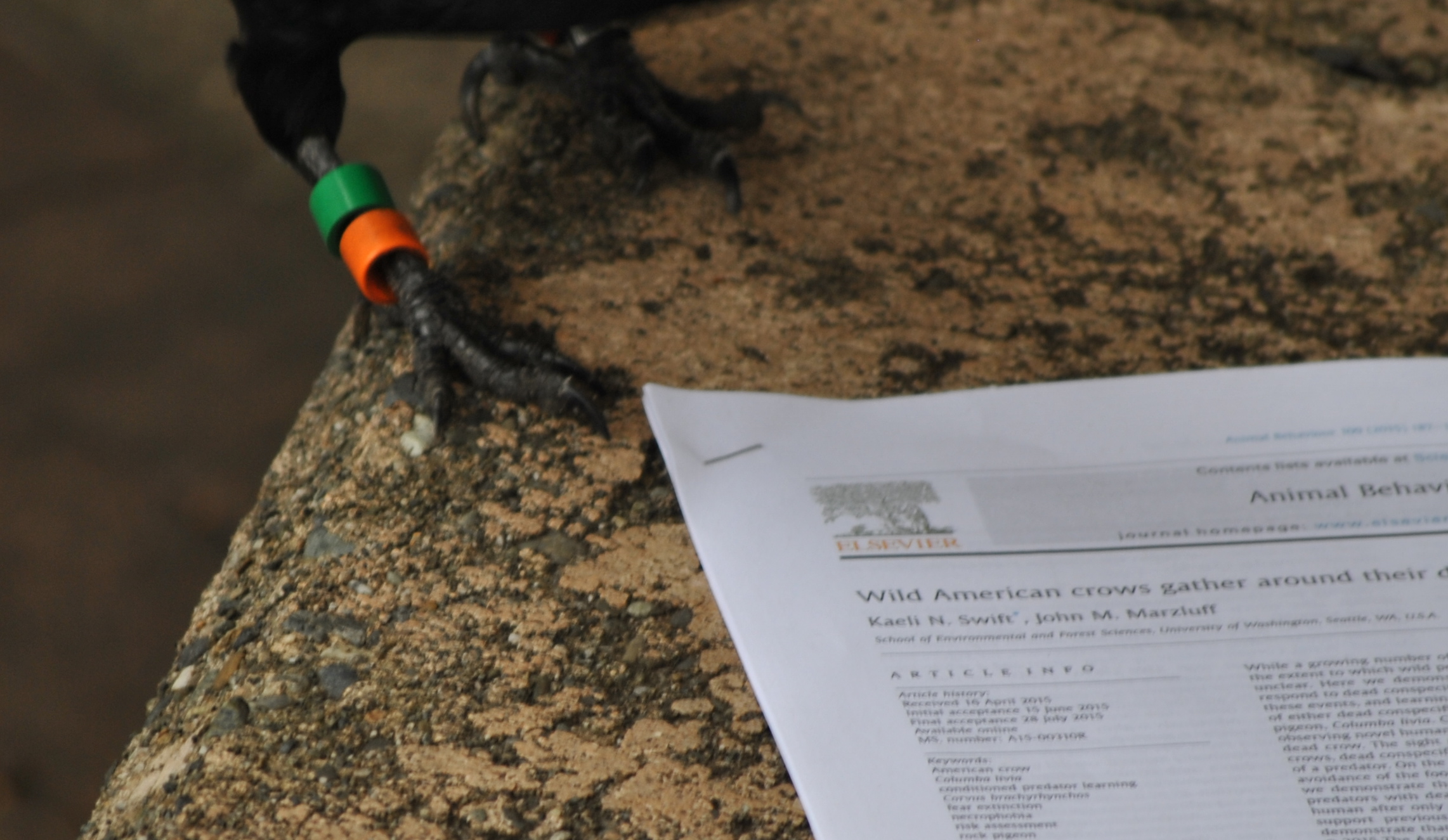
As long as I’ve been interested in crows, I’ve wondered the same thing that many other people who study or simply enjoy crows have wondered; why do they gather so predictably around their dead?  It’s with great pleasure that this week not only do I get to address this question, but I get to do so with my own research, which was recently published in Animal Behaviour.  Banished are the days of cagey descriptions of my work and results, the peer review process has finally green-lighted full disclosure.

Anecdotes of crows’ attraction to their dead have long been documented and accounts usually go something like this: a dead crow is observed laying in the grass and other crows, sometimes an individual, sometimes a large group, are perched nearby silently or very raucously.  People have reported that sometimes these onlookers stay for minutes, sometimes days.  So what are we to make of this?  Well it could be explained a number of ways:

  • Maybe it’s purely coincidental, the crows have no idea there’s a dead crow on the ground.  Anyone who has observed this event in action, of course, will know that this explanation seems unlikely, but from a scientific perspective, we’ve also been able to invalidate it through previous experiments on corvids1,2,3.  So we can pretty safely ex-nay that explanation.
  • Maybe they gather because it’s a foraging opportunity.  Well, as far as we know crows rarely cannibalize each other, and even if they did, they probably wouldn’t be simultaneously scolding.  So this also seems like an unworthy hypothesis.
  • Maybe they’re experiencing a deep sense of mourning and have come together to grieve and pay their respects.  Having spent as much time around crows as I have, I hold little doubt that they have emotional intelligence.  But testing this scientifically remains problematic because there’s still no way we can truly know what’s happening on an emotional level in an animal’s head.  We’ve tried4, using noninvasive brain imagining (invasive meaning lethal or surgical), but this method is imperfect and while it can tell us the parts of the brain used, it still doesn’t tell us what they’re thinking or feeling.  So for now, the question of crows and grief remains open (scientifically anyway).
  • Which brings us to danger learning.  If I were to find a dead person in the woods I might be feeling sad but I’d also be alarmed and likely looking for the cause of death to make sure I’m not next.   Perhaps the crows are doing the same thing; looking for the source of danger and remembering key elements of the experience that will help keep them safe in the future.

Previous experiments in jays1, crows2 and ravens3, suggested that danger learning is likely a key motivator behind these gatherings since corvid effigies can be an effective deterrent, a fact that is old hat to many farmers.   So I wanted to look at this question with a little more nuance and ask, 1) whether crows would avoid food in areas previously associated with crow death, 2) could they learn new predators (i.e specific people) they see near dead crows, 3) for how long will they remember these people and, 4) how do these same responses compare if we substitute a “dead” crow for a “live” familiar predator.

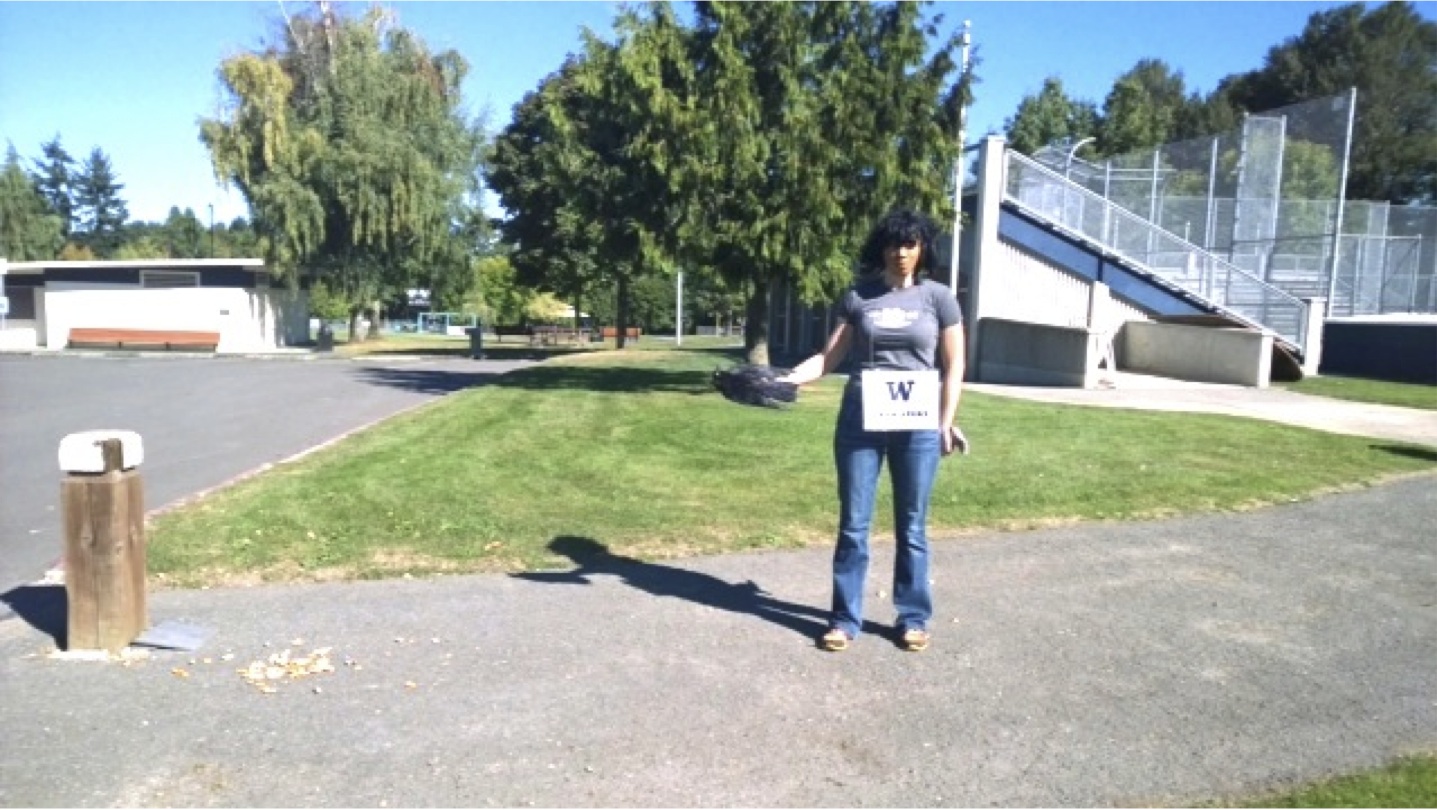
A volunteer demonstrates the one of the experimental set-ups. A masked person holds a “dead” crow. In the following days we looked for changes in latency to approach the food. A week later this same masked person would reappear and we would see how the birds responded to them.

To do this I would locate a territorial pair and feed them for 3 days.  This would give me a baseline of their feeding behavior and allow me to say, “on average, crows take x minutes to arrive at a fresh food pile.”  Then I would introduce one of my three dangerous scenarios: a masked person holding a dead crow, a masked person standing near perched hawk, and a masked person standing near a perched hawk with a dead crow.  In all these cases the birds were taxidermy-prepared mounts.  In a handful of cases (4 to be exact) the birds simply observed the scene in silence and left.  In most other cases however, the response was pretty stereotyped; the discovering bird (usually the territory holder) would scold and typically attract 5-11 additional birds.  The mob would stick around for 10-20 minutes, scolding loudly and gradually growing more silent and dispersing before all but the territory holders were left.  Exposure to the dangerous stimuli would only last 30min, after which they were removed.  I found that crows responded most strongly when they saw a person and a hawk with a dead crow as opposed to a person holding a dead crow or a person near a hawk.  This tells us that context matters, and crows are most sensitive to dead crows when they’re with familiar predators.

Following this event, for the next three days I would continue feeding the birds.  By doing this I was able to test if exposure to the dead crow, hawk, or hawk with dead crow would make them act differently in the area, despite the presence of their favorite food.  Spoiler alert, it did!  While the crows usually approached the food it would take about 15-30min longer than it used to.  This suggests that dead crows are used, in part, to assess that an area is dangerous, and that this information is retained and used for future decisions about spatial use.

The last question was if and for how long they would remember that masked person associated with the dangerous event.  Provided the birds had scolded them in the first place, a week after the main experiment wrapped up, I would reintroduce the dangerous person.  I found that, of birds that were administered this test (N=84) the majority of them remembered and scolded the person.   Even after 6 week, 38% of the 65 pairs eligible for all 6 tests continued to respond to the ‘dangerous’ person.  It’s incredibly cool to me that crows cannot only learn new predators based on their proximity to dead crows but to other predators and remember them for so long.  It’s really amazing.  Crows are likely learning and remembering an incredible number of humans faces over their lifetime.

So why do crows gather around their dead, according to the best available science?  At least in part, it’s to learn about dangerous places and new predators.  Could there be other, more emotionally intelligent reasons?  Sure.  Scientists simply haven’t devised a way to address that yet, but we’re trying to think of ways to do so that are minimally invasive.  Until then, I know there are many folks out there who need no scientific evidence to believe that that’s precisely what’s going on and I see no reason studies like this should disabuse them of that belief.  Studies of animal emotions are the next frontier and I couldn’t be more excited to watch crows continue to blow people away.

To read the scientific article in full, which covers the many additional elements of this experiment, click here.

Thank you to GO who was one of my original test subjects and who continues to be a regular source of friendship and delight.

Literature cited

  1. Iglesias, T.L., McElreath, R., & Patricelli. G.L. (2012) Western scrub-jay funerals: cacophonous aggregations in response to dead conspecifics. Animal Behaviour 84: 1103-1111.
  2. Avery M.L., Tillman E.A., & Humphrey J.S. (2008) Effigies for dispersing urban crow roosts. Proceedings of the 23rd Vertebrate Pest Conference. Davis, CA: University of California, Davis: 84–87
  3. Peterson, S. & Colwell, M. (2014) Experimental evidence that effigies reduce corvid occurrence. Northwest Naturalist 95: 103-112.
  4. Cross, D.J., Marzluff, J.M., Palmquist, I., Minoshima, S., Shimizu, T., & Miyaoka, R. (2013) Distinct neural circuits underlie assessment of a diversity of natural dangers by American crows. Proceedings of the Royal Society B. 280: 20131046

28 Comments

Filed under Uncategorized

The facts about crows and West Nile virus

Ah fall, the changing colors, the arrival of mushrooming season, and the gratuitous consumption of hot drinks makes this season a favorite of mine.  But if you live in a temperate zone like the PNW, there’s one drawback to fall; West Nile virus (WNV).  Make no mistake, since its first appearance in the US in 1999, cases of WNV have been documented year round.  Outbreaks, however, typically peak in late summer and early fall which is why you often start to see increasing media attention directed towards the discovery of crow corpses.  Such is the case with a recent die-off in Spokane which inspired a fleet of recent articles.  My favorite was a post from an otherwise predominately car-focused site called The News Wheel which included the following passage:

“In either case, authorities are telling residents that, should they find a dead or dying crow in the street, that they should under no circumstances handle them…In the mean time, it may be a good idea to replace your car’s windshield cleaning fluid with holy water (just in case).”

I suspect some sarcasm was at work there but, in truth, people can get very worked up about WNV.  So here are some FAQs about crows and WNV intended to keep you safe and informed.

What is WNV?
WNV is an arthropod-borne virus which can cause febrile illness, encephalitis (inflammation of the brain) or meningitis (inflammation of the lining of the brain and spinal cord).  It was first documented in the US in 1999, and exists across most of the world (sigh; the costs of globalization)1.

Why are crows associated with WNV?
No, this isn’t unfair prejudice at work, corvids really do have it rough when it comes to this disease.  In all the documented cases of WNV 80% of them have affected corvids, despite its presence in 300 other species of bird2.  The connection between WNV and climate change means that corvids could be in big trouble which you can read about in a previous post here.

What does a bird sick with WNV look like?
Most birds who contract WNV will survive, but for the many crows and other corvids what won’t, symptoms include trouble with balance both at rest and while mobile, and lethargy.  There won’t be any way to tell if a dead crow is infected simply by looking at it2.

Can I get WNV from touching a crow?
According to the CDC, there is no evidence that a person can be infected by direct contact with infected birds, dead or alive3. That being said, always use gloves when handling wildlife.

Can people get WNV?
Yes, though keep in mind that the virus really doesn’t want to be in you.  Humans and other mammals are considered ‘dead-end’ hosts meaning we generally don’t develop a big viral load and the virus cannot be transmitted from you to other humans via mosquitoes1.

How is it spread?
Mosquitoes, mosquitoes, mosquitoes.  They bite the infected bird and then bite you.   And very, very rarely through blood or organ transfusions, and from mother to baby during pregnancy or by breast feeding1.

transmission cycle

How worried should I be?
I’m not a doctor so let’s let the numbers speak for themselves on this one.  Here are the key stats you should know c/o the CDC1:

  • 80% of infected humans will not develop any symptoms.
  • Of the 20% that show symptoms, most will look like the flu.  It will suck, but you’ll recover just fine.
  • Only 1% of infected individuals develop life threatening symptoms.
  • As of September 22, 877 people have tested positive for WNV in 2015.  Of those 43 have died. That’s about half the number that will probably be killed by bee stings and twice as many as will be killed by cows4.
  • For a look at the average annual WNV incidence by state from 1999-2014, check out this map from the CDC.  Suffice it to say, in most states the incidence per every 100,000 people is less than 1.  As a reference point, about 5-20% of the population gets the flu every year and about 36,000 die as a result5.

How can I protect myself?
The CDC recommends an integrated management plan that includes:

  • Mosquito surveillance (are there lots around, how often are you getting bitten, are illnesses being reported etc.).
  • Reduction of breeding sits (i.e eliminate standing water around your home).
  • The use of chemical and biological mosquito control.
  • And finally, education (which by reading this you’re already doing!).

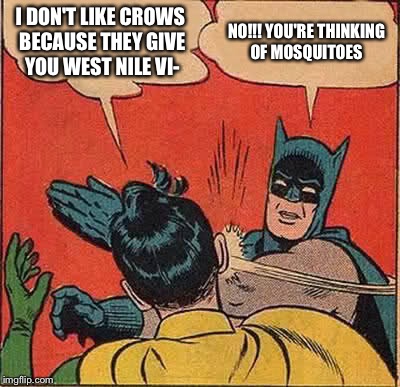
So, does a dead crow in your yard mean it’s time to break out the hazmat suit? Definitely no, but do Fish and Wildlife a favor and report your crow carcasses.  And if any of your neighbors start to panic, calmly and gently give them the facts.  Or just send them this meme I made you:

IMG_2711(1)

Literature cited

  1. http://www.cdc.gov/westnile/faq/genquestions.html
  2. http://www.seattleaudubon.org/sas/LearnAboutBirds/SeasonalFacts/WestNileVirus.aspx
  3. http://www.cdc.gov/westnile/faq/deadbirds.html
  4. http://wnyyradio.com/news/25-shocking-things-more-likely-to-kill-you-than-a-shark/
  5. http://www.cdc.gov/flu/about/qa/disease.htm

2 Comments

Filed under Crow behavior, crow conflicts, Crow disease, Crows and humans

Baby crow detective work

By now, most of us have come across these images of  “baby crows” so often it induces more of a yawn than a fit of aggravation.
Image-1If, somehow, these images are new to you feel free to check out my post fully debunking them, as I will not dedicate any further time to them here.   But there’s a new photo circulating social media, and it makes for a much more compelling crow doppelganger;

baby crow
You’ve got three, black, altricial baby birds in a nest and really, they’re not terribly un-crow like.   It doesn’t make you a complete crow rookie to make this mistake, but there are some key things wrong here.  And this is the moment where, as a scientist, these photos elevate from being simply another source of annoying misinformation (which, they are) to the kind detective work that childhood doctor visits fostered a deep love for.  Because, not unlike my favorite activity in the Highlights magazines I anxiously parsed through in those waiting rooms, there are 4 things that are different between these two photos and it’s up to you to find them.  So take a minute and see what jumps out at you….

Crows_v_no crows
Figured it out (or given up)?  The first thing to know is that all bird species are very specific in terms of both nest materials and nest construction.  Sure, some birds can happily use some ribbon in place of straw (like orioles) or build nests in old shoes just as easily as in gutters (like bewick’s wrens) but the basic style is always the same.  Robins will always use mud as a binder and bushtit nests will always look like cozy sleeping bags made of moss.  Knowing that, the material used in the nest on the right should jump out as a red flag.  Of course you’ll find crow nests with a bit of string, fabric or grass (especially for lining) but the bulk of the nest is always made of pinky-wide sticks.   Really, you need look no further at this point to know immediately that the photo on the right is an impostor but let’s keep going because it’s fun.

Next let’s look at the babies themselves, which is where the three remaining differences are.  Two of them are color-coded, did you catch them?  Ah yes, gape and eye color.  See that brightly colored area on the corner of the bird’s developing beak?  That’s called the gape, and the bright color that flashes when they open their mouths is a powerful signal that tells parents to “insert food here”.  Crows have bright pink gapes, whereas these other birds have yellow gapes.  Our other color coded giveaway is the eyes.  Granted the lighting is not great, but it’s clear that the crows on the left have light blue eyes whereas these other birds have dark eyes.  In some species of crow the babies are born with brown eyes that turn blue as they age, but such is not the case with our American crows and you can expect that nestlings will always have blue eyes.  The last clue, which takes more expert level knowledge to notice, is the bill shape.  The birds on the right have a slightly more embellished curve to the bill than a typical crow chick.

The final mystery, of course, is what the birds on the right actually are.  Unfortunately, I failed to track down the original poster, but as best I can tell they’re black drongo chicks.  Black drongos are members of the drongo family (Dicruridae) and are native to Southern and Eastern Asia.  Here’s another photo I found that looks consistent with the previous one.  If any drongo experts read this blog though and want to correct me, I’d love to hear from you!

5 Comments

Filed under Birding, Crow life history

#FieldworkFail

Recently, scientists have been taking to social media to share their stories of field work bloopers under the tag #fieldworkfail.  Things like dropping fecal samples on themselves, falling sleep while waiting for a turtle to arrive, only to be woken up by the curious turtle crawling over them, or darting a zebra and having it pass out in a precarious position.  Needless to say I have plenty of stories of my own so I thought I would share my top three favorite, or at least most memorable, field moments.

1) What’s crackin? 

At one point during my first field season I found myself spending a week’s worth of my mornings in Seattle’s International District between the hours of 5 and 7am.  Looking back, this was a bad idea.  So much so that at one point a cab driver pulled over to ask what I was doing and urge me, for the sake of my safety, to leave immediately.  But there were crows there and after months of time on the streets of Seattle I had developed an inflated sense of my safety and bad assery and decided to stick it out.  On one of my last mornings at this particular site, a women who I had previously encountered pan handeling took a seat on the bench next to mine, and proceeded to pull out what was unmistakably a crack pipe.  Unwilling to give up my data, I politely asked her to move but, much to my dismay, she didn’t seem very interested in listening.  High on crack, she then proceeded to do cartwheels over my peanuts and dance pants-less around my field site.  After a while she tuckered out and left me alone to do my work.  Looking back, I’m not sure if this was more a #FieldworkFail or a #KaeliLifeDecisionFail but it’s certainly not a field experience I wish to relive!

My unwelcome field participant spicing up my morning with some drug induced cartwheels

My unwelcome field participant spicing up my morning with some drug induced cartwheels

2) Sorry kids

During some of our experiments looking at the funeral behaviors, we would have volunteers stand around holding dead crows.  To protect their identity should the crows decide to hold a grudge, I had the volunteers wear rubber makes that covered their whole head.  One of my best volunteers was a fellow UW student, a mountain of a man who had a proclivity for wearing black and camo.  One of these field experiments was in Magnuson park which, if you live in Seattle, you know is one of our most curious parks.  It’s got all the features of a park you might expect like a play ground, soccer fields, trails that wander through peaceful restoration areas, but it’s also got some more curious features.  Old, WWII era airplane hangers, a block of abandoned school building and a few miscellaneous businesses just to name a few.  So when selecting a field site I picked a spot that seemed far from the potentially curious glances of parents or kids coming to enjoy a day at the park and instead nestled against one of the many buildings which appeared to have no foot traffic.  I was surprised then, when moments after starting our experiment a police car rolled up with its lights flashing.  Turns out the building I thought was rarely used was actually a pediatric dental office and I had planted my 6’6”, black and camo clad, dead bird holding, creepy mask wearing volunteer right under the side window.   Whoops!

Volunteers were required to wear signs after this incident...

Volunteers were required to wear signs after this incident…

3) Off with their heads!

During one of my preliminary field experiments we were looking at how crows respond to a mounted stuffed hawk.  We didn’t want them to see it before it was in position, so we would cover the bird with a piece of mesh camo fabric until moments before we were ready when a volunteer would run over and pull the cloth off.  Although the holes in the mesh were very small, as it turned out they were exactly the right size for the tip of the hawk’s bill to fit through.  One fateful day, my volunteer got more than she bargained for when the hawk’s bill caught on the mesh and the head ripped right off along with the cloth.  Unsure of what to do she balanced the head on the hawk’s shoulders and proceeded with the experiment.  All was well until right at the end, when one of the aggressively diving crows actually hit the hawk and knocked the head to the ground.   We’ll never know what was going through his or her mind at the achievement or what followed, but I like to imagine that on the block of 8th and Madison in downtown Seattle to this day juvie crows share in uncertain but excited whispers about the legend of the crow so powerful, it took the head of the a hawk in one fell swoop.

IMG_2611

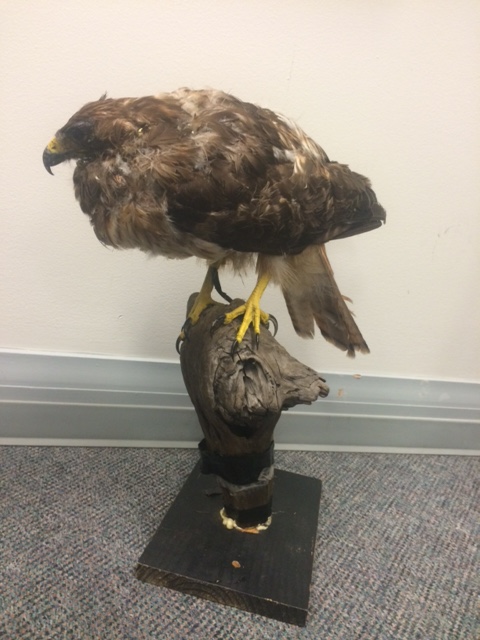
Big Red is a little worse for the wear but she still gets the job done!

1 Comment

Filed under Field work, Graduate Research, Just for fun

Corvid of the Month: How abundant food may be killing the Mariana crow

For most of us, it’s hard to imagine crows being anything but ubiquitous.  Here in Seattle, American crows can nest so densely, I once found myself within 50 m of three different active nests.  Such is the case for many other parts of the world too, where house crows, jungle crows, or hooded crows are an almost inescapable part of the landscape.  Given these species’ success, it might be tempting to assume that all crows welcome human presence and habitat modification.  Rules don’t exist without exceptions however, (especially in nature!) as our Corvid of the Month, the Mariana crow, tragically illustrates.

A female Aga and fledgling do some exploring. Photo: Matt Henschen

A female Aga and fledgling do some exploring. Photo: Matt Henschen

The Mariana crow, or Aga, is endemic to Guam and Rota and is the only corvid native to Micronesia1.  In appearance, they bear a striking resemblance to the American crow, only they’re 40% smaller (cue adoring sound effects).  Across their range they’re considered critically endangered and as of today, all of Guam’s birds have been extirpated by the invasive brown tree snake, and only about 46 breeding pairs remain on Rota.  If that wasn’t alarming enough, their numbers continue to dwindle and researchers at the University of Washington project they could be extinct within the next 75 years2.  Unlike Guam, however, there are no brown tree snakes on Rota.  So what is causing the drastic decline of this island crow?   As my colleague and Mariana crow researcher, Sarah Faegre, is beginning to tease out, the answer may lie in the delicate nature of island food webs, and the unanticipated butterfly effect that started with a few errant snails.

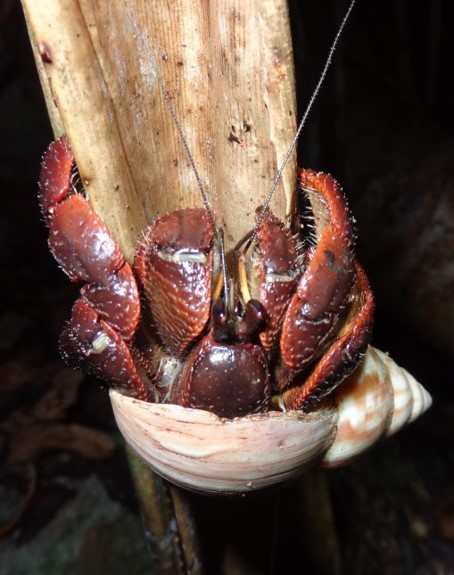
Like our American crows, Mariana crows are generalists and eat a wide variety of foods from insects, to geckos, to fruits and seeds.  But adult Mariana crows have one other food source they’ve come to specialize on: the humble hermit crab. Despite the presence of hermit crabs near other species of corvus, the Mariana crow’s frequent predation on them is unique, especially when you look at how they extract them.  Unlike most coastal or inland living crows that drop tough objects like clams or nuts onto hard surfaces to open them, the Mariana crow actually uses its bill to peck and break the shell at the seams to extract the vulnerable crab, a process that takes place entirely on the ground and is only shared by two other known bird species in the world (one of which is now extinct).  So what does this have to do with wanderlusting snails?  As it turns out, everything.

What's crackin' crabby? Photo: C. Brevimanus

What’s crackin’ crabby? Photo: Sarah Faegre

Rota is home to several species of native land and sea snail, though hermit crabs only utilize the larger shell of the sea snail.  Critically, these shells are extra hard and apparently impenetrable to even the most determined crow.  In the late 1930’s, however, humans introduced the Giant African Land snail which quickly invaded the island.  Two major differences between the native and invasive snails are 1) that the invasive snails have thinner shells, and 2) people were anxious to get rid of them.  So, naturally, we introduced  yet another invasive species (a predatory flatworm) and…it actually worked.  By the 1970’s the island was brimming with large, thin, empty shells, ready and waiting to be filled with hermit crabs.  Gradually, the crows learned that these shells were possible to peck open and now hermit crabs are an important staple for Rota’s crows.

Photo: Matt Henschen

Photo: Phil Hannon

On its surface, this seems like the making of an ecological disaster turned into a conservation blessing.  After all, we successfully controlled an invasive species while simultaneously creating a new food source for a threatened bird.  But in our tangled web of introduced species and ecological fallout we must considering the one remaining player: cats.  Although further study is needed, Sarah’s work3 suggests that all that extra time adult crows now spend on the ground cracking open hermit crabs may be making them more susceptible to predation by cats.

Couple the effect of cats with habitat destruction and persecution by people and the results project a bleak outlook for crow recovery.  But conservationists and researchers like Sarah are working tirelessly to better understand the threats facing this bird and how to solve them.  In fact Sarah and her husband, Phil Hannon, recently started a non-profit called Luta Bird Conservation to help raise awareness and conservation funds to better protect this unique crow.  At the top of their priorities is funding initiatives that would bring the science of crow conservation to the classrooms of local people, helping to raise both pride and awareness for the plight of this endemic species.

So the next time you look at a crow and experience a slight feeling of fatigue at such a ubiquitous bird remember; not all corvid species welcome the consequences of people and some have suffered greatly from them.  Aldo Leopold once said “to keep every cog and wheel is the first precaution of intelligent tinkering.” The lesson from Rota, and so many others, is that the same can be said of not adding any either.

If you wish to contribute directly to Mariana crow conservation, I encourage you to send Luta Bird Conservation Inc. a check at:

Luta Bird Conservation Inc. c/o Aron Faegre
520 SW Yamhill Street, Roofgarden 1
Portland, OR 97204

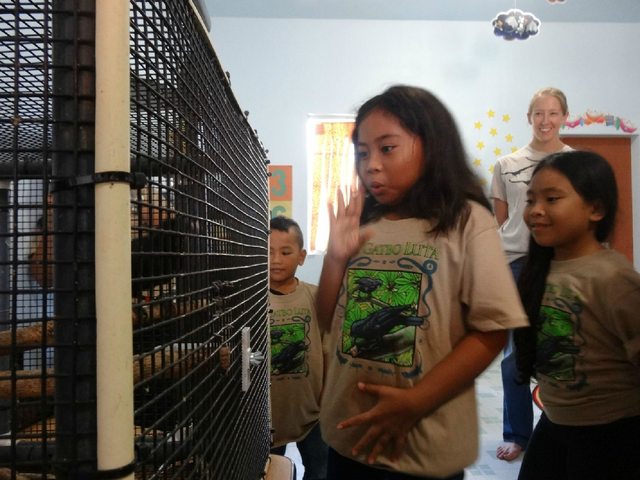
Sunny, Luta's educational Mariana crow captivates the students in a local school

Sunny the captive Aga on an ambassadorial trip to a local classroom with Luta Bird Conservation Inc.

Literature cited:

  1. http://www.fws.gov/pacificislands/fauna/marianacrow.html
  2. http://www.washington.edu/news/2010/12/20/without-intervention-mariana-crow-to-become-extinct-in-75-years-2/
  3. Faegre, S. (2014) Age-related differences in diet and foraging behavior of the critically endangered Mariana Crow (Corvus kubaryi) (Masters thesis; University of Washington).  https://digital.lib.washington.edu/researchworks/handle/1773/27571?show=full

1 Comment

Filed under Corvid of the month, Crow behavior, crow conflicts, Crow life history, Crows and humans, Graduate Research, New Research, women in science

Crow curiosities: Causes and consequences of bill deformities

If you live in the Pacific Northwest, chances are you’ve come across a crow that’s made you do a double take. No, not for an unusual behavior or vocalization, but for what might be described as an overgrown, monstrous even grotesque looking bill. Bills like the one belonging to a bird in south Seattle I recently came across during one of my field experiments. It is, at best, unsettling to see something like this. So what exactly is going on here?

DSC_1648

A “crossbill” crow living in a south Seattle neighborhood

First, it’s helpful to understand the different layers of a bird’s beak.  The beak is comprised of bone overlaid with a horny structure made of keratin (for you Scrabble people out there it’s called the rhamphotheca). Keratin is the same stuff that makes up our hair and fingernails and, just like our nails, the rhamphotheca is always growing and wearing away. For most birds, this growth is very slow which means that keeping bills nicely manicured takes no special effort. For birds suffering from what’s now termed Avian Keratin Disorder, however, the growth can be as much as 2x as fast as normal, making it impossible to keep things in check.  This growth results in bills that are extra long, decurved on the top, bottom, or both, or overgrown and crisscrossed like my friend in Seattle. Even if the bill is clipped or broken, it grows right back.

Across most of the country, incidences of AKD in crows are other birds are rare. Which means that, unless you’re the afflicted individual, there’s no real cause for alarm. If you live in the PNW, especially Alaska, however, it’s not only increasing common, it’s spreading.

Data taken between 2006-2008, indicates that 17% of Northwestern crows in Alaska have AKD, the highest rate of deformities ever recorded in a wild population.1 Needless to say, the alarm bells, gongs and vuvuzelas are going off within the scientific community.

DSC_1650

So what causes AKD?

~On 10/2016 I published a new post with the most current information on causes.  For now though, I will leave the ’causes’ content in this post as-is, so readers have access to the history of scientific thinking and progress on AKD research.~

Well, lots of things. Heat stress, diet, genetic disorders, environmental contaminates, parasites, or bacterial infections have all been linked to the disorder in individual cases. Given that it affects residential, adult birds, environmental contaminants seem a likely suspect. But tests on afflicted birds (mostly chickadees) show no consistent correlation with the top suspects like heavy metals and trace elements, organic pesticides, and toxic environmental pollutants like PCBs, PCDDs, and PCDFs. Future studies will look at compounds like PCDD-Fs, polycyclic aromatic hydrocarbons, and emerging contaminants such as brominated compounds (stuff found in flame retardants which were used for wildfire suppression).2 For now though, there’s no clear culprit for the disorder’s spread across Alaska and the PNW.

Is it fatal? That really depends on the nature of the growth. The main problem is that it can affect eating and preening, both of which are critical to survival, especially in cold climates. But animals (including people of course) are amazingly adaptable, and according to the USGS, a surprising number of individuals find mates and breed (though reproductive success is lower).3 Indeed, even my friend in Seattle was followed by the “wah! wah!” of its relentlessly begging juvenile.

DSC_1617

The good feather condition and successful fledgling of at least one offspring suggest that this bird is, for now, managing just fine.

Is there anything I can do? Yes, report your sightings!  Help scientists track the spread and proliferation of this disorder by documenting and reporting whenever you encounter it. You can do so at the USGS site here. As far as the individual bird is concerned, you can make feeding easier by supplementing with easy to ingest foods, like hard boiled eggs. And as always, make your yard safer to vulnerable birds by providing lots of cover and keeping unattended pets indoors.

Make feeding easier by providing meals which can be easily ingested and offer big nutritional value.

Make feeding easier by providing meals which can be easily ingested and offer big nutritional value.

Literature cited:

1.  Van Hemert, C., & Handel, C.M. 2010.  Beak deformities in Northwestern crows: Evidence of a multispecies epizootic.  The Auk 127: 746-751.  doi: http://dx.doi.org/10.1525/auk.2010.10132

2. http://alaska.usgs.gov/science/biology/landbirds/beak_deformity/contaminants.html

3. http://alaska.usgs.gov/science/biology/landbirds/beak_deformity/effects.html#reproduction

22 Comments

Filed under Crow curiosities, Crow disease