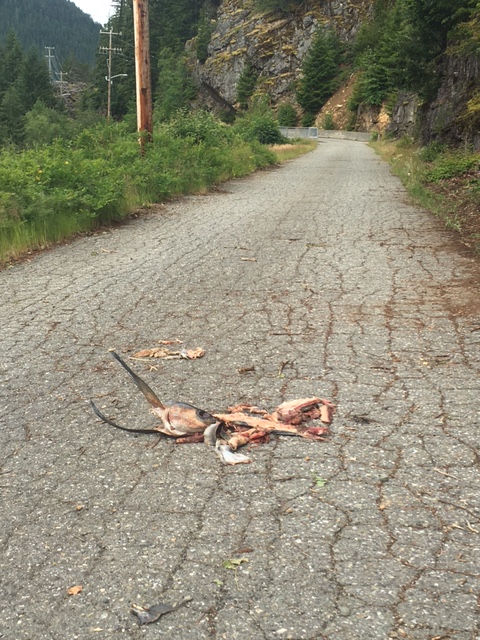
“There’s not a raven alive that wouldn’t eat that,” my colleague exclaimed as we finished spreading out the tuna. It was a beautiful carcass. Big, glistening head, bones and guts spread out over the asphalt, perfect bait to lure the ravens we were attempting to band. As I wiped the blood off my shoes, I could hear the beating of raven wings above my head. Surely when we returned in a few hours it would be gone. Twenty four hours later it smelled considerably worse but was otherwise unchanged. The ravens had inspected our offering and evidently rejected it. Where had we gone wrong?
There are many possibilities, but a likely explanation is that our set-up was simply too unusual in its setting. Perhaps if we had been working on the coast or at a dumpster, the carcass wouldn’t have seemed so out of place. Here, however, high above a freshwater lake our bait was probably not something these birds had ever encountered. Seeing such a strange carcass likely drove our ravens off to a more conventional and trusted source of food.
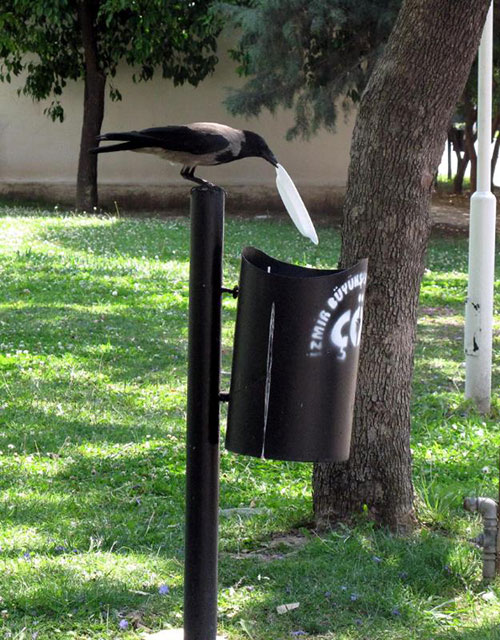
Contrast this with the behavior of an urban crow, and this level of cautiousness on behalf of our forest ravens might seem strange. For example, watching a crow root seemingly recklessly through your garbage might give the impression that they worry little about new things. In fact, corvids are notoriously neophobic1 (fearful of new objects) in contrast to many other bird species. This may seem at odds with an urban corvid’s lifestyle. After all, the urban environment is constantly presenting them with new objects, many of which contain edible food. An unnecessary fear could therefore be a costly inhibition to exploiting worthy food sources. On the other hand, too little indiscretion could expose them to predators, poisons or other dangers. So how do urban crows deal with this paradox and how might they compare with their rural counterparts?
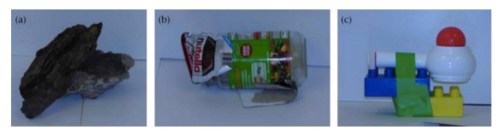
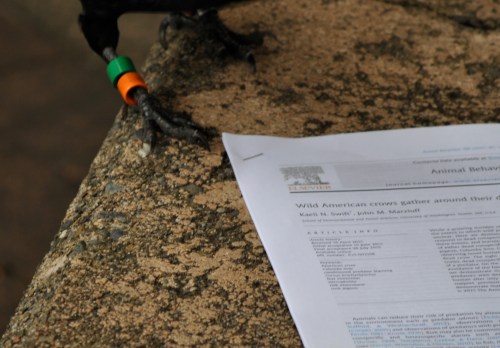
A study by Alison Greggor et al.2, recently published in Animal Behaviour set out to address this question. To do so, they presented 5 corvid species (including jays, rooks, crows, magpies and jackdaws) and 7 urban dwelling non-corvids species (including blackbirds, finches, tits, robins, pigeons, etc.) in both urban and rural settings with a novel object placed near a familiar food source. The novel object was either a) natural objects, b) familiar pieces of litter or c) strange new object made to look unlike any animal or food packaging. Neophobia was measured by changes in latency to the food after the object was placed near it.
They found that, in contrast to non-corvid species, corvids were more wary to approach food near any of the three novel objects, adding support to their neophobic reputation. Interestingly, there was no difference between urban and rural corvid’s willingness to approach the completely new object (object c). Urban crows were however, faster to approach food near familiar litter (object b) than their rural counterparts. They interpret these findings to suggest that urban living fosters context specific, rather than generalized reductions in neophobia. This balance may best keep corvids out of trouble with respect to entirely new things while still allowing them to exploit items that look similar to other known anthropogenic food sources.
I guess next time we’ll stick with trail mix and old sandwiches to entice our wary ravens!
Literature cited
R. Greenberg, C. Mettke-Hofmann (2001) Ecological aspects of neophobia and neophilia in birds. Current Ornithology 16: 119–178
Greggor, A., Clayton, N., Fulford, A., and Thorton, A. (2016). Street smart: faster approach toward litter in urban areas by highly neophobic corvids and less fearful birds. Animal Behaviour 117: 123-133. doi:10.1016/j.anbehav.2016.03.029
Pinching a peanut shell between my fingers, I pulled my hand out of my pocket and laid the nut on the concrete between us. GO cocked her head, catching the light on her left cheek and reflecting the deep blues that hid among her inky black feathers. “Please don’t die before I graduate,” I whispered. GO stared back at me a moment before galloping forward for her treat and making off.
Try as I might, I couldn’t will her to understand my foreign tongue anymore than I could will her body to keep working indefinitely. Today it finally stopped. Today I say goodbye to my companion.
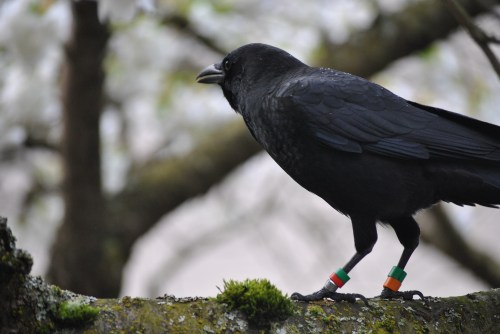
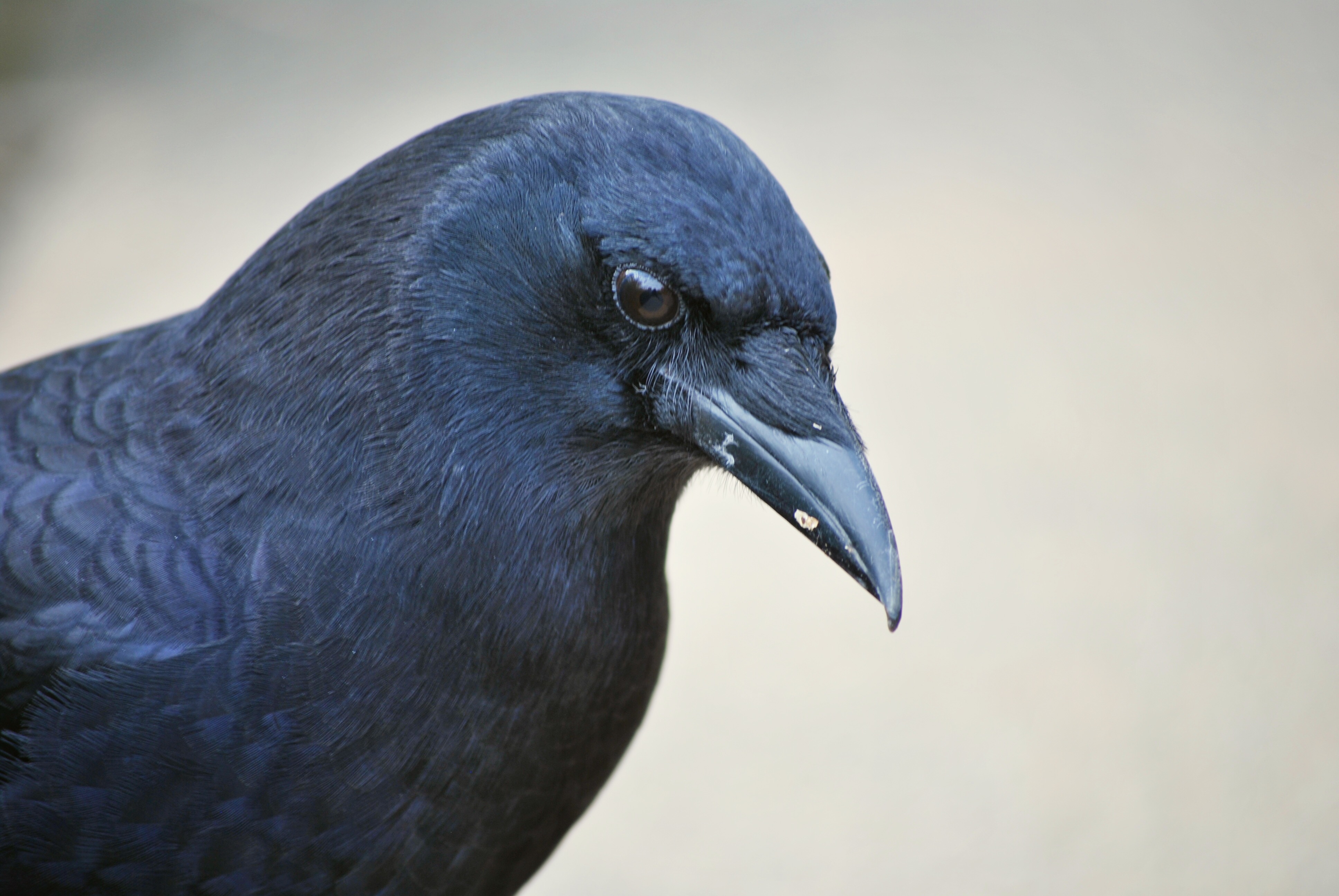
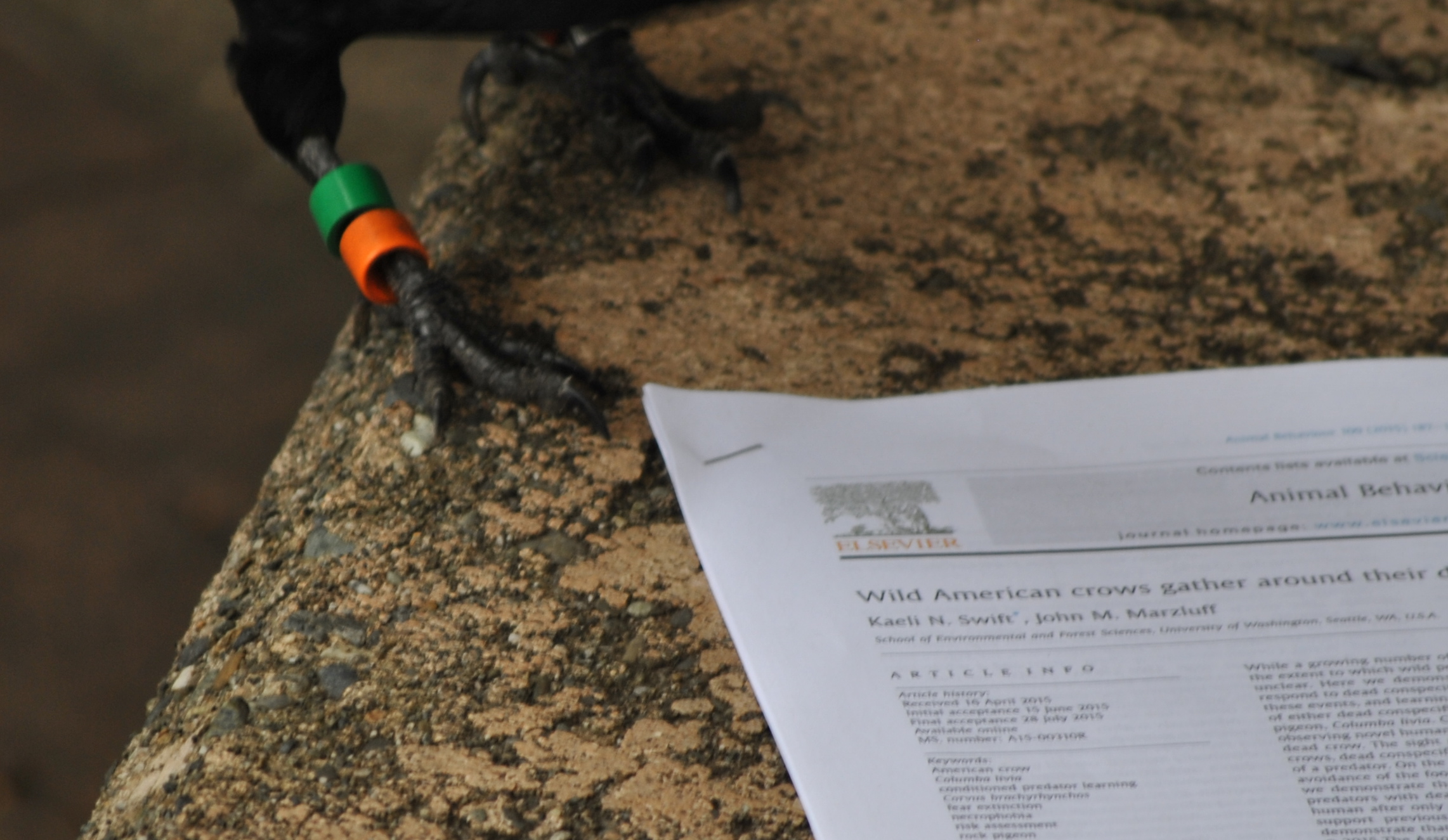
For those that follow my blog regularly, you’re probably familiar with GO. Even if you’ve never seen mentions of her, you see her face every time you visit my site; she’s the bird staring back at you from my site’s banner. I first met GO while searching for banded birds to use as subjects in my early funeral experiments. Her name actually comes from her band combo: Green/Red/Metal x Green/Orange.
The location of her and her mate’s territory was ideal, and soon I was regularly feeding her as apart of the initial conditioning phase of the experiment. Like most campus birds, she readily took to feeding and soon enough I could hear the soft rattling of her bands as soon as I approached the food site each day. After the funeral event though, GO and her mate aggressively avoided the food and I wrapped up the experiment assuming that, like many of my other data points, she would be anxious to never have to see me or my ‘scary’ accomplice ever again. But a few months later, while waiting for the bus I heard the familiar rattle of her bands and turned to see her looking expectantly down at me from a branch. I offered her a peanut and she took it without pause. I never went to the bus stop without a few peanuts in my pocket after that. It’s been four years since then.
During the darkest days of writing my last publication I might have visited her 2 or 3 times a day, desperate for someone to shake me out of my writer’s block or my frustration with myself. Hearing her wing beats was like taking a Xanax; it was calming and reminded me why I was working 15 hours a day juggling field work and authorship duties. I adored her, I wanted to know and understand everything I could about her, and I wanted to be part of the community that was using science to enhance people’s appreciation for corvids. She wanted peanuts. I don’t think her side of things was any more complicated than that but that’s never cheapened the relationship for me. She wasn’t a pet or a human friend dressed in corvid clothing. She was a wild crow, and it was wondering about how she existed in that wild, urban space that most inspired my work. Still, I had always hoped GO would somehow be spared from the one thing I wonder about the most: death.
For all the advances our team has made about the function of crow funerals we know almost nothing about what the birds are really thinking. Like most other social animals, they do a great variety of things which makes getting at what they are thinking or feeling very difficult. GO and her mate had presumably been together many years. It’s hard for me to imagine this is lost on him, but I can’t say for sure. All I know with certainty is how I feel about her loss and I know the thought of silence in place of the soft rattle of her bands or the whoosh of her wing beats as I approach our spot makes my heart ache.
GO was at least 16 when she died. In that time she successfully raised many broods, contributed to two scientific publications, and undoubtedly befriended more people than just me. She embodied everything we love about crows: their deft skill at thriving among us, their bold demand of our time and attention, and the way they engender our curiosity and admiration. She was my data, inspiration, stress relief, and eager companion. I will never forget what this bird meant to me. Miss you already my lovely ladybird.
For the most part, crows come in the same general size, shape and color, but every once in a while individuals will deviate from this template in eye catching ways. These deviations can manifest as missing or elongated beaks, color abnormalities such as white plumage, or jarring metamorphoses into rudderless, flying orbs.
Tailless crows are fairly uncommon; in a typical year I’ll maybe spot a couple afflicted individuals. Although feather loss and replacement is a normal part of a crow’s annual cycle, crows don’t shed their tail feathers simultaneously so we can’t blame molting season for this odd appearance. Instead, a tailless crows most often indicates that the bird recently escaped a predator or other kind of threat.
Similar to some lizards, many bird species can drop their tails defensively as a last resort to avoid being injured or killed. In fact, tail feathers require less force to detach in contrast to other feathers on a bird’s body. In addition, the force required to remove tail feathers decreases with how vulnerable a species is to predation.1 Tail feathers can also be broken, rather than completely lost. Although that might sound painful, unlike a bird’s beak which is full of nerve endings, mature feathers are dead structures like hair or fingernails. While a bird surely feels and avoids the sensation, it’s not painful.
You can see the broken tail feathers below the power line. Unfortunately for this crow, it will have to wait until its annual molt to replace these feathers.
Tails are crucial to most birds not only for their visual appeal but also because they allow birds to steer and maneuver in flight. Without one a crow can still fly and land, but they’re not nearly as agile in the air and you’ll notice their take offs and landings are a bit awkward. Fortunately, the tail will eventually grow back though just how quickly is contingent on what happened to the feathers themselves. If the feathers were pulled out, so long as the follicles weren’t damaged they will begin to regrow immediately. If, on the other hand, the feathers were broken rather than pulled out, the crow will need to wait until its annual summer molt to replace them.
For crows fortunate enough to be brought into a wildlife care facilities, there’s also a secret second option to correcting a broken flight feather: imping. Although little known outside of rehab or falconry circles, imping is an age-old technique dating back to at least the 1240’s when it was mentioned in The Art of Falconry by the Holy Roman Emperor, Frederick II. The procedure involves trimming the broken feather to about one inch above the skin and then inserting a thin piece of wire, fiberglass, or wood (called the imping needle) into the empty feather shaft. A matching donor feather is then affixed to the exposed portion of the imping needle. Picture sheathing a double sided samurai sword, where the sword is the imping needing and the sheaths are the imbedded, trimmed feather shaft and the donor feather respectively. Historically, rust was used as a bonding agent but today vet safe epoxies are the standard adhesive.
So the next time you see a tailless crow go ahead and give it a few extra treats. It’s not in any pain, but it’s been through something fierce. And to quite literally add insult to injury, it looks absolutely ridiculous.
Literature cited
Moller, A.P., Nielsen, J.T., Erritzoe, J. (2006). Losing the last feather: feather loss as an antipredator adaptation in birds. Behavioral Ecology 17: 1046-1056
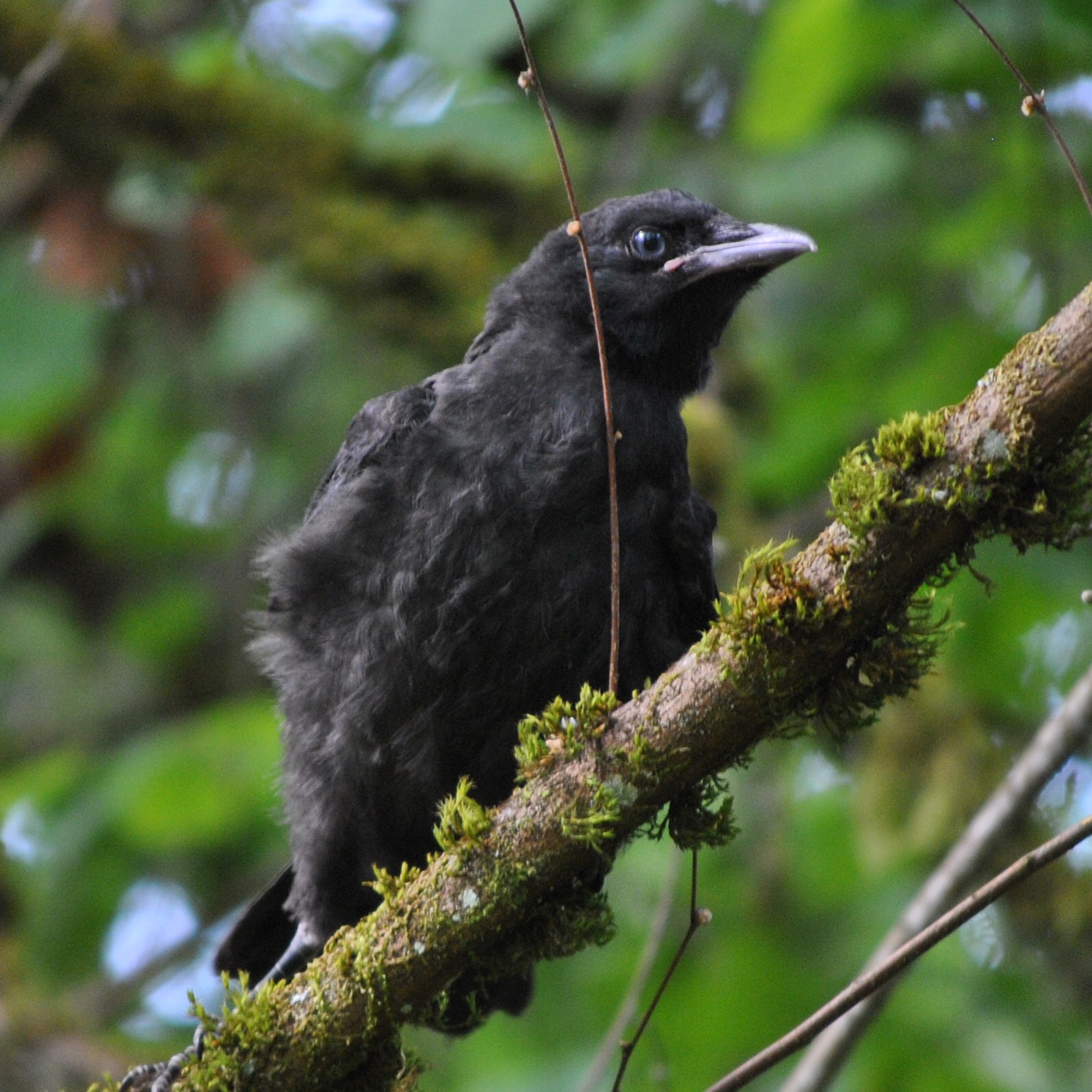
Those blue eyes, that awkward gate, their seemingly constant precariousness, they’re all calling to you to intervene. Here are 5 reasons second guessing that instinct might be in the bird’s best interest.
1) The vast majority don’t need your help. It’s totally normal for baby crows to be on the ground and flightless as long as they’re covered with feathers and appear otherwise alert and mobile. Even nestling crows are usually on the ground on purpose. Not because they are ready, but because their parents have intentionally rejected them for one reason or another. They will die and that’s ok. Part of coexisting with wildlife is giving them the agency to be wild. The story is different of course for species where the survival of individuals may mean the difference between population survival and extinction, especially because these situation are almost always driven by human activity.
2) It’s hard to tell when they’re stressed. Recently, I saw a video on Facebook of a Steller’s jay fledgling in the care of a very well intentioned person. She was giving it gentle strokes with her fingertips, each touch resulting in the young bird turning its head towards its back and opening its mouth. The comment thread filled with ooo’s and awww’s and general comments of encouragement or gratitude for her actions. For me it was like watching an alien attempt to care for a human child, the child recoiling and screaming while its caretakers congratulated themselves on how kind they were being. Having handled baby corvids before, I know what that kind of posturing means, it means “I’m scared and stressed.” To an untrained eye though, it may not look much different than the kind of gaping that means ‘feed me.’ Being stressed to death is a reality for young, or even adult animals, so any handling best be done by experts whenever possible.
3) It’s illegal to rehab crows without a license. You can provide temporary care until you can get them to a licensed facility, but do not attempt to rehab them on your own. Mistakes like the one I just described are a prime example of why the law seeks to protect animals by ensuring they are only raised or rehabilitated by experts. For more information on how to handle them until you can get them to a facility visit my previous post.
4) Imprinted crows do not survive well in the wild. Even if baby crows are receptive to being treated like a pet, doing so is both a legal violation and I would argue a violation of their right to be a wild animal with a healthy fear of people. Of all my daydreams, at the top of the list is having a wild but imprinted crow that follows me around. I even have a name picked out. This fantasy of mine will forever remain just that, however, because it’s too dangerous to allow a crow to become that comfortable with people. All it would take is one cranky neighbor with a pellet gun and it would be over. Not to mention being imprinted on people, instead of crows, denies them access to skills and relationships with other crows that will help them survive into adulthood.
5) It may do more harm than good. The conventional wisdom suggests “well, worse case scenario is I try and rehab this baby crow and it dies, which it would have done anyway so really, nothing’s been lost.” The more we study death in social animals the more we are beginning to realize there may be a cost to prematurely removing ailing or dead animals from their groupmates. Being able to interact with their dead may serve an important role for social animals, and denying them this opportunity may have serious implications in their ability to process that death. So be thoughtful about how slim the chance of survival is. It might be that the kindest, most responsible action is no action at all.
It hurts to look at. The physical pain incurred at the time of the injury, the likely chronic pain on the path to recovery, the dubious chance of survival, it all makes me reach for my mouth in horror when I see this bird. To me, the idea of living on in spite of such a grotesque injury seems impossible. Yet here this bird is, surviving, reminding me of what life is capable of.
So now that I had my moment of sadness and awe, let’s get to what everyone wonders when they see a bird like this: Will a crow’s beak grow back if it’s broken and if not, can it survive?
Cracks or complete fractures like this can result from a number of things, though the list could be longer since these accidents are so rarely observed firsthand. Perhaps it was traumatic run in with a window, or perhaps the upper or lower bill got trapped against a fulcrum point and an opposing surface.
As far as the prognosis is concerned, I asked birds experts, wildlife rehabilitators and veterinarians and the answer was always an equivocal ‘maybe’. Maybe it would heal back to something resembling normal and maybe it would remain stunted. Maybe it would survive and maybe it wouldn’t. To fully understand the reasoning behind this ambiguity you need to understand how a bird’s beak is actually formed.
Like mammals, birds have two jaws bones that form the upper and lower mandibles. These bones are surrounded by the nerves and blood vessels that support the beak’s functionality and growth. Protecting these layers is the outer lightweight layer of keratin called the rhamphotheca. Like our fingernails, this layer is always growing and being replaced.
Depending on where the fracture occurs, the rhamphotheca can grow back enough to abolish the injury. Unfortunately though, there’s not much room to work with before you hit bone, and the bone cannot be regrown. In these cases the rhampotheca may heal over the exposed bone, but it may not grow back to full size since the template for its shape (the bone) has been stunted. Even if it does grow back, it may not do so correctly, leading to twisty shapes.
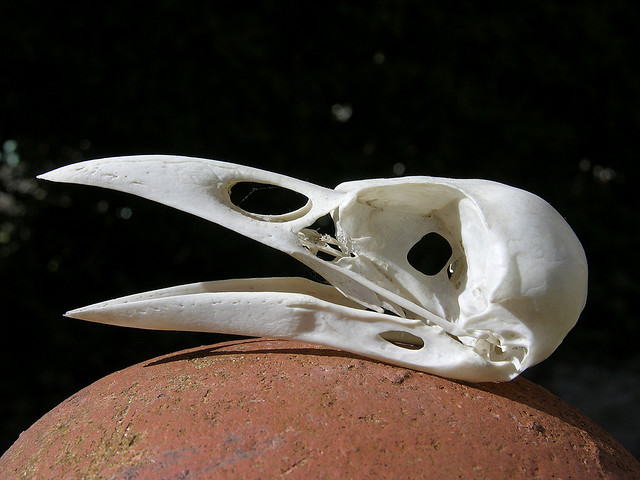
A crow skull. You can see that the jaws bones are almost the full length of a crow’s beak. The black outer layer, the rhampotheca, adds only a little (think mm) extra length so there’s not much that can be removed from the tip of the bill without hitting bone.
So what’s the prognosis? Well again, that depends. Even if the bill does not grow back correctly, or at all, some crows can learn to compensate. Fortunately, being a generalist helps their chances considerably. Although some foods may now be out of reach, many crows lean how to scoop, poke, and jab their way to a full stomach everyday. The same cannot be said for many species of bird whose beaks are the cornerstone for consuming a specialized diet.
So while it’s fair to be heartbroken at such an injury, it’s not cause for hopelessness. Many crows will learn to compensate, and go on to remind us of the beautiful stubbornness of life.
With the advent of social media, the number and official community of crow feeders is more apparent than ever. They come together on twitter and facebook, though blogs and websites, to share their observations and even document the lives of individual crows. They think deeply about crows and their relationship to them, but I wonder how much thought they’ve given to the science of their own activities and their relationship to fellow feeders?
For those curious how their own food provisioning behaviors relate to those of their peers, there’s no need to reinvent the wheel; crow expert, John Marzluff, and renowned culture anthropologist, Marc Miller, tackled this very question as a part of pilot study for a chapter in Biocommunication of Animals1. They argue that crow feeders can be sorted into two categories: ‘crow friends’ and ‘crow observers’.
Crow friends exhibit the following characteristics:
Have a personal commitment to the wellbeing of one or more named crows.
Care about signaling approval, disappointment, sadness, praise, hope, etc.
Motivated to improve their friendship.
Value a symmetric relationship where both crow and human benefit equally.
Relationship mirrors that of a human/human relationship (commitments are honored, routines developed, and feelings considered).
Crow observers on the other hand are identified by these metrics:
Prefer interacting in unobtrusive and passive ways.
Do not identify or name individual crows.
Value providing food but do not consider what the crow may think of their actions.
Do not care if the crow comprehends their humanity.
More interested in learning general crow behavior and not the behaviors or personality of a specific crow.
With these guidelines in mind I’d love to learn which category you fit into. Do you fancy yourself a crow friend or a crow observer? Why do you prefer that approach? Let me know in the comments!
What kind of bird FEEDER are you?
Literature cited:
Marzluff, J.M, & Miller, M. 2014. Crows and crow feeders: Observations on interspecific semiotics. In: Witzany, G. ed., Biocommunication of Animals. New York: Springer Science+Business Media Dordrecht. pp 191-211.
I’ve posted before about the generals of crow play behaviors, and it’s something I’m routinely delighted with as the kids of late summer start testing the limits of their world and their peers. Adult play (or what I’m fairy confident are adults) is something I’ve encountered far less often, however. Even more rare is a camera on hand to capture what’s usually a rather fleeting behavior.
You can imagine my excitement then, when yesterday not only was I present to witness either two adults or one adult and one subadult play wrestling in the grass but I also had a camera already rolling. Granted the footage isn’t great (it’s an old camera and they were far away) but you can make out enough to see what’s happening.
Here’s a play by play of them moments leading up to and during the event.
I had been following a family group of three, presumably composed of two territorial adults and one subadult based on mouth lining color and general behavior (allopreening).
Two of them were foraging when they joined together and began to roll in the grass.
No audible calls were given, which I would expect if it had been a malicious attack.
You can see moments where one crow appears to have the upperhand and then willingly falls to its side to allow a shift in power and continue the play.
The roughhousing only stopped after the third bird flew overhead and gave a short loud ‘caw’.
After they disentangled they continued foraging near each other rather then taking chase, another indication that is was mutual and fun rather than antagonistic.
Looking at the hard copy of my recent publication, I can’t hep but marvel at how clean it looks and feels. Each sentence is as crisp as the months long editorial process could make it and each section offers a critical addition to the simple narrative: Crows gather around their dead to learn about danger. As any of us in field biology know, however, the austere, concise nature of our publications make every effort not to betray the dirty, messy, sometimes chaotic process that defines the research experience.
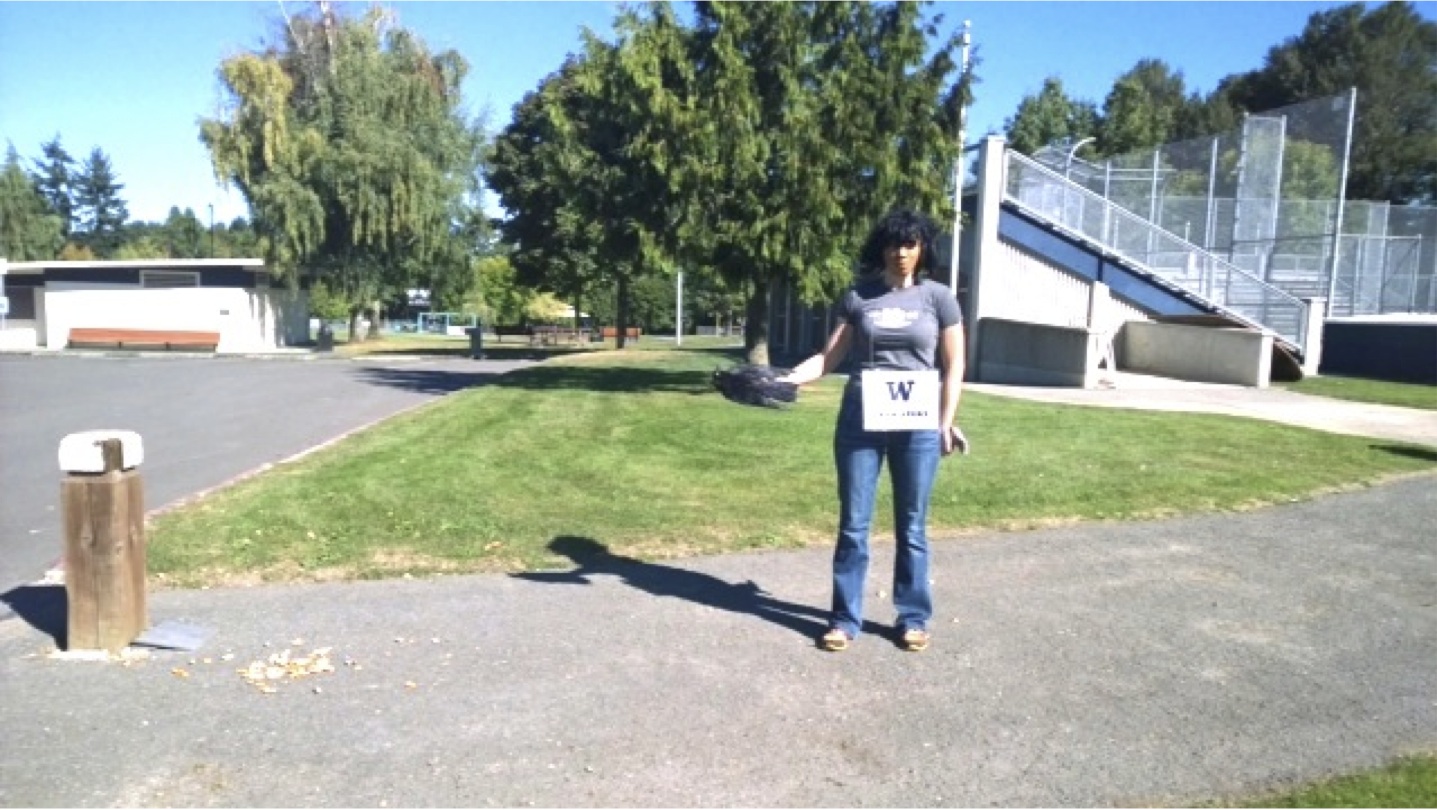
Equipment breaks, ideas don’t work, field sites get destroyed, animals refuse to cooperate, money runs out, these are all par for the course for any field biologist, and any “field” is going to come with its own hazards. My field, of course, was the city of Seattle. By now, most readers are familiar with the look of our experimental set-up; a masked person with a “UW research” sign holding a dead crow. We could have made the sign the size of a billboard and it still couldn’t have eliminated the sense of shock those latex masks instilled in people. So you can maybe imagine how conducting those experiments in the heart of downtown, in people’s parks and neighborhoods, went over. But you don’t have to.
A few months ago an excellent new popular science publication, Biosphere Magazine, approached me about doing a story detailing my experience as an urban field biologist. Today, with their permission, I’m posting the story in its entirety. I hope it gives you some insight into the research process, but I also hope it encourages you to check out this delightful new publication. I have no doubt it will feed your hunger for science. Enjoy!
As long as I’ve been interested in crows, I’ve wondered the same thing that many other people who study or simply enjoy crows have wondered; why do they gather so predictably around their dead? It’s with great pleasure that this week not only do I get to address this question, but I get to do so with my own research, which was recently published in Animal Behaviour. Banished are the days of cagey descriptions of my work and results, the peer review process has finally green-lighted full disclosure.
Anecdotes of crows’ attraction to their dead have long been documented and accounts usually go something like this: a dead crow is observed laying in the grass and other crows, sometimes an individual, sometimes a large group, are perched nearby silently or very raucously. People have reported that sometimes these onlookers stay for minutes, sometimes days. So what are we to make of this? Well it could be explained a number of ways:
Maybe it’s purely coincidental, the crows have no idea there’s a dead crow on the ground. Anyone who has observed this event in action, of course, will know that this explanation seems unlikely, but from a scientific perspective, we’ve also been able to invalidate it through previous experiments on corvids1,2,3. So we can pretty safely ex-nay that explanation.
Maybe they gather because it’s a foraging opportunity. Well, as far as we know crows rarely cannibalize each other, and even if they did, they probably wouldn’t be simultaneously scolding. So this also seems like an unworthy hypothesis.
Maybe they’re experiencing a deep sense of mourning and have come together to grieve and pay their respects. Having spent as much time around crows as I have, I hold little doubt that they have emotional intelligence. But testing this scientifically remains problematic because there’s still no way we can truly know what’s happening on an emotional level in an animal’s head. We’ve tried4, using noninvasive brain imagining (invasive meaning lethal or surgical), but this method is imperfect and while it can tell us the parts of the brain used, it still doesn’t tell us what they’re thinking or feeling. So for now, the question of crows and grief remains open (scientifically anyway).
Which brings us to danger learning. If I were to find a dead person in the woods I might be feeling sad but I’d also be alarmed and likely looking for the cause of death to make sure I’m not next. Perhaps the crows are doing the same thing; looking for the source of danger and remembering key elements of the experience that will help keep them safe in the future.
Previous experiments in jays1, crows2 and ravens3, suggested that danger learning is likely a key motivator behind these gatherings since corvid effigies can be an effective deterrent, a fact that is old hat to many farmers. So I wanted to look at this question with a little more nuance and ask, 1) whether crows would avoid food in areas previously associated with crow death, 2) could they learn new predators (i.e specific people) they see near dead crows, 3) for how long will they remember these people and, 4) how do these same responses compare if we substitute a “dead” crow for a “live” familiar predator.
A volunteer demonstrates the one of the experimental set-ups. A masked person holds a “dead” crow. In the following days we looked for changes in latency to approach the food. A week later this same masked person would reappear and we would see how the birds responded to them.
To do this I would locate a territorial pair and feed them for 3 days. This would give me a baseline of their feeding behavior and allow me to say, “on average, crows take x minutes to arrive at a fresh food pile.” Then I would introduce one of my three dangerous scenarios: a masked person holding a dead crow, a masked person standing near perched hawk, and a masked person standing near a perched hawk with a dead crow. In all these cases the birds were taxidermy-prepared mounts. In a handful of cases (4 to be exact) the birds simply observed the scene in silence and left. In most other cases however, the response was pretty stereotyped; the discovering bird (usually the territory holder) would scold and typically attract 5-11 additional birds. The mob would stick around for 10-20 minutes, scolding loudly and gradually growing more silent and dispersing before all but the territory holders were left. Exposure to the dangerous stimuli would only last 30min, after which they were removed. I found that crows responded most strongly when they saw a person and a hawk with a dead crow as opposed to a person holding a dead crow or a person near a hawk. This tells us that context matters, and crows are most sensitive to dead crows when they’re with familiar predators.
Following this event, for the next three days I would continue feeding the birds. By doing this I was able to test if exposure to the dead crow, hawk, or hawk with dead crow would make them act differently in the area, despite the presence of their favorite food. Spoiler alert, it did! While the crows usually approached the food it would take about 15-30min longer than it used to. This suggests that dead crows are used, in part, to assess that an area is dangerous, and that this information is retained and used for future decisions about spatial use.
The last question was if and for how long they would remember that masked person associated with the dangerous event. Provided the birds had scolded them in the first place, a week after the main experiment wrapped up, I would reintroduce the dangerous person. I found that, of birds that were administered this test (N=84) the majority of them remembered and scolded the person. Even after 6 week, 38% of the 65 pairs eligible for all 6 tests continued to respond to the ‘dangerous’ person. It’s incredibly cool to me that crows cannot only learn new predators based on their proximity to dead crows but to other predators and remember them for so long. It’s really amazing. Crows are likely learning and remembering an incredible number of humans faces over their lifetime.
So why do crows gather around their dead, according to the best available science? At least in part, it’s to learn about dangerous places and new predators. Could there be other, more emotionally intelligent reasons? Sure. Scientists simply haven’t devised a way to address that yet, but we’re trying to think of ways to do so that are minimally invasive. Until then, I know there are many folks out there who need no scientific evidence to believe that that’s precisely what’s going on and I see no reason studies like this should disabuse them of that belief. Studies of animal emotions are the next frontier and I couldn’t be more excited to watch crows continue to blow people away.
To read the scientific article in full, which covers the many additional elements of this experiment, click here.
Thank you to GO who was one of my original test subjects and who continues to be a regular source of friendship and delight.
Literature cited
Iglesias, T.L., McElreath, R., & Patricelli. G.L. (2012) Western scrub-jay funerals: cacophonous aggregations in response to dead conspecifics. Animal Behaviour 84: 1103-1111.
Avery M.L., Tillman E.A., & Humphrey J.S. (2008) Effigies for dispersing urban crow roosts. Proceedings of the 23rd Vertebrate Pest Conference. Davis, CA: University of California, Davis: 84–87
Peterson, S. & Colwell, M. (2014) Experimental evidence that effigies reduce corvid occurrence. Northwest Naturalist 95: 103-112.
Cross, D.J., Marzluff, J.M., Palmquist, I., Minoshima, S., Shimizu, T., & Miyaoka, R. (2013) Distinct neural circuits underlie assessment of a diversity of natural dangers by American crows. Proceedings of the Royal Society B. 280: 20131046
Time to take my scientist hat off and have some very anthropomorphic fun*. These are the best GIFs from around the internet proving that corvids are nature’s most hilarious rule-beakers. What’s not to love?
1. Yeah I read the tortoise and the hare, and then I came over here to steal Stumpy’s lunch because things with longer legs beat things with shorter legs and that fable is dumb.
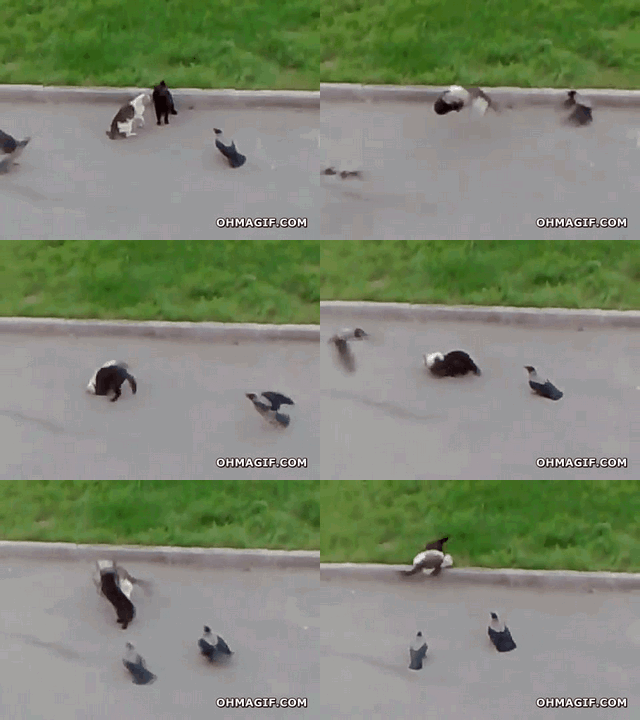
2. We know how to be the CATalyst for a fight
3. I’m not breaking a rule, I’m enforcing the will of the fashion police.
4. Just when you started to think we always have it out for dogs…#NoRulz!
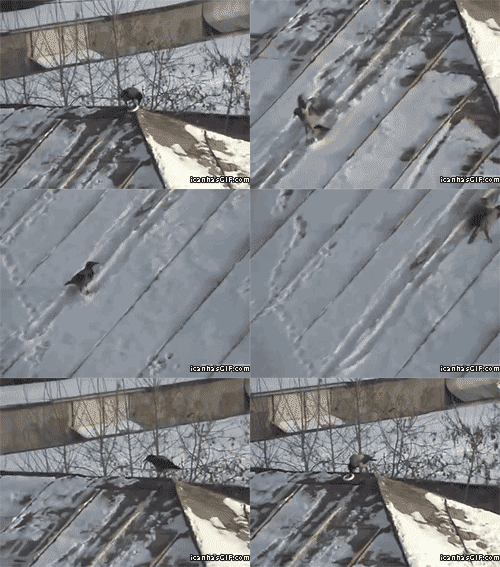
5. Nothing is off limits to my board, not even your roof.
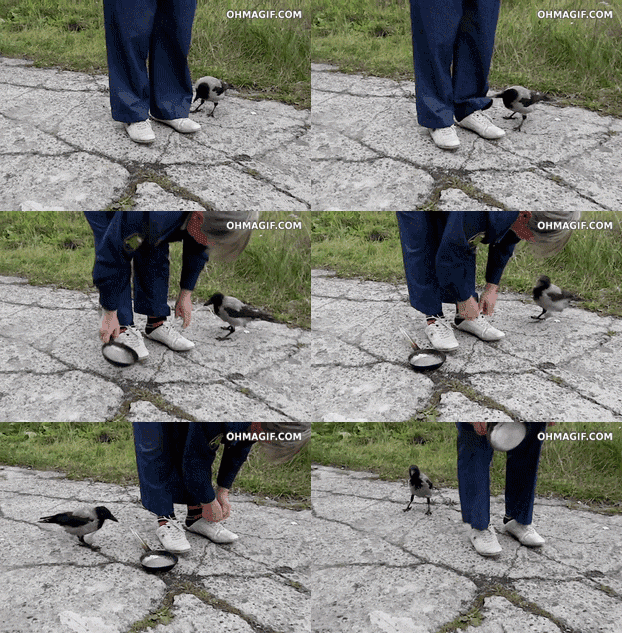
6. I don’t care what they say, I will be America’s next Top Chef! Wait for me Padma!
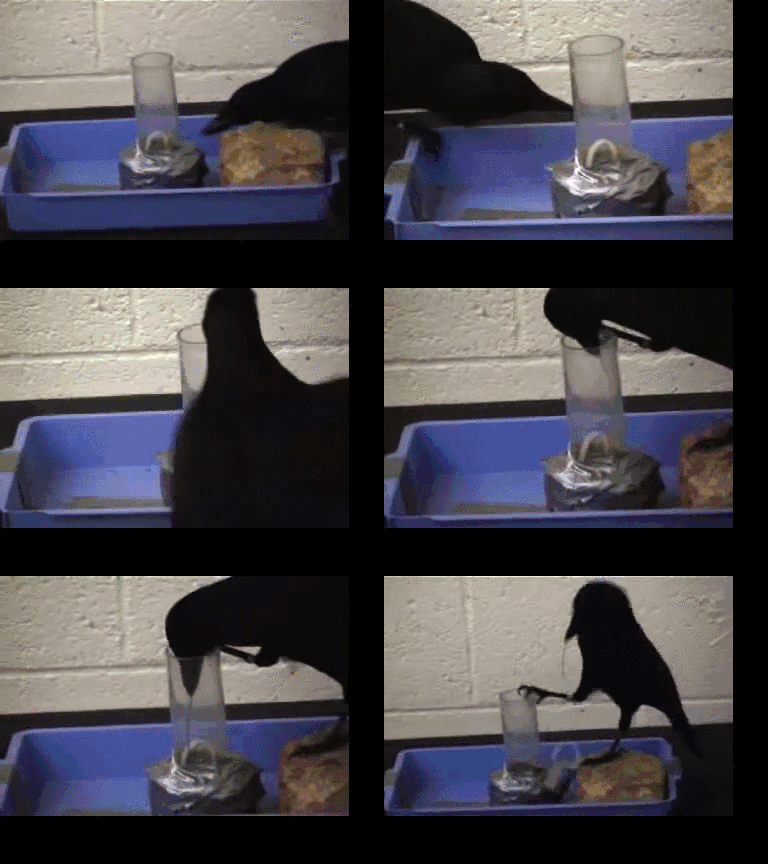
7. “Primates are the only species that make tools” Lol, nope
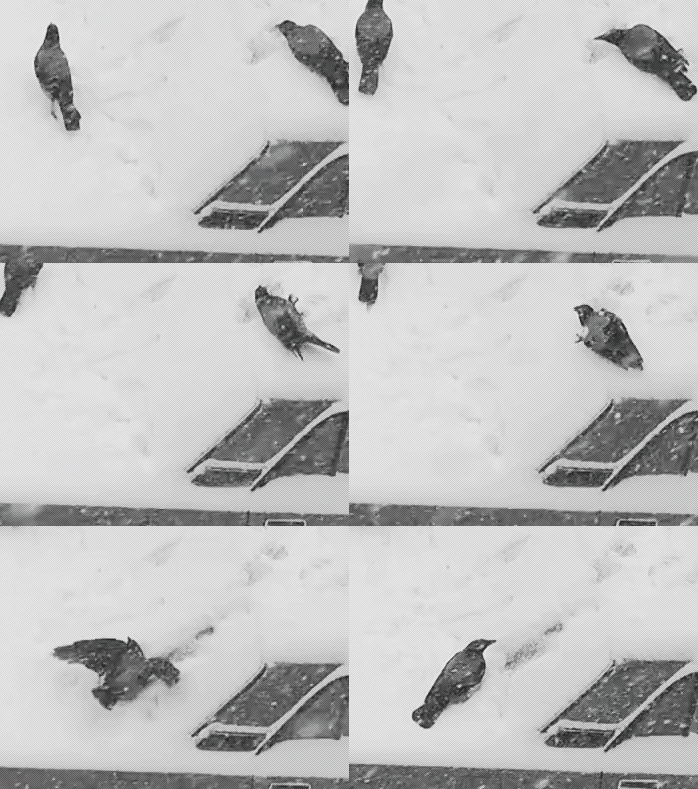
8. Just because they left it out of your ornithology textbook, doesn’t mean rolling isn’t a primary mode of avian transportation.
9. What do you mean birds are only supposed to make music with our songs?
10. Big bear? Don’t care. I need this for my nest.
*This post has been edited from a previous version due to both some initial inaccuracies and some scientific updates.












 corvidresearch.blog