Given their similarities, it might surprise folks to see crows occasionally harassing and chasing ravens. After all, birds of a feather right? Not in this case. Rather than being in cahoots, the relationship between crows and ravens is most often competitive, though it can also be predatory.
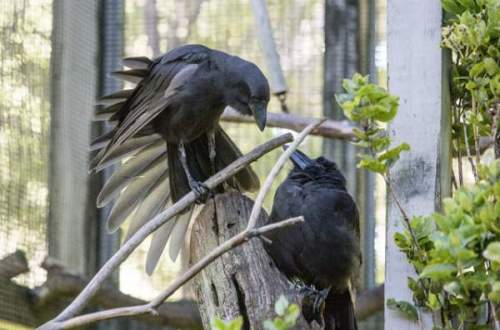
A raven barrel rolls to scold an attacking crow.
Such is the case in a recent video shared with me by a reader, Ty Lieberman. To the dismay of him and his colleagues, a crow nest they had been observing outside their Los Angeles office window was partially dismantled, and at least one egg taken by what they believed was a pair of crows. Concerned for the survival of the nest, Ty reached out for my interpretation. Based on his initial description, I wondered if maybe he had witnessed egg transport, something I knew had been observed in black-billed magpies and pinon jays.1 Previous accounts of these species included descriptions of eggs being taken, and then returned to the nest, as well as eggs being deposited into the nests of neighbors, both of which are utterly fascinating behaviors and probably warrant their own post.
To date, however, there are no accounts of crows engaging in this behavior, though there is one documented observation of a nestling being deposited into a nest from which it did not originate.2 Again, utterly fascinating, but not helpful here.
Later, a more detailed account from Ty made mention of the size of the intruding birds, which quickly led me to the story’s true explanation. Shortly after my ‘ah ha’ moment, to the dismay of he and his colleagues the nest raiders returned, and this time were caught on video by one of Ty’s colleagues (who you can follow on twitter, @namnam). Rather than being crows, these literal homewreckers were common ravens.
Instead of being something out of the ordinary, Ty had witnessed a typical breeding season interaction between crows and ravens. It’s no wonder then, that crows can be so hostilie when ravens enter their territory.
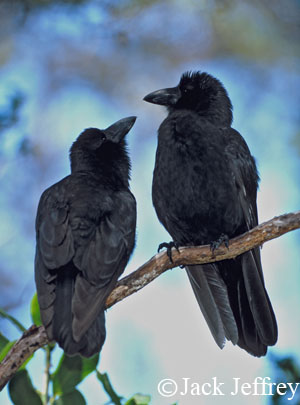
Crows (top) mobbing a raven (bottom) in Kent, WA
Eggs of all kinds are one of the most power-packed meals in the animal kingdom, so it’s no surprise ravens would take advantage of crow nests when they find them. Around this same time back in 2015, a black bear made a similarly memorable meal out of a raven nest, reminding us that for corvids of all kinds, it’s a constant fight between being predator or prey.
Literature cited
Trost CH and CL Webb. 1986. Egg moving by two species of corvid. Animal Behaviour 34: 294-295.
Schaefer JM and Dinsmore JJ. 1992. Movement of a nestling between American crow nests. The Wilson Bulletin 104: 185-187
With a peanut visible in my gloved hand, we square off. The crow eyes me from its snow covered perch, weary of such gifts offered by strangers. Above us a raven castes a disinterested look, croaks, and flies away. I toss the nut into an empty parking space and the crow descends to quickly collect its prize. The space between us must be widened before it will comfortably eat however, so I decide to leave the crow to its snack and return to my car.
Scrunching my feet in my shoes, I’m relieved for the excuse to retreat. It’s about 10˚F outside and despite the wool socks and insulated boots between my skin and the snow I can tell that my feet are numb from the cold. Even stashed in my pocket, my gloved hands are having trouble articulating to their full range. How is it that my extremities lose function even with so much coddling and yet the crows can continue using their bare toes to steady and manipulate food in such cold weather?
To be clear, birds are endothermic, or warm blooded, just like mammals. In fact, on average, birds run a little hotter than mammals. And their feet, like ours, requires warm blood both to function and to prevent the tissues from outright freezing and causing cell death. Yet despite these needs birds can comfortably walk, stand, or even sleep on ice.
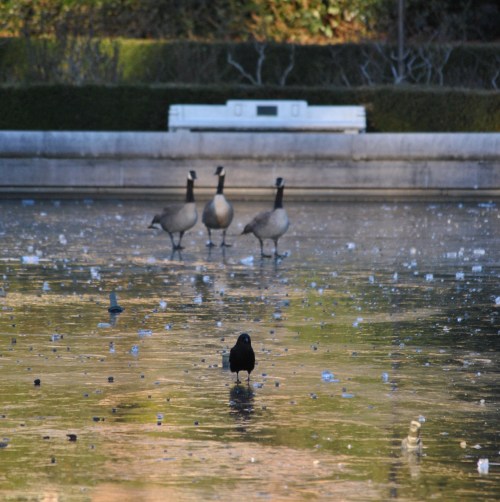
Glassy ice makes cold footing!
To do so, they can take advantage of two important adaptations. The first is that the size of the arteries carrying blood into the legs and feet is exceedingly small. Given this high surface to volume ratio, the blood has already lost most of its heat by the time it reaches the feat, and can’t lose much more to the outside world. The second is that they employ what’s called a counter current heat exchange system. Essentially, warm blood traveling away from the core and towards the feet via the arteries comes into close contact with colder blood traveling away from the feet and towards the core via the veins. At this point of contact, heat from arterial blood is transferred to blood traveling in the veins. This heat exchange system allows for the tissues in the feet receive just enough heat to prevent cell death, and can reduce heat loss by up to 90%1.
A crow wades out across a frozen Drumheller Fountain in search of scraps
As an additional strategy, you’ll see them protecting their exposed legs under their body feathers, as if they’re incubating them. This is the same reason you often see winter birds standing on one leg. By switching back and forth, birds can minimize overall heat loss by reducing the exposure to only a single leg.
A crow covers its feet while it waits (hopes) for a handout
So while I need special clothing to keep my extremities at a similar temperature range to my core, the physiology of most birds is adapted to simply allowing extremities to exist at near ambient temperatures with no tissue damage. In other words, rather than crows’ feet not getting cold, their feet simply are cold. That said, frostbite is still a possibility even in birds, particularly for: nonnative species, birds in wire cages, birds with metal legbands, and birds in unseasonably cold conditions. If frost bite occurs, early treatment at a rehab facility can prevent long term damage2.
Still, the idea that cold-adapted birds can keep their hearts beating away at around 105˚F even while their feet are exposed to freezing temperatures is marvel of adaptation and thermoregulation!
Literature cited:
Elphick C, Dunning JB Jr., Sibley DA (eds). (2001) The Sibley guide to bird life and behavior. New York: Alfred A. Knopf
Wellehan JFX. (2003). Frostbite in birds: Pathophysiology and treatment. Compendium 25: 776-781
It can be hard to imagine crows as anything but ubiquitous. During winter across the country, dusk marks the time where some cities see their skies turn black with thousands, even hundreds of thousands of American crows converging to roost. These crows have taken nearly all that people have thrown at them: deforestation, mass waste, and the urban sprawl that simplifies previously complex ecosystems, and uses it to their advantage. Not all species of crow have thrived in the Anthropocene, however.
Thousands of gather accumulate in the skies above UW’s Bothell campus in the winter
Far from being icons of the ultimate adapters some species of crow represent some of the most endangered animals in the world. Among those, the ‘Alalā or Hawaiian crow, is arguably one of the rarest birds on earth. Once locally abundant in the forests and woodlands of Hawaii’s Big Island, their decline began in the 1890’s following persecution by coffee and fruit farmers1. Back in September, 2015 there remained only 114, all living exclusively in captivity giving them the unenviable title of ‘extinct in the wild’. How can one species thrive with such zeal while another holds on by a thread?
Island species are generally more specialized and therefore more sensitive to human induced changes. In fact proportionally, islands host a higher number of endangered or extinct species than continental areas2. In Hawaii alone, 77 different species of endemic birds have gone extinct since the arrival of the Polynesians 2,000 years ago4, all largely for similar reasons: habitat destruction and invasive species.
Unlike their generalist, continental counterparts, the ‘Alalā is more specialized to feed on understory fruits and nuts and in fact were key seed distributors for many of Hawaii’s native plants. Island living also fostered a similar behavior seen in only one other species of crow: tool use. Like the New Caledonian crow, the ‘Alalā is a dexterous tool user, though the two species are only distantly related. Scientists believe this example of convergent evolution is fostered by aspects typical of islands, namely low predation and low competition for embedded food5.
Unfortunately, limited distributions and higher specialization also meant their population was more fragile than that of continental crows. Logging, agricultural development, loss of native pollinators, and alterations by non-native ungulates challenged both food acquisition and breeding habitat. Introduced diseases such as avian pox, malaria and the Toxoplasma gondii parasite carried by cats further weakened an already ailing population6,7. Invasive predators including rats, mongoose and cats consumed eggs, nestlings and fledglings. Finally, humans continued their tradition of persecution, particularly feral pig hunters who would shoot the birds before they could alarm call and scare off their prey2.
Together, these threats set into motion a decline in population we failed to recover despite some increases in research and management starting in the 1970’s. The last known wild egg was laid in 1996, and the last wild pair was seen in 20022,3. Some people did recognize the urgency of their decline prior to 2002, however, and a captive breeding population was started successfully rearing over 90 birds8. Although such a small number of breeders may raise red flags with respect to inbreeding and genetic depression, this is rarely as big of an issue as is commonly perceived. Unfortunately, light management and depredation by the also endangered Hawaiian hawk (‘io), decimated the released population and reintroduction efforts were halted in 1999 until a larger captive population and better management strategy could be devised.
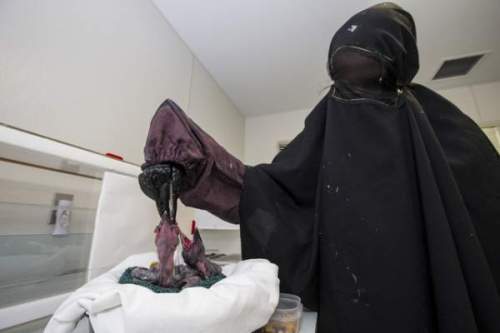
Since that time, the ‘Alalā Restoration Project (collaboration between the State of Hawaii, the U.S. Fish and Wildlife Service, and San Diego Zoo Global) has spearheaded captive breeding programs on Maui and the Big Island culminating in a population of over 100 birds. An important part of these captive breeding programs is the use of puppets, which help prevent habituation to humans9. In addition, intensive management operations have taken place to ready their prospective home at the Pu‘u Maka‘ala Natural Area Reserve including the removal of invasive/feral animals, erecting exclosure fencing, and constructing a sort of half-way house to help ease the birds into life in the wild. These efforts have not been without setbacks, however. Back in June, 2015 two miles of protective fencing was cut down by vandals, though their motivations remain unknown.
A human dressed as an ‘Alala feeds captive reared nestlings. Photo c/o San Diego Zoo Global
Finally, after so much work, the end of 2016 marked the first time researchers and managers agreed the elements were in place for a reintroduction effort. On December 14th, five male birds were released onto the reserve, marking the first time the ‘Alalā set claw into the wild since 2002. Sadly, within weeks all but two had died. Two were killed by the native Hawaiian hawk or ‘lo, and the third was killed by “natural circumstances” which, I’m guessing, is related to a heavy storm that occurred shortly after their release. As a protective measure, the remaining two were recaptured until the results from the necropsies are obtained.
While clearly disheartening, early hiccups in a release effort like this are not unusual and conservationists and biologists are not losing hope that success is still possible. Part of ensuring such success, however, is undoubtedly public support particularly with respect to maintaining the strength of the Endangered Species Act and support of the ‘Alalā Restoration Project. The perception that all crows are alike or that generous populations of American crows means protections for other corvus species is unwarranted or redundant will be a disaster for these rare birds. So make your voice heard when funding for conversations efforts come under fire, and share your passion for endangered corvus species with friends and family. The fate of the world’s rarest crow quite literally depends on it.
Two newly released ‘Alalas peer around their new surrounding in the Pu’u Maka’ala Natural Area Reserve. Photo c/o the San Diego Zoo Global
Faike, E. 2006. Wild voices in captivity: the date of the ‘Alala. Birding 38: 64-67.
Banko, P. C.; Burgett, J.; Conry, P. J.; David, R.; Derrickson, S.; Fitzpatrick, J.;
National Research Council (US) Committee on Scientific Issues in the Endangered Species Act. Science and the Endangered Species Act. Washington (DC): National Academies Press (US); 1995. 2, Species Extinctions. Available from: https://www.ncbi.nlm.nih.gov/books/NBK232371/
Rutz C, Klump BC, Komarczyk L, Leighton R, Kramer J, Wischnewski S, Sugasawa S, Morrissey MB, James R, St Clair JJH, Switzer RA, and Masuda BM. (2016).
Discovery of species-wide tool use in the Hawaiian crow. Nature 537: 403-407 doi:10.1038/nature19103
Maxfield, B. 1998. Wild ‘Alala population suffers major setback. ‘Elepaio 58: 51.
Liebermann, A.; Nelson, J. T.; Simmons, P.; Unger, K.; Vitousek, P. M. 2003. Draft revised recovery plan for the Alala (Corvus Hawaiiensis. US Fish and Wildlife Service, Portland, OR, USA.
Lieberman, A. C., Kuehler, C. M. 2009. Captive propagation. In: Pratt, T. K.; Atkinson, C. T.; Banko, P. C.; Jacobi, J. D.; Woodworth, B. L. (ed.), Conservation Biology of Hawaiian Forest Birds: Implications for Island Avifauna, pp. 448-469. Yale University Press, New Haven.
Valutis LL, and Marzluff JM. (1999). The appropriateness of puppet-rearing birds for reintroduction. Conservation Biology 13: 584-591
Crows, ravens, magpies, even blackbirds or other non-corvid species can be tricky to distinguish from one another if you’re a beginning or even experienced birder given the right angle or blurry photo. While some of it is a matter of learning key field markers, a big part of effectively learning to distinguish these species is an eye for the subtle differences in portion or appearance that comes with practice. I believe learning these skills is not only fun, but makes us more informed corvid lovers and birders.
To that aim, I’ve started a weekly #CrowOrNo “quiz” on my Instagram (@corvidresearch) and Twitter (@corvidresearch) accounts. Every Wednesday at 11:30 AM PST, I’ll post one photo and it’s up to you to decide whether or not it’s really a crow. At the end of the day I’ll share the answer and any tips or tricks that would have helped to discern the true species. Play, share, or simply spectate. Whatever you’re comfortable with is fine for me, as long as you’re enjoying the process and learning more about these wonderful animals! Check out the photos below for examples from past weeks. I hope to see you there!
Oh, and have photos you think would make good fodder for the game? Send them my way!
Update: The game is also now available on the Corvid Research facebook page!
When most Americans think of corvids, the color palette that probably comes to mind is black, grey, blue, white and iridescent. Together, these colors have certainly assembled a handsome collection of birds, but there’s an awful lot more pigments in the corvid family than that. Even among those colors, some of the more topical corvids exploit them in dazzling ways. Unlike American or New Caledonian crows though, these birds have not gotten their fair share of the corvid limelight and it’s time we change that. The following is a sample of just some of the corvid diversity more folks should know about. If you really want to have a little extra fun, ignore the scientific names and see if there are any birds you would group together in the same genus (reminder: Family>Genus>Species). Then you can go back and look at the first part of the scientific name to see if you were right!
These photos were primarily sourced from some of the generous and talented photographers that can be found on Flickr. Please click on their names to see more of their great work.
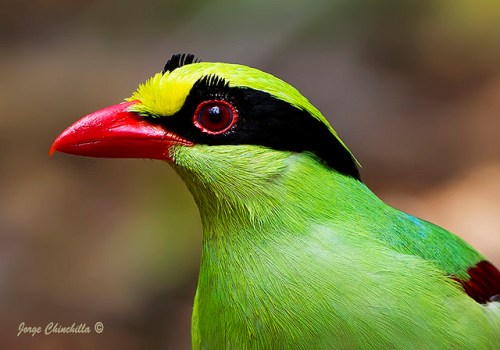
1. Common green magpie (Cissa chinensis). Found in parts of India, China and Indonesia. A flocking corvid often found low in the canopy where they can be very difficult to spot among the vegetation. According to the International Union on the Conservation of Nature (IUCN) their populations are considers stable and of least concern.
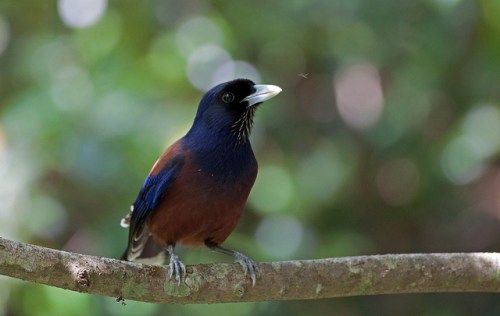
3. Lidth’s jay (Garrulus lidthi). The only jay endemic to Japanese islands of Amami-oshima and Tokunoshima. In the fall they can gather in groups as large as 100 birds where they feed mainly on acorns. Habitat loss and predation have this bird listed as declining and vulnerable.
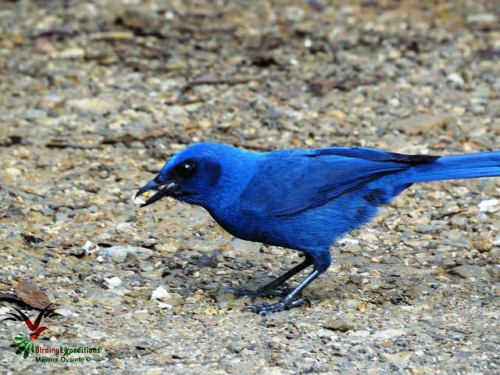
4. Unicolor jay (Aphelocoma unicolor). Ranges intermittently from western Mexico to El Salvador and may have as many as 5 subspecies! They are considered of least concern, though populations are declining.
5. Green jay (Cyanocorax yncas). These jays can be found from southern Texas throughout central America and as far south as Peru. Although they are a solitary breeder, they are very social in the non-breeding season. Populations are increasing and they are considered of least concern.
6. Spotted nutcracker (Nucifraga caryocatactes). Native across Europe and Asia, theses birds are monogamous and generally hang out only with their mate. Like the unicolor jay they are considered of least concern but trends point towards decline.
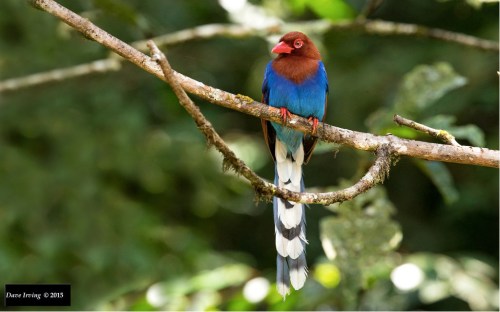
7. Ceylon magpie (aka Sri Lanka blue magpie; Urocissa ornata). Another Sri Lankan endemic. These birds can be seen in pairs or small flocks where they noisy work the tree canopy. They are considered vulnerable and declining.
8. Black-throated magpie jay (Calocitta colliei). This bird is limited to northwest Mexico where it can be found in open woodlands chatting loudly and waiving their tails. They are common and populations are stable.
9. Turquoise jay (Cyanolyca turcosa). Can be found in the humid forests of Ecuador, north Peru, and south Columbia. Overall this species is poorly documented. Right now it is considered a least concern species but it’s possible that’s due to lack of data.
10. Rufous treepie (Dendrocitta vagabunda). Found across India and southeast Asia. These birds are generally wary of people but have been known to enter houses to look for geckos. Would love to find one in my house! Populations are stable and they are considered least concern.
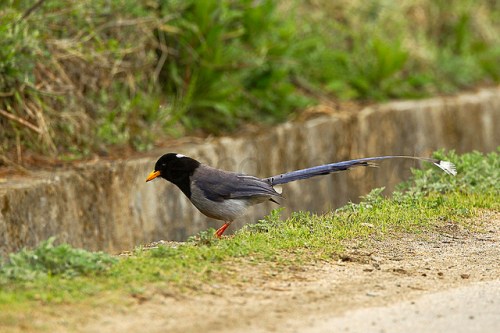
11. Gold-billed magpie (Urocissa flavirostris). Endemic to Taiwan, these birds keep their tails erect when on the ground, possibly to prevent the feathers from being damaged. Populations are stable and they are considered of least concern.
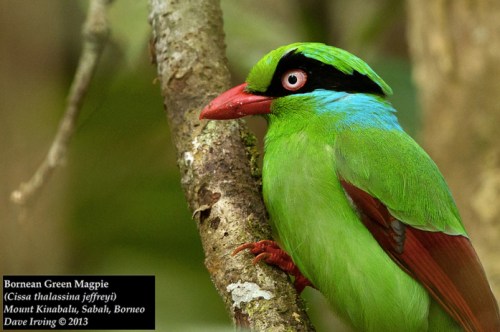
12. Bornean green magpie (Cissa jefferyi). Found only in Indonesia and Malaysia, these birds look (and act) similarly to the common green magpie. Relatively little is known about this species as they are hard to access high in the mountain forests. It’s listed as of least concern.
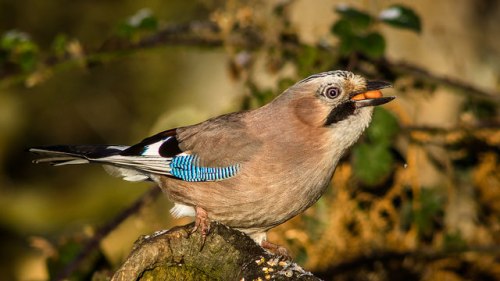
13. Eurasian jay (Garrulus glandarius) Found throughout Europe, Asia and Northern Africa. This bird is common to most birders outside of North and South America. Although these birds remain with their mates for extended periods they do not keep much contact throughout most of the year. Eurasian jays are in no danger of global population decline.
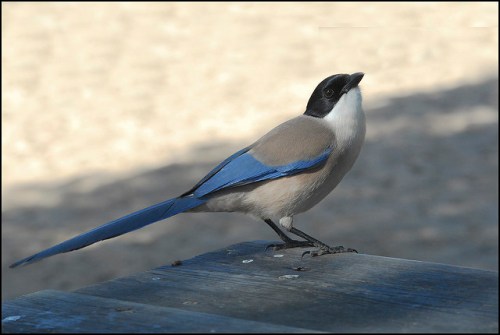
14. Azure-winged magpie (Cyanopica cyana). Native across Asia and as far north as Mongolia and southern Siberia*. They form small family parties during the breeding season but amass into large groups during the nonbreeding season. Populations are increasing and they are of least concern.
15. Finally we have, literally, the beautiful jay (Cyanolyca pulchra). Found only in the Andes of Colombia and north Ecuador. They can be found alone or in pairs but are not believed to interact in large social groups. Little known about reproduction, social behavior or predators. Populations are declining and near threatened.
Did you pick out a favorite bird? Let me know in the comments and I’ll try to dedicate a post to it!
Literature cited
*A previous version of this post incorrectly stated that the Azure-winged magpie spread as far west as Spain and Portugal. Although this was true at the time the reference guide used to write the post was written, since 2002 these western birds have been splint into their own species called the Iberian magpie1.
1Fok KW, Wade CM, Parkin DT (2002). “Inferring the phylogeny of disjunct populations of the azure-winged magpie Cyanopica cyanus from mitochondrial control region sequences.”. Proc. Roy. Soc. B Biol. Sci. 269 (1501): 1671–1678.doi:10.1098/rspb.2002.2057.
All other species descriptions were based on: Madge, S. and Burn, H. 1999. Crows and jays. Princeton, New Jersey: Princeton University Press 1999.
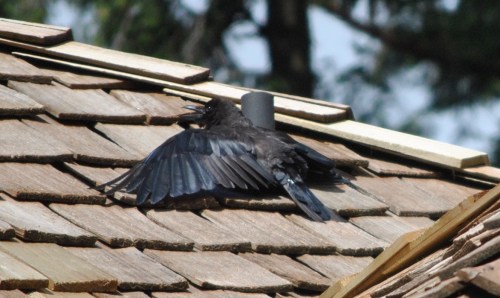
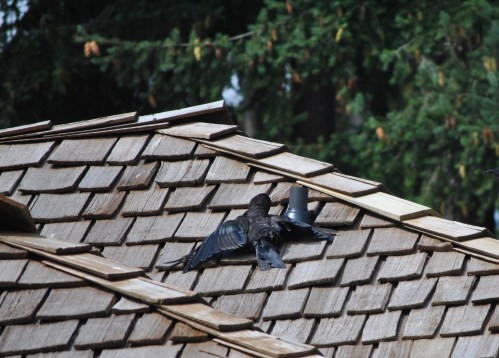
With its bill agape, I watch as the crow fans out awkwardly across the cedar shingles. Pressing the camera to my face I snap a couple photos, pleased to finally capture on film a moment I so often encounter in the field. Unlike the crow, who’s keeping a watchful eye on the sky, I’m completely taken with my admittedly creepy behavior. Until, of course, I hear the stiff “Excuse me, can I ask what you’re doing?” from the driver’s window as the homeowner’s minivan pulls up behind me.
Fortunately for me, crow curiosity isn’t hard to come by and quickly the homeowner is as taken with watching this bird as I am. “So, what is it doing up there? I see them like this on my roof all the time” he asks after I give him my credentials. It is a rather odd sight. It’s nearly 90˚ and the crows is sitting in direct sunlight, mouth open, head cocked and wings outstretched like it’s injured. Rather than escaping to shade, it’s joined by its fledgling and together they bake their bodies in the hot sun for a few minutes before gathering themselves and carrying on down to the grass to forage.
Although the specifics can vary slightly, this general kind of posture can be observed across hundreds of bird species, even those you might not expect to have much opportunity for it like owls. Often it’s used to dry wet feathers or warm up on a crisp winter morning but, given that they do it even when it modestly heat stresses them, it must have some other physiological benefits beside thermoregulation.
There are a handful of other reasons that birds may sunbathe, but the big picture is that applying intense heat to feathers is critical to maintaining them in good condition. For example, sunlight exposure has been shown to suppress feather degradation caused by the bacteria Bacillus licheniformis.1 Heat also helps control ectopatasites, possibly by making them more mobile and easier for birds to remove.2 Lastly, sunning may relieve discomfort caused by molting and promote vitamin synthesis.3
So, far from being a signal of distress or heat exhaustion, observing this posture in crows is like watching them ruffle around in a puddle. It’s a routine, and important part of their self care regimen. Plus, everyone knows a few minutes in the sun just plain feels nice.
Photo c/o Kathy Brown. Find more of her great photos on Instagram @kat2brown
Literature cited
1. Saranathan, V., and Burtt, E.H. Jr. (2007). Sunlight on feathers inhibits feather-degrading bacteria. The Wilson Journal of Ornithology 119: 239-245
2. Blem, C.R., and Blem, L.B. (1993). Do Swallows sunbathe to control ectoparasites? An experimental test. The Condor 95: 728-730
3. Potter, E.F., and Hauser, D.C. (1974) Relationship of anting and sunbathing to molting in wild birds. The Auk 91: 537-563
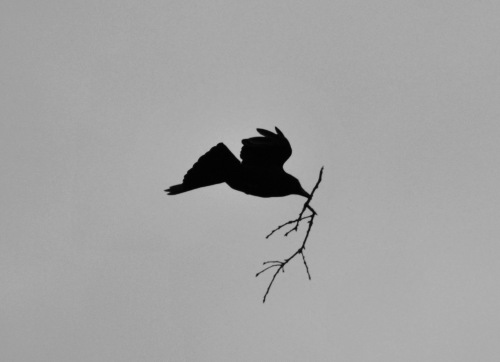
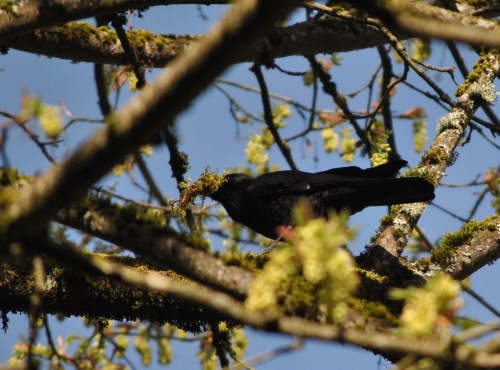
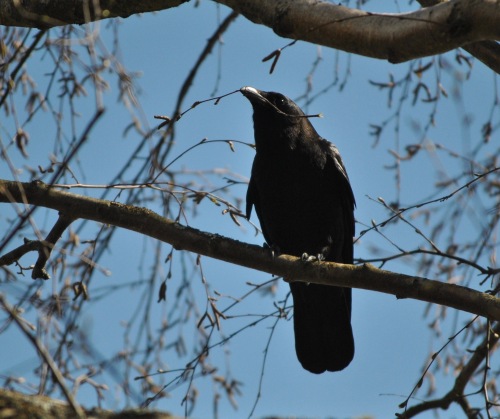
Spring marks one of my favorite times of year. Cherry blossoms abound, the rain smell sweet and the birds get busy putting their carpentry skills to good use. Starting early March, the silhouettes of crows with bill loads of timber or wads of soft material dot the skies as they shuttle back and forth to their nest tree. Like a townhouse development, these construction projects are over in the blink of an eye and soon, their bill loads of twigs will be replaced by food for their mate and, eventually, their insatiable young. Spotting these nests is both a great way to observe and engage with your local crow family and avoid unpleasant conflicts with protective crow parents. With a little knowledge and a bit of practice, tracking down your resident crow nest will become one of your favorite spring traditions in no time.
Nest construction and site selection
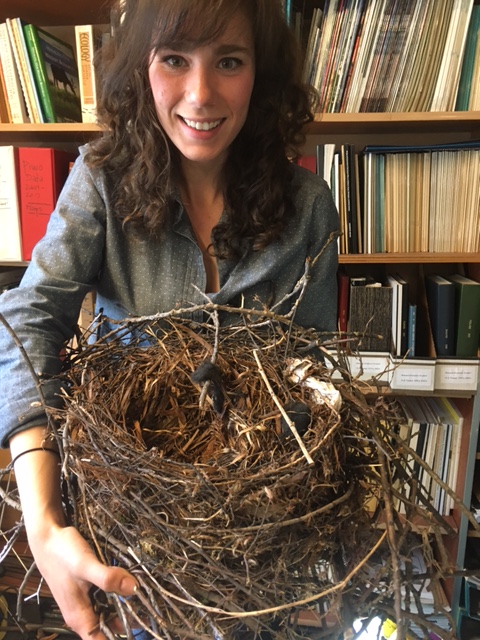
Nest construction begins in early March and will continue (as nests fail) through about June. It takes 1-2 weeks to finish a nest after which the female will lay a clutch of 2-6 eggs. Unlike similarly sized squirrel nests (aka: dreys) which are made of leaves, crow nests are made mostly of pencil-width twigs. A new nest is usually about 1.5 ft across and 8-10 in deep. After the bulk of construction is complete, they’ll line the cup of the nest with soft materials like grass, tree bark, moss, flowers, paper or fur. Once we saw a crow ripping out the hair of an outdoor mannequin, no doubt to use as lining material.
A crow gathers moss off the branches of a big leaf maple to use as lining material.
This bird toyed with this branch for a few minutes before rejecting it and letting it fall to the ground.
A sidewalk littered with twigs is good evidence that the nearby deciduous tree is a favorite among the local crows to pull branches from. I’ve only once seen a crow try and retrieve a branch it dropped, so these are all rejects.
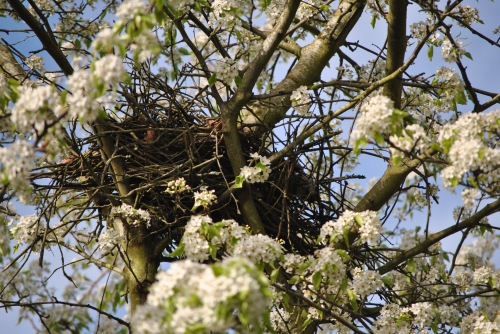
Crows will nest in an astounding array of places, from the eaves of skyscrapers to the crooks of well concealed tree limbs. They can tower in the sky or be almost within reach. Most commonly, I see them built close to the trunk in the top third of Doug fir trees, but this is, of course, specific to the PNW. Both partners participate in nest construction. Helpers will aid to some degree but most of the work is left to the parents.
Not sure how they did it, but this pair managed to build a nest on the underside of the Alaska Way Viaduct in downtown Seattle
This is one of my favorite nesting locations I’ve discovered so far. Rather than being deterred by the bird spikes, they’ve essentially used it as rebar!
Differences among corvids
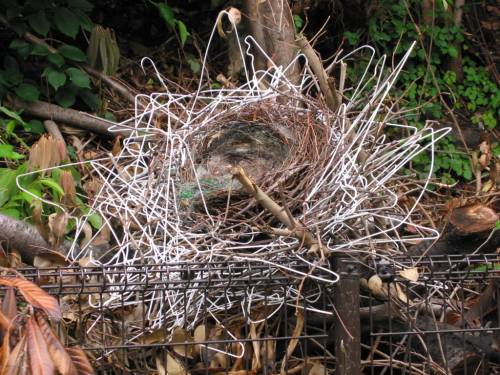
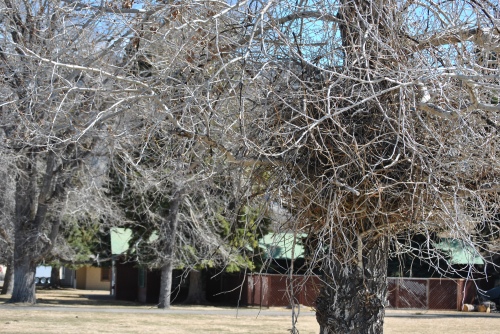
Crow, jay and raven nests are similar in shape and material but differ in overall size in accordance with the size of the bird. The main standout are magpies, which build incredible domed-shaped nests the size of a large beach ball. The nests require so much material, they can take as much as 40 days to build. Japanese jungle crows are another species of note, as they have a (relatively) new and problematic habit of building nests out of wire hangers and causing massive blackouts.
A Jungle crow nest in urban Japan. Photo: Götz
The magpie’s nest is the big clump in the middle of the tree.
Reuse
The life of a typical nest is only about 9 weeks (1-2 weeks of building, 6 days of laying, 20 days of incubating and 4 weeks of nestlings) though they are hardy structures and can remain intact in a tree for years. After the young fledge, the crows will not return to the nest. Crows will only use a nest once, and generally only fledge one brood a year. They will, however, build on top of an old nest particularly in areas where nest trees are especially sparse like downtown Seattle. This also appears to be more common in the Midwest.
Avoiding conflicts
Most breeding related dive bombs occur as the result of a person being too close to a fledgling, but some crows get feisty around their nest too. Crows in areas where they are less persecuted (like cities) tend to be more aggressive than their rural counterparts. If you know where a nest is and can avoid it, do so and save everyone the aggravation. Otherwise carry an umbrella or paint eyes on the back of a hat. Crows rarely attack from the front so having eyes on the back of your head can be an effective deterrent!
***
Putting all this together to actually find nests, is one of the most rewarding moments an urban naturalist or crow enthusiast can have. Be warned though: crows are wary of potential predators (including people) spying on them and they have a few tricks for throwing you off, so don’t be surprised if a nest location you were certain of turns out to have been a ruse!
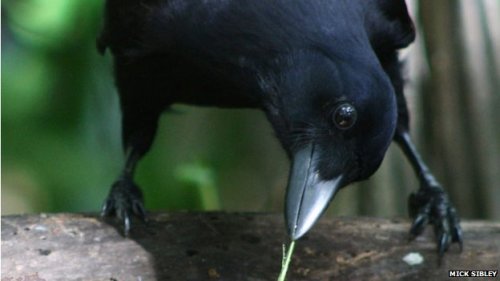
There’s hardly a corvid species that doesn’t strike me as beautiful but there’s only one that’s always struck me as particularly gleeful. Looking at the New Caledonian crow it’s evident there’s something different about the shape and proportions of its bill. It’s a bit shorter and more blunt, and it lacks the obvious downward curve of a typical crow bill, with lower mandible actually curving slightly up. Put together, these features appear to give it the perpetual grin that trademarks this species. I’ve joked that this must be because they’re always feeling very pleased with themselves for being so smart, and thanks to new research, I’ve come to learn my joke had it backwards.
A New Caledonian crow’s bill appears in sharp contrast to a typical American crow. Photo: “Science Meets Adventure”
By using tomography scans, Hiroshi Matsui and his team were able to compare the shape and structure of the NC crow’s bill with that of its close relatives. Their conclusion, which they report in the March issue of Scientific Reports, is that this shape makes the handling and manufacturing of tools easier. Looking at photos of the birds in action, it feels intuitive that the more exaggerated curve of a raven or American crow bill would have a hard time achieving the dexterity that NC crows need to use their stick and hook tools.
Given this new research it’s time to amend my joke. It’s not that NC crows grin because they’re smart, they’re smart because they grin.
Literature cited
Matsui, H., Hunt, G., Oberhofer, K., Ogihara, N., McGowen, K., Mithraratne, K., Yamasaki, T., Grey, R., and Izawa, E. 2016. Adaptive bill morphology for enhanced tool manipulation in New Caledonian crows. Scientific Reports 6. doi:10.1038/srep22776
Ah the Australian magpie. With its glossy tuxedo plumage, heavy bill, and charismatic reputation it’s no wonder it’s a favorite among corvid lovers. Why then, do scientists keep insisting that it’s not, in fact, a corvid? This insistence of ours can feel arbitrary, even perhaps insulting, to a bird that superficially looks and acts like the corvids we know.
A still frame from the infamously cute video of an Aussie magpie and a puppy play-wrestling together.
To address this question, corvid expert and my colleague, Jennifer Campbell-Smith, recently penned a terrific piece to lay the confusion to rest. I recommend everyone take the time to read it in full.
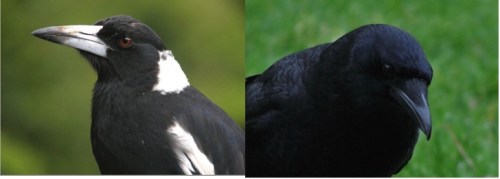
If you do not have time, the short version of the story is that physiologically, Australian magpies, like the other butcherbirds they are classified with, lack the nasal bristles indicative of corvids. Genetically, DNA work done in the late 80’s also showed that, while they share a common ancestor, are are phylogentically distinct from other corvids. There has been some back and forth since then on the details, but there’s no scientific evidence that we should be lumping them in with corvids.
The nasal feathers are those thin, wire like feathers covering the base of the bill on the crow to the right, but conspicuously absent on the Aussie magpie to the left. Australian magpie photo: Guy Poisson
Why this bums so many corvids lovers out is a curious mystery to me. Personally, I find the convergent evolution with respect to both appearance and behavior much more interesting than if we simply made a taxonomic mistake. As for whether corvid lovers should continue to find joy and fascination in observing these birds well, I’ll direct you to this video and let you be the judge.
…someone trying to steal my lunch. Turns out, humans are not the only ones wary of peeping Toms; new research shows raven can imagine being spied on by a competitor.
***
The other day my friend and I were having a very merry time at the thrift store when, without cause or provocation, this women decides to up and ruin our trip. Well really, she simply spotted the same gorgeous caste iron dutch oven that my friend wanted and reached it first, but the consequence was the same (it was a tragically beautiful dutch oven). This dynamic-my friend having her own intentions (to obtain and own that dutch oven for herself) and recognizing that this other women had her own intentions (to obtain and own that dutch oven for herself) is something so second nature to being human we rarely give it any thought. But the ability to attribute mental states to those around us is an incredibly profound and complex cognitive task. Understanding if this ability, called Theory of Mind, exists in other animals has been among our top interest as ethologists.
Like other corvids, ravens cache food and, as a consequence, run the risk of their caches being stolen by others. It has long been known that if ravens can see that they are being watched, they behave differently when it comes to caching than if they are alone. This is interesting, but doesn’t necessarily speak to whether they posses theory of mind because of the confounding effect of “gaze cues”. Basically, the correlation between head cues and competitor behavior make skeptics doubtful about non-human animals having the ability to know what others might be seeing. So raven master Thomas Bugnyar and his colleagues Reber & Bruckner recently published an elegant study to address just this issue.
By training captive ravens to look through a peephole, and then allowing them to cache food with the peephole opened or closed, the researchers were able to show that ravens behaved as if they were being watched when they could hear ravens and the hole was open, but not when they could hear ravens but the peephole was closed. What this suggests is that ravens are capable of remembering their own experience of looking through a peephole to see into another room, and can imagine that another bird might be doing the same thing even if they cannot see this bird.
Experimental set up. Bugnyar et al. 2016. Nature Communications
Theory of mind and imagination (which are not mutually exclusive) are the cornerstones of what makes for a powerful cognitive toolkit and have long been thought to be uniquely human. As we continue to build on the body of work showing non-human primates, corvids and some other animals posses some of the same skills we do, many will be challenged to redefine what it means to be human. Personally, framing the question that way doesn’t interest me. To me the more interesting question is not how are humans different from ravens, but how are we the same and why? What is it about being human and being raven that make possessing imagination important? Fortunately there is still loads more research to be done, and when it comes to teasing out this question I can only imagine the possibilities.






















 corvidresearch.blog