Author Archives: corvidresearch

Bill overhang in corvids

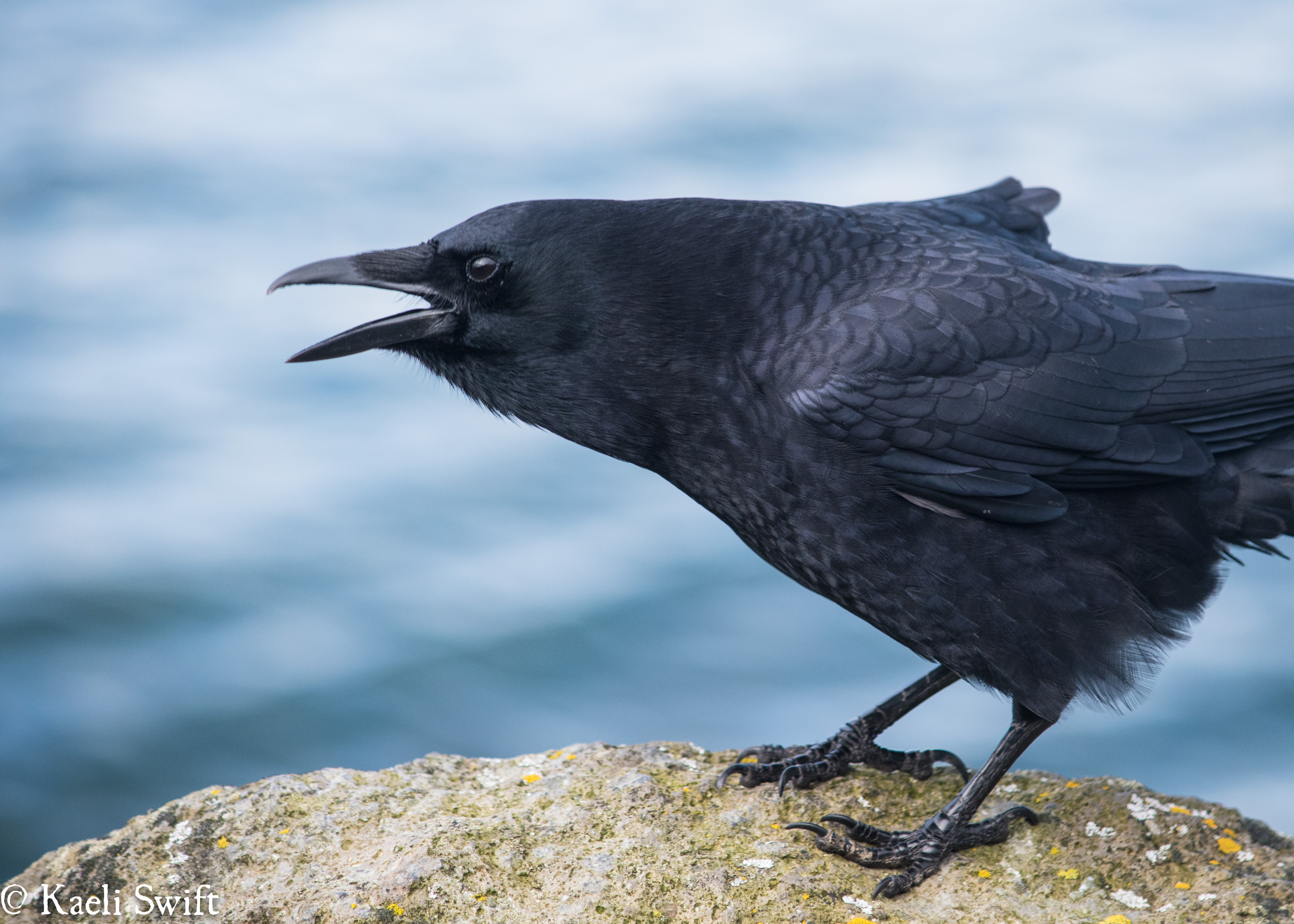
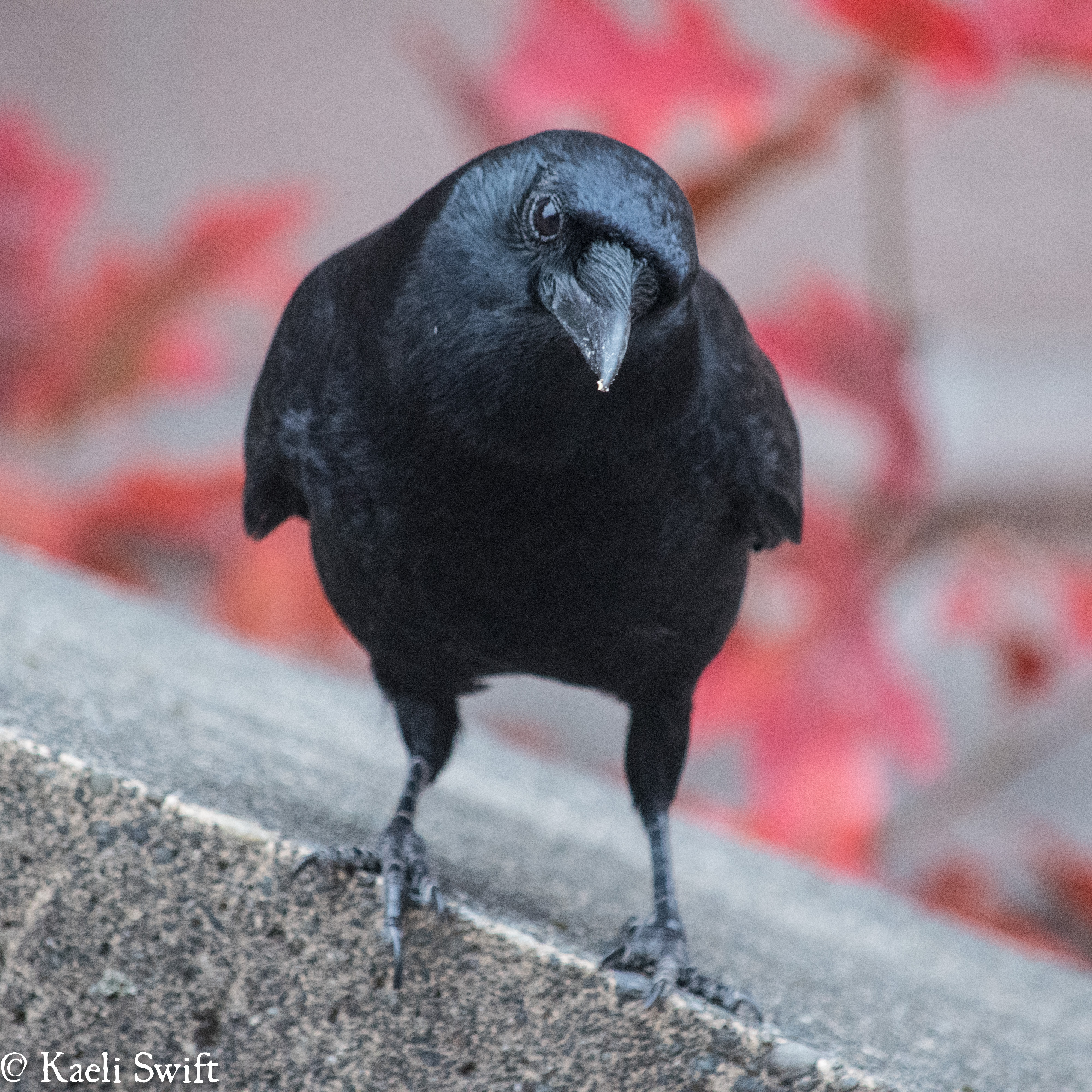
I hardly notice it when I’m in the field because the bird is either too far or too fussy for me to examine the finer details of its beak, but looking at pictures like this I can’t help but notice that little extra bit of bill that sweeps over this raven’s bottom mandible like an awning. It leaves me wondering, what is this overhang for? A why is it more noticeable on some individuals than others?

When we think of birds with curved upper mandibles we are most primed to think of raptors, which have the most conspicuously curved overbite of any group of birds. This shape give them the tearing power they need to breakdown and consume their prey. But upon closer inspection we can see that actually most birds, even some hummingbirds, have a slight* overbite known as maxillary overhang. Among corvids, common ravens have one of the most noticeable overhangs, though they can be quite visible in crows as well. Unlike raptors though, for most other birds this overbite has less to do with food consumption and more to do with hygiene.1

While they can be good at hiding it under those sleek feathers, wild birds are constantly contending with a suite of exterior parasites like gnats, feather lice, and mites. The presence of these parasites, and the speed at which they can cause real harm if left unchecked, is part of the reason birds dedicate so much time and energy into preening. To remove and kill these pinhead sized parasites, birds carefully comb through their feathers, individually plucking up offenders with their bill tip. Even a small (1-2mm) overhang has been show to provide a significant advantage to birds by providing a backdrop against which the lower mandible can pin and damage parasites. Without such an overhang, parasite loads can be as much as 4x higher. By contrast, the overhang doesn’t seem to play any measurable role in foraging success or efficiency.1

Given the largely carrion based diet of common ravens, it’s possible their more visible overhang provides some advantage when it comes to digging into a carcass. Since it hasn’t been tested, however, I can only guess that if some feeding advantage does exist here, it’s slight. This is supported by looking at other carrion specialized corvids, which don’t seem to show a particular bias in longer overhangs relative to their omnivorous or seed eating corvid cousins, and the fact that even within common ravens overhang length is variable.

This common raven doesn’t have a particularly big overhang

To an extent, the longer the overhang the more effective it can be. As anyone who has tried to maintain naturally long nails can attest though, long keratin based appendages are prone to damage and breakage. Bill tips are no different, which explains why there can be so much variation between and within species. The overhang is playing an evolutionary balancing act to arrive at the length that is the most effective and the least vulnerable to damage. That means that not only will some species have shorter or longer overhangs, but individuals within species may, at any point, exhibit more or less obvious tips as due to recent damage. As a result of this variability, I don’t recommend looking to the level of bill overhang as a diagnostic tool for identifying ravens. While it’s certainly useful for crushing bugs, you can’t bank on it being useful for winning that next round of #CrowOrNo.

•••

* Some corvids have more than simply a slight overbite. Unusually long or misshapen bill tips can be the result of a viral infection called avian keratin disorder. Check here to learn more about AKD in crows.

Literature cited

  1. Clayton DH, Moyer BR, Bush SE, Jones TG, Gardiner DW, Rhodes BB, and Goller F. 2005. Adaptive significance of avain beak morphology for ectoparasite control. Proc. R. Soc. B 272: 811-817

11 Comments

Filed under Corvid health, Crow curiosities, Diversity, Ravens

Crows removing ticks: helpfulness, opportunism, or something else?

Guest post by Thom van Dooren

If you’ve spent much time at all watching YouTube videos of corvids, you’ve likely come across some of the numerous examples of them engaging in the seemingly helpful act of removing ticks and other ectoparasites from all kinds of other animals. The lucky ‘client’ might be a rhino, a sambar deer, or a cow.  Admittedly, it isn’t always entirely clear that these crows are being exclusively helpful, engaging in what biologists call symbiotic cleaning. In at least some of these cases, there seems to be a reasonable chance that they’re (also) playing, pestering, or even getting ready to take a bite out of an unsuspecting animal. 

In a few cases though, the results of their cleaning work speak for themselves. One recent set of camera trap videos circulating at the moment on social media shows a group of corvids, probably Torresian Crows (Corvus orru), removing ticks from several, somewhat reluctant, wallabies. The ticks have been around for a while, as evidence by their size, and cover large parts of many of the animals’ ears and necks. As the wallabies arrive at a watering station that has been set up for them in the dry summer of southern Queensland, the crows move in. They carefully sidle up to the wallabies while they’re drinking, and then, in one swift movement, a beak flashes out and returns with a tasty, protein-rich, tick.

While these videos fascinate, delight, and frequently disgust, YouTube viewers, these behaviors are not uncommon in the animal kingdom. Symbiotic cleaning, across species lines, is a particularly common practice for fish, crustaceans, and birds. The animals who receive these cleaning treatments are mostly larger fish and herbivores. In the case of corvids, studies have documented the symbiotic cleaning of deerwild boars, camels1, and a handful of other species.

Perhaps my favorite example—sadly, one without footage—is another Australian case involving the same species, the Torresian Crow. At the top of the Northern Territory, on the Cobourg Peninsula, these crows have struck up an unlikely relationship with banteng (Bos javanicus), a species of feral cattle that was introduced to Australia in 1849. Over the last couple of decades, scientists have observed crows landing on the backs of resting banteng. The banteng will then roll onto its side and lift its upper legs—which is not a comfortable or easy posture for a banteng—so that the crow can access the area under the legs and belly. Moving into this space, crows have then been observed removing ectoparasites, likely ticks, from these exposed areas. 

While this kind of cleaning is not in itself exceptional, the degree of attunement between the cleaner and the client in this case is fascinating. In many cases, as with the wallabies, the clients seem not to agree to the treatment at all. In other cases, as in a beautiful set of photos of a house crow cleaning a cow in India, we can see some degree of ‘posing’ and positioning to facilitate access. But in the case of the banteng and the crow, a whole procedure seems to have been worked out and agreed to. Torresian crows aren’t known to have similar relationships with any other mammals, and banteng around the world aren’t known to deliberately expose themselves for grooming by any other bird. Yet this is happening here. We will never know which crafty individuals struck up this mutualism, how those first awkward interactions took place, how a proposal was made, and how an agreement was reached that such vulnerability was worth the risk. But we do know that this behavior is spreading as more and more banteng and crows around the region get in on the action.

There are lots of lessons that might be taken from all these inter-species interactions. One that particularly interests me, visible in the comments below many of these YouTube videos, is the desire to cash this behavior out in simple, black and white terms. Either this cleaning is an example of a helpful altruist, or it is a nasty, opportunistic, crow taking advantage of another. Biologists, too, are not immune to these kinds of explanations—although which ones are preferred does shift over time, as things like ‘selfish genes’ go in and out of fashion. As Robert Poulin and Alexandra S. Grutter noted, writing in the mid 1990s: “Over the past few decades … the opinion of scientists regarding cleaning symbioses has changed, from selfless cooperation, to a mutually beneficial interaction, and finally to a one-sided exploitation.”

Of course, how these interactions are characterized depends a lot on whether we’re after the adaptive, evolutionary, explanation, or the psychological motivations of the individual involved. When it comes to clever corvids, there seems no reason to assume that all individuals engage in this behavior for the same proximate reasons. Some Torresian Crows might clean wallabies or banteng purely for the tasty snack. But can we hold open room for the possibility that others might, at least in part, be motivated also by the desire to help out, to remove a difficult parasite? As I’ve argued elsewhere, I want explanations that, at the very least, refuse to rule out in advance the possibility that corvids might be engaged in something like “targeted helping” across species lines. More than this, I think we need explanations that refuse one size fits all, black and white, options.

When it comes to the ethical behaviors of humans, many people have likewise often looked for either/or explanations, altruism or selfishness. But for hundreds of years at least some philosophers have been arguing for the need to destabilize these categories. When we look closely, our own actions are very rarely purely selfless or selfish, they are a complex, shifting, sea of grey. Perhaps it is time to recognize that similar, even if thoroughly distinctive, dynamics might be at work in the black and white worlds of corvids and other nonhuman animals?

Thom van Dooren is a philosopher and a corvid enthusiast. His most recent book is The Wake of Crows: Living and Dying in Shared Worlds (Columbia University Press, 2019). He is an associate professor and Australian Research Council Future Fellow at the University of Sydney and a Professor II at the University of Oslo. www.thomvandooren.org

You can read an excerpt of Kaeli’s review of The Wake of Crows for the journal Oryx here.


Literature cited
1Lewis, A. D. (1989). Notes on two ravens Corvus spp. in Kenya. Scopus13.2, 129–131. 

7 Comments

Filed under Uncategorized

Crows are watching your language, literally

That crows can recognize humans faces (and other physical attributes) has been a staple of our experiences with them for thousands of years.  It’s part of what has allowed them to take such a prominent place within our cultures, and it’s what keeps us refilling our pockets with peanuts or kibble, anxious for the chance to be recognized, to be seen by a wild animal. If, like me, you’ve been committed to such a relationship, you probably found yourself wondering about what it is they’re saying all the time. Although we still have more questions than answers, it’s not for lack of trying; in fact parsing crow “language” is still a hot topic in corvidology.  But for all our efforts to understand what crows are so often going on about, have you ever thought much about what they make of what we’re saying?

DSC_1974

Calling American crow

Ask any crow feeder about their ritual and there’s a good chance that it starts with more than just making themselves visible. To get “their” bird’s attention, about half of crow feeders start with some kind of auditory cue, like a whistle or gentle name calling.¹ Given that American crows (Corvus brachyrhynchos) can be individually distinguished by their calls, and many corvids—including the large-billed crows (Corvus macrorhynchos)—can recognize familiar conspecific* calls, this strategy seems far from superstitious.2,3 In fact, previous work has demonstrated that crows can discriminate human voices.

When presented with playback of their caretakers or unfamiliar speakers saying, “hey,”  hand-reared carrions crows (Corvus corone) showed significantly more responsiveness towards unfamiliar speakers.4 That their response is different is what suggests that they can discriminate, but it’s hard to not do a double take at the fact that the thing they seem more interested in is the person they don’t know.  Shouldn’t they be more interested in the folks that generally come bearing gifts? While we still don’t have a super satisfying answer to this question, it’s possible this comes from the fact that novel humans are less predictable, and therefore more threatening, than a familiar caretaker who can be safely ignored. Likewise, a new study out suggests that it’s not just individual people crows can hear the difference between, but entire languages.

In a newly released study conducted by Schalz and Izawa (2020), eight wild large-billed crows were captured in major cities around Japan and subsequently housed in aviaries at Keio University where they were cared for by fluent Japanese speakers.5  Given both their life histories and their time in the aviary, it’s safe to assume these birds had listened to a tremendous amount of Japanese throughout their lives. So, it stands to reason they might be able to actually recognize this language as familiar, but to date no one had looked at crows’ ability to discriminate between languages.  To test this question the researchers used playback to present recordings from multiple unfamiliar Dutch or Japanese speakers.  As with the carrion crow study, when these crows were presented with playback of a more familiar acoustic style—in this case a Japanese speaker—they didn’t show a strong reaction. Play them what was likely a completely unfamiliar language—Dutch—and the crows were rapt. Or at least they acted more vigilant and positioned themselves closer to the speaker. In other words, large-billed crows were able to discriminate between human languages without any prior training!

junlge crow

Large-billed crow (Corvus macrorhynchos) Photo: Anne Kurasawa

The next most obvious question is, well, why? What purpose would it serve to discriminate between different languages among unfamiliar speakers? One possibility is that it’s just an artifact of the auditory perceptual skills they need to successfully be a crow.  As I mentioned earlier, there’s a lot of information encoded in their calls, including individual identity, so being attentive to rhythmic classes may be important.  Another reason that’s worth pursuing, though, is that it may help tip them off to tourists, who may be more inclined to share or easier to take advantage of, than locals.  Fortunately the lead author on this study, Sabrina Schalz, will be starting her PhD on this topic in the coming fall. You can find her on twitter at @Sabrinaschalz, where she’s promised to keep us abreast of her future discoveries.

So the next time you’re hanging out in Japan, don’t forget to literally watch your language around the local crows. And to be safe, I wouldn’t divulge any secrets to them either.  They’re not called large-billed crows for nothing.

*conspecific=member of the same species

Literature cited
1. Marzluff JM, & Miller M. (2014). Crows and crow feeders: Observations on interspecific semiotics.  In: Witzany, G. ed., Biocommunication of Animals.  New York: Springer Science+Business Media Dordrecht. pp 191-211.

2. Mates EA, Tarter RR, Ha JC, Clark AB & McGowan KJ. (2015). Acoustic profiling in a complexly social species, the American crow: caws encode information on caller sex, identity and behavioural context, Bioacoustics, 24:1, 63-80, DOI: 10.1080/09524622.2014.933446

3. Kondo N, Izawa EI, & Watanabe S. (2010). Perceptual mechanism for vocal individual recognition in jungle crows (Corvus macrorhynchos): contact call signature and discrimination. Behaviour 147: 1051–1072.

4. Washer CAF, Szipka G, Boeckle M, and Wilkinson A. 2012. You sounds familiar: carrion crows differentiate between the calls of known and unknown heterospecifics. Anim Cogn 15: 1015-1019.

5. Schalz S. & Izawa E. (2020). Language Discrimination by Large-Billed Crows. In Ravignani, A., Barbieri, C., Martins, M., Flaherty, M., Jadoul, Y., Lattenkamp, E., Little, H., Mudd, K. & Verhoef, T. (Eds.): The Evolution of Language: Proceedings of the 13th International Conference (EvoLang13). doi:10.17617/2.3190925.

33 Comments

Filed under Crow behavior, Crows and humans, New Research, Science

Join me virtually tonight!

Tonight at 7:00pm PST, Timberland Regional Libraries is hosting an evening of crows and literature featuring myself and Hollow Kingdom author Kira Jane Buxton.  The night will start with a reading from Kira’s book, which features an irreverent crow navigating a zombie apocalypse in Seattle.  Afterwards Kira and I will host a game of crow and literary themed trivia, followed by a Q&A with myself.  It promises to be a family friendly event for crow lovers and book worms alike.  Registration is required but the event is free.  I hope to meet some of you there!

Register here 

Crow trivia

8 Comments

Filed under Uncategorized

The adorable guide to distinguishing American crows and common ravens

Recently, I published what I hope is one of the most comprehensive crow vs. ravens guides readily available on the web. But sometimes, you don’t want to pour through a bunch of text and details, you want just a quick reference, or a shorthand way of explaining to an inquiring newbie that crows and ravens are actually different.  To that aim, I am so excited to share that I teamed up with artist Rosemary Mosco of Bird and Moon comics to create a guide that is equal parts charming and informative.  Share it widely and spread the corvid love!

raven vs crow

UPDATE
Since initially sharing our comic Rosemary and I have been absolutely delighted at its reception, including the number of education programs asking to use it.  Among those is the Kituwah Preservation and Education Program, whose mission is to preserve and promote the Cherokee langue through engagement and service.  Cherokee is a beautiful, complex language that like all other indigenous American languages is endangered of dying out due to the cultural genocide that the US government inflicted on indigenous Americans during the late 19th and early 20th century.  I am incredibly honored to contribute to KPEP’s mission even in this small way.  Please feel free to share this image widely, just make sure to attribute the design to Rosemary Mosco, and the translation to the Kituwah Preservation and Education Program.

raven vs crow Cherokee

26 Comments

Filed under Uncategorized

The definitive guide for distinguishing American crows & common ravens

For two birds that are surprisingly far apart on the family tree, American crows (Corvus brachyrhynchos) and common ravens (Corvus corax) can be awfully hard to distinguish, especially if you rarely see both together.  But with the right tools and a little practice you can most certainly develop the skill.  Fortunately, there are many different types of clues you can use to tell one from the other, so feel free to use the links to skip around to what interests you.

Physical Differences

Although crows and ravens are superficially quite similar, there are variety of features that can be used to tell one from the other. Overall size can be a good place to start.  This especially helpful if you live in an area where they overlap, but even if you don’t, I find that people who are used to seeing crows take notice when they see a raven in person because it feels ~aggressively~ large.  That’s because ravens, by mass, are about twice the size of an American crow.

IMG_3600

A common raven specimen (top) with an American crow specimen (bottom). On average, ravens are about twice as big as crows, but individually there are certainly large crows and diminutive ravens.

This size difference becomes most obvious is when you look at their face.  Raven’s are much more adapted for consuming carrion than crows are (crows cannot break through the skin of a squirrel) and their bills give the distinct impression that they could, in fact, pluck your eyes from your face with little effort. So if your sense of things is that you’re looking at a bill with a bird attached, then you’re probably looking at a raven, not a crow.

IMG_3603

With practice, judging the proportion of crows’ and ravens’ features, like bill size, becomes easier.

Crow vs. raven measuremntsWith practice, judging relative size becomes easier and more reliable, but for a beginner it may not be useful because it’s so subjective.  Instead, it’s easier to look at the field marks (birder speak for distinctive features) which provide more objective clues.

When looking at perched birds, the most helpful attribute is to look at the throat.  Ravens have elongated throat feathers called hackles, which they can articulate for a variety of behavioral displays.  Crows meanwhile have smooth, almost hair like throat feathers typical of other songbirds.

Crow v raven

Even when the feathers are relaxed, the textural differences between the two species throat feathers are apparent. Note that in this photo, the crown feathers of the crow are erect, while the raven’s is not.  The difference in crown shape should not therefor be judged in this comparison.

DSC_0079

When vocalizing or displaying the raven’s hackles become especially obvious.

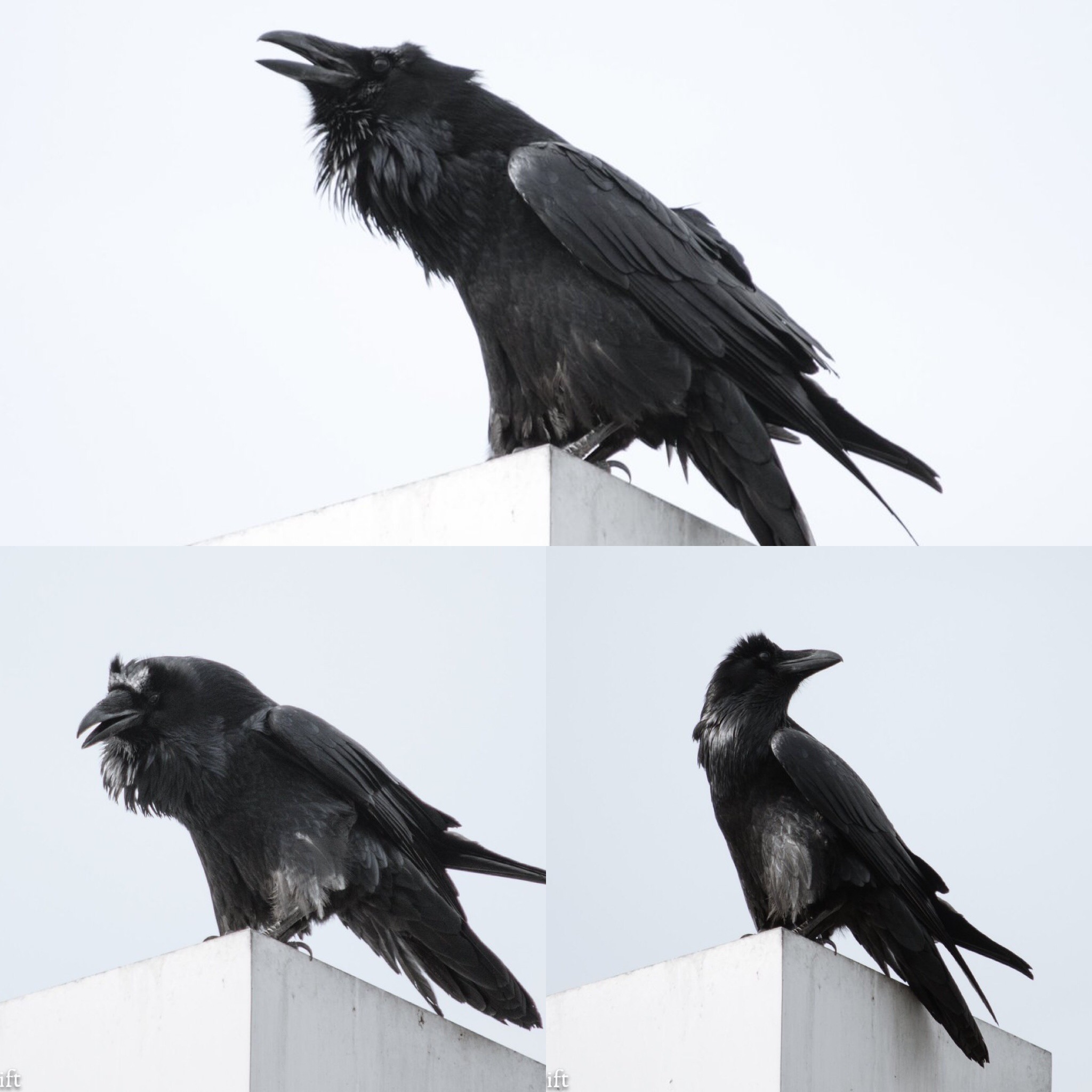
In addition to the hackles, ravens can also articulate some of their other facial feathers in way crows cannot.  During threat displays for example, ravens will fluff out both the throat hackles and their “ear” tufts.
868AA791-9936-4AD1-BEC7-F7952F0B254F

For birds in flight, however, it’s often difficult—if not impossible—to clearly see the throat feathers.  Fortunately, the tail offers a reliable field mark in this case.  Whereas crows have a more squared or rounded tail (depending on how much they’ve fanned the feathers) a raven’s tail will have a distinct wedge shape. Additionally, although they are a bit more subtle, there are also some differences in the primary wing feathers.  While both birds have 10 primary feathers, in flight, ravens will look like they have four main “finger” feathers while crows will appear to have five. Ravens also have more slender, pointed primaries relative to crows.

crow vs raven

Vocal differences

With a little practice American crows and common ravens can easily be distinguished by their calls.  The call of a raven can be best described as a deep, hollow croak.  Crows on the other hand, caw.  Of course, they can both make at dozens of other sounds including rattles, knocks, coos, clicks, and imitations. With practice even these can be recognized by species, but that level of detail is not necessary for most identification purposes.

Juvenile common raven yell (Recording by Antonio Xeira-Chippewa County, Michigan)
Common raven water sound (Recording by Niels Krabbe-Galley Bay, British Columbia)
American crow call (Recording by David Vander Pluym-King County, Wasington)
American crow juvenile begging call (Recording by Jonathon Jongsma Minneapolis, Minnesota)
American crow rattle (Recording by Thomas Magarian-Portland, Oregon)
American crow wow call (Recording by Loma Pendergraft King County, Washington)
American crow scolding (Recording by Kaeli Swift-King County Washington)

Geographic/habitat differences

While both American crows and common ravens have wide distributions across North America, there are some key differences in where you are likely to find them.  The most notable difference is that ravens are absent throughout most of the midwest and the southeast.  Crows on the other hand, occupy most American states with the exception of the southwestern part of the country.  The below maps from Cornell’s All About Birds website offer more specific breakdowns (hover over the images to see the caption). Comparing them globally, common ravens range throughout the northern hemisphere, whereas American crows are limited to the North American continent.

With respect to habitat, both birds are considered generalists, with ravens erring more towards what one might describe as an “extreme generalist”. Ravens can be found along the coast, grasslands, mountains (even high altitude mountains), forests, deserts, Arctic ice floes, and human settlements including agricultural areas, small rural towns, urban cities (particularly in California) and near campgrounds, roads, highways and transfer stations. Crows meanwhile are more firm in their requirement of a combo of open feeding areas, scattered trees, and forest edges.  They generally avoid continuous forest, preferring to remain close to human settlements including rural and agricultural areas, cities, suburbs, transfer stations, and golf courses.  In cases where roads or rivers provide access, however, they can be found at high elevation campgrounds.

Behavioral differences

There are books that could be (and have been) written on this subject alone, so we will limit ourselves to what is likely to be most essential for identification purposes.

Migration
While common ravens are residents wherever they are found, American crows are what’s called a “partially migratory species” because some populations migrate while others do not.  Most notably, the northern populations of crows that occupy central Canada during the summer breeding season, travel south to the interior United States once the snow-pack precludes typical feeding behaviors

Breeding
Although trios of ravens are not uncommon, and there have been observations of young from previous years remaining at the nest, ravens are not considered cooperative breeders. Crows are considered cooperative breeders across their entire range (though specific rates vary across populations and not much is known about migratory populations).  If helpers are present they typically have between 1-3. So if a nest is very busy with more than two birds contributing to nest construction, feeding nestlings, or nest defense, it’s more than likely a crow’s nest, not a raven’s.
IMG_5408 2

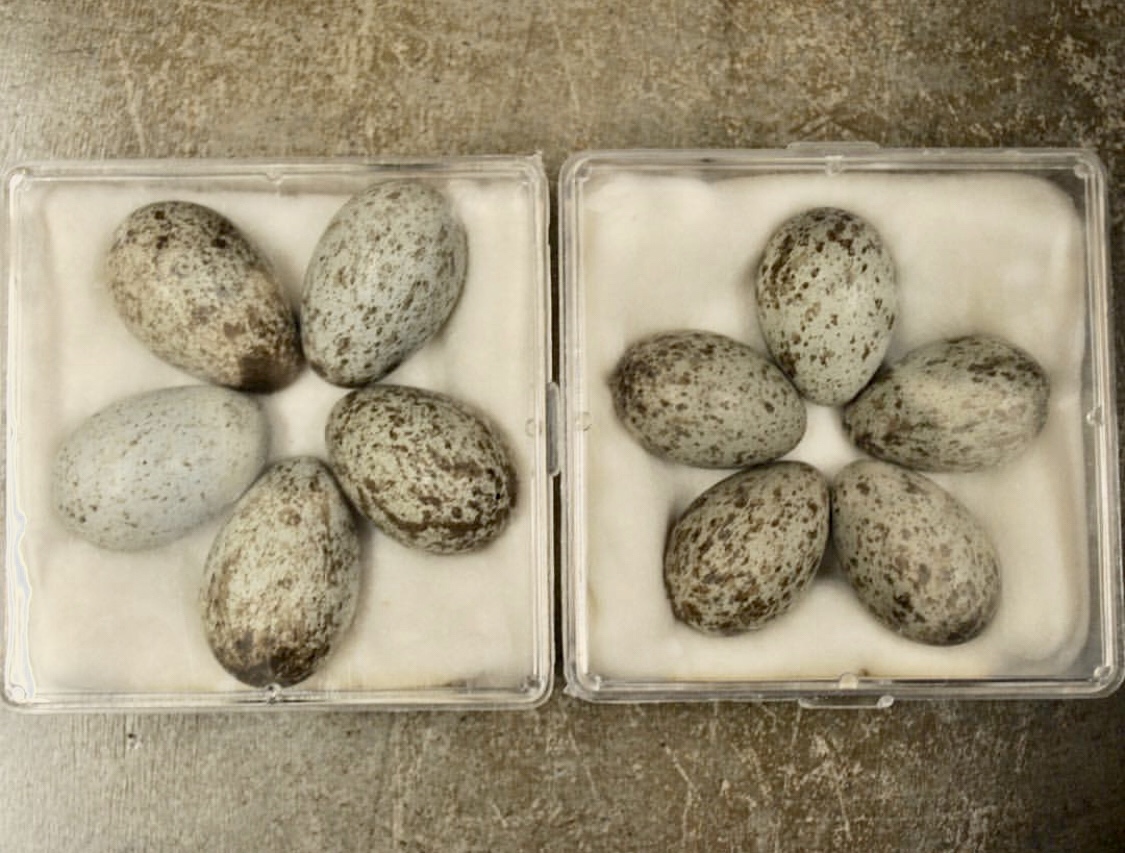
Common raven eggs left | American crow eggs right

Diet
Although both species consume a host of invertebrates, crows consume a larger proportion of inverts and garbage relative to ravens.  Mammals, especially from carrion, meanwhile make up the largest proportion of a raven’s diet across surveyed populations.  Access to refuse and population location, however, can dramatically shift the dietary preferences of both these omnivores.

Flight
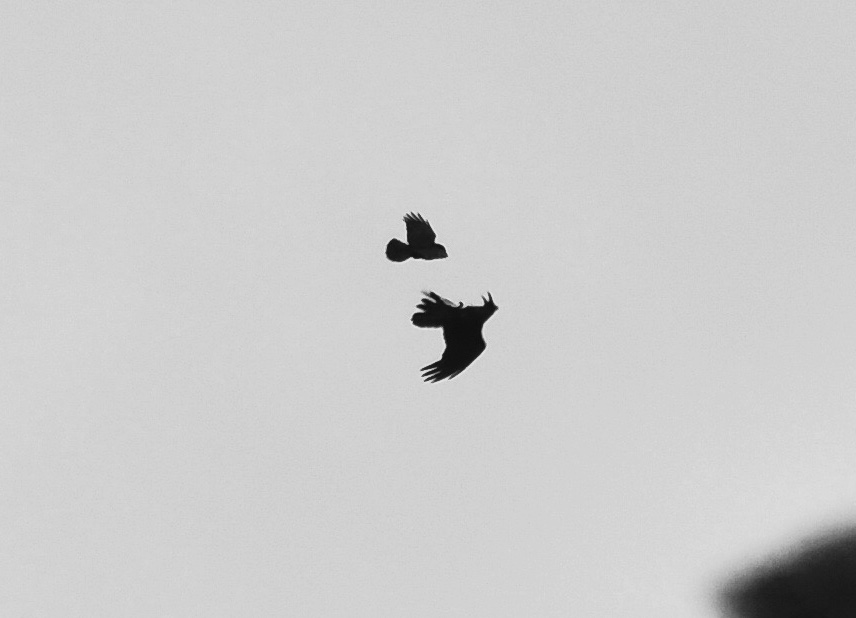
Because ravens consume a lot more carrion, which is unpredictable in its availability and location, they spend a great deal more soaring than crows do.  So if you see a black bird cruising the sky for more than a few seconds, it’s most likely a raven.  Ravens are also unique from crows in that they barrel roll to advertise their territory.  So if you see a  barrel rolling bird, there’s a better chance it’s a raven.

Interactions
In places where they do overlap, interactions between the two are often antagonistic, with crows acting as the primary aggressors in conflicts.  Ravens will depredate crow nests if given the chance.
DSC_0675 (2)

A raven defends itself from a crow by rolling upside down.  Someday I’ll get a better photograph…

Genetic differences

Throughout most of our history, we have used external cues like appearance, voice and behavior, to sort one kind of animal from another.  Now that we have access to a plethora of genetic tools, however, we can ask a new level of the question “what’s the difference between an American crow and a common raven.”

To put it simply, American crows (Corvus brachyrhynchos) and common ravens (Corvus corax) are different species in the same genus, just like lions (Panthera leo) and tigers (Panthera tigris).  Species and genus refer to different levels of the taxonomic tree, where species represents the smallest whole unit we classify organisms.  The issue of species can get complicated quickly, however, so I’ll direct you here if you want to learn what a mess it really is.  Most important thing to appreciate now, is that if you want a quick, back of the envelope way to evaluate if two animals are closely related, look at the first part of their latin binomial (scientific) name.  If they share that part then they’re in the same genus (ex: crows and ravens belong to the genus Corvus).  If they don’t (ex: American crow is Corvus brachyrhynchos and the Steller’s jay is Cyanocitta stelleri) then they are more distantly related. 

Within the Corvus genus, however, there is still a ton of evolutionary space available.  In fact, to find the closest shared relative of common ravens and American crows you’d need to go back approximately 7 millions years.  Although they are more visually distinct and don’t overlap geographically, American crows are more closely related to the collard crows of China, or the carrion crows of Europe, than they are to common ravens.
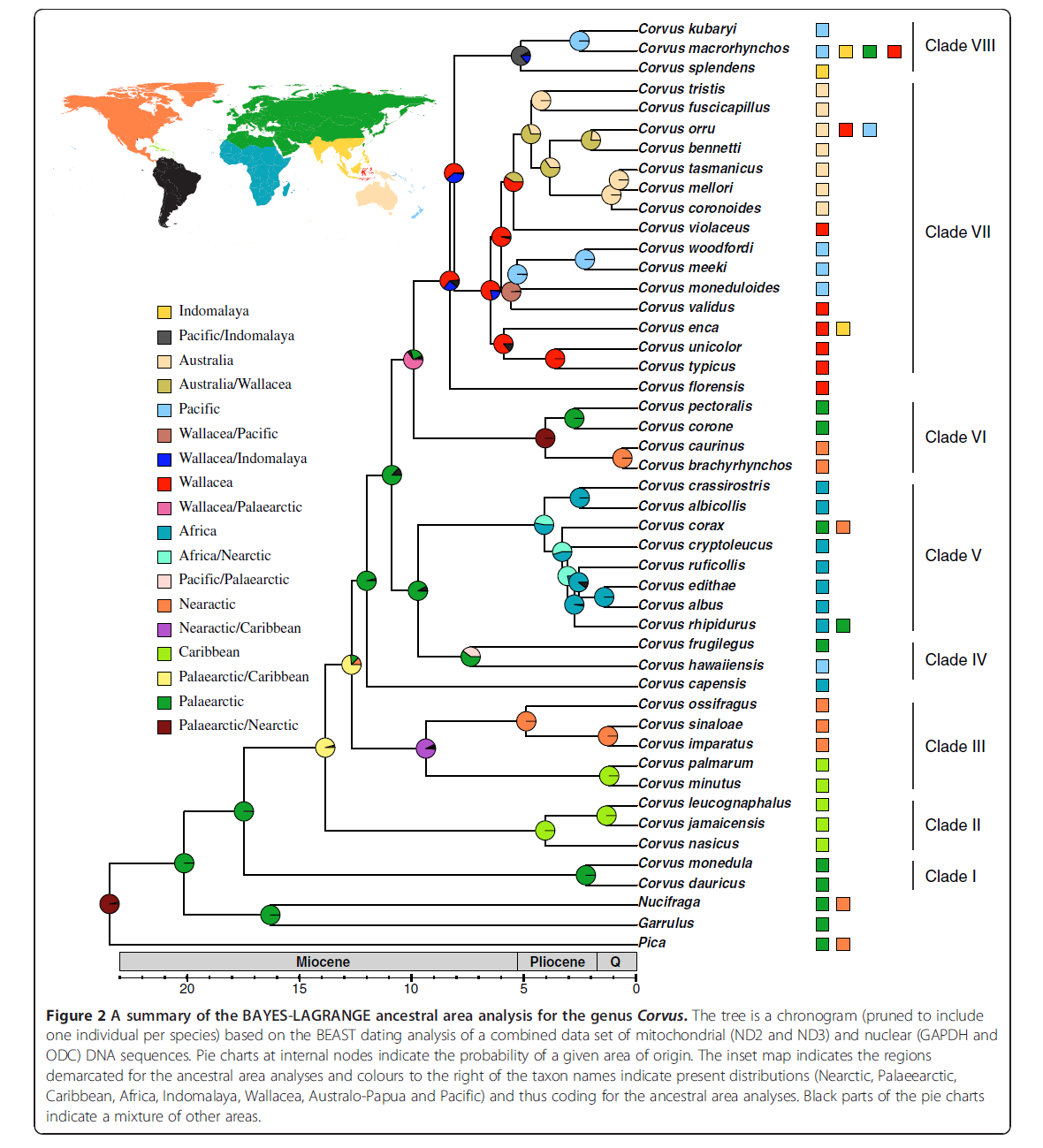
Crow phylogeny

Image from Jønsson et al. 2012

Laws and protections

US laws
In the United States, both American crows and common ravens are protected under the Migratory Bird Treaty Act.  This means that, like with nearly all native birds species, you cannot kill, possess, sell, purchase, barter, transport, or export these birds, or their parts, eggs, and nests, except under the terms of a valid Federal permit. It is this law that prohibits the average person from keeping these birds as pets, and requires that rescued crows be turned over to a licensed professional.  The MBTA also prohibits the civilian hunting of ravens under any circumstance.  Under 50 CFR 20.133, however states are granted an exception for crows, wherein with some restrictions, states can designate regulated hunting seasons.

In addition, under 50 CFR 21.43 of the Migratory Bird Treaty Act, you can also kill crows without a license and outside of the regulated hunting season if they are in the act of depredating crops, endangered species, or causing a variety of other destructive issues.  You can obtain the specifics of the Depredation Order here.  Such lethal control must be reported to Fish and Wildlife to remain within the law. No such depredation exceptions exist for ravens. 

Canadian laws
In contrast to the US, no corvids receive federal protections in Canada.  Crows and ravens may receive provincial protections, however.

Concluding thoughts

Before we pack it up, I want to leave you with one last useful piece of information.  This whole article was dedicated to the question of how American crows are different from common ravens.  Hopefully, you’re walking a way with a solid understanding that these animals are in fact different morphologically, behaviorally, and genetically. Asking if American crows are different from common ravens is a different question, though, than asking if “crows” are different than “ravens”.  Because while that first answer is a hard, “yes,” there is no one thing that initially classifies a bird as either a type of raven or a type of crow.  Generally ravens are bigger and have those elongated throat feathers, but there are plenty of crow named birds that could have been named raven and vice versa. So proceed cautiously and consider the specific types of birds the question’s author is referring to before offering specific answers.

If you want to continue to hone your skills I invite you to play #CrowOrNo with me every week on twitter, Instragram and facebook, all at the @corvidresearch handle.  While it’s not to quite this level of detail, I promise it will help advance your ID skills and introduce to to more of the world’s fantastic corvids. For a head start, keep this charming and informative guide illustrated by Rosemary Mosco of Bird and Moon comics handy!

raven vs crow

Reference literature
Jønsson K.A., Fabre P.H., and Irestedt, M. (2012).  Brains, tools innovations and biogeography in crows and ravens.  BCM Evolutionary Biology 12
https://bmcevolbiol.biomedcentral.com/articles/10.1186/1471-2148-12-72

Freeman B.G. and Miller, E.T. (2018).  Why do crows attack ravens? The roles of predation threat, resource competition, and social behavior.  The Auk 135: 857-867

Verbeek, N. A. and C. Caffrey (2020). American Crow (Corvus brachyrhynchos), version 1.0. In Birds of the World (A. F. Poole and F. B. Gill, Editors). Cornell Lab of Ornithology, Ithaca, NY, USA.

Boarman, W. I. and B. Heinrich (2020). Common Raven (Corvus corax), version 1.0. In Birds of the World (S. M. Billerman, Editor). Cornell Lab of Ornithology, Ithaca, NY, USA.

50 Comments

Filed under Birding, Corvid diversity, Crow behavior, Crow curiosities, Raven behavior, Ravens, Taxonomy, Vocalizations, Wildlife

A tale of two crows: northwestern vs. American

If you search nearly anywhere along the west coast from California to southern Alaska, you will find our most persistent avian neighbors: crows.  Cloaked in their Gothic outfits and uttering that all too familiar harsh caw, most people—even many experts—might not register that the neighbors in the north are not exactly like their counterparts in the south.  While it’s the American crows (Corvus brachyrhynchos) that have staked their claim to the contiguous states, it’s the northwestern crow (Corvus caurinus) that calls the coast home from British Columbia to southern Alaska. That is, at least as far as the field guides have been telling us since northwestern crows were first described scientifically in the mid 19th century.  Despite this early recognition that one of these things was not like the other, however, differentiating American crows from northwestern crows on the basis of phenotypic features like size, voice, and behavior has since proven to an almost impossible challenge; especially in places like Washington where the two ranges meet.  This has resulted in questionable hand waving by people like me about what those crows in Seattle really are.  I’ve always called them American crows without any qualifiers, but are they really? Might they be northwestern crows? Or something in between?  Fortunately, a new study by Slager et al. (2020) lays bare the reticulated evolutionary histories of the two crows of the Pacific Northwest.

IMG_5392

By examining differences in both nuclear DNA from 62 specimens and mitochondrial ND2 markers from 259 specimens collected across North America, the team was able to evaluate when these two likely initiated speciation, the process of becoming distinct species from a shared ancestor. What they found is that American and northwestern crows likely split some 440,000 years ago when late Pleistocene glaciers really made mess of things by geographically separating formally intact populations.  Isolated in their respective pockets of livable habitat (called glacial refugia) the formally united species did what all organisms do in the face of new selective pressure: they changed, and from one species emerged two.  Well, kind of.

Eventually of course, the Pleistocene ice ages came to a close and the glaciers that had divided their ancestors receded away.  Although their time apart made a lasting impression on their genome, it did not appear to make a lasting impression on their taste in sexual partners.  The team found extensive genomic admixture (the presence of DNA in an individual that originated from a separate population or species), suggesting pretty pervasive hybridization between the two species.  In fact, along their shared 900 km range from coastal Washington to British Columbia they found not one “pure” individual.  For just how long American and northwestern crows have been hybridizing remains unknown, but the evidence suggests that it’s been happening since well before colonial landscape changes.

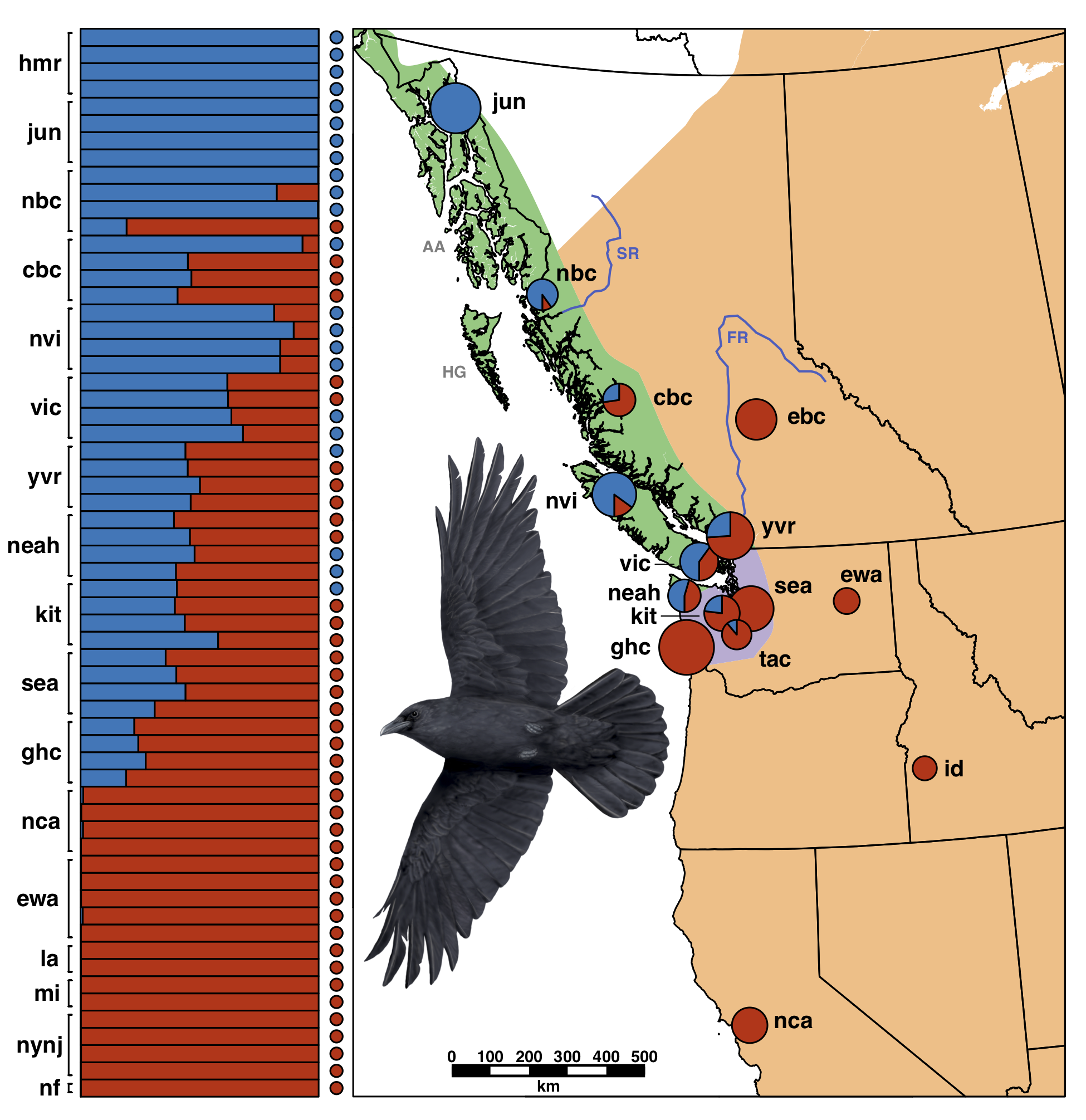
These revelations beg two important and contradictory questions.  The first is the answer to just what the hell crows in Seattle are.  The answer appears to be option C: a hybridized mix of American and northwestern crow, but with slightly more all-American genes.  That seems to be true throughout the Washington coast.  Once you hit Oregon though, you’re getting almost all ancestral American crow.  The opposite pattern is true moving from British Columbia north: what starts as hybrids with a stronger northwestern crow bias, are “pure” northwestern crows once you hit Juneau.

SLager

Figure shows the extent of hybridization between American crows (red) and Northwestern crows (blue) along the PNW coast. Image from Slager et al. (2020).

The second question, however, is whether those distinctions are really of any biological value. After all, what appears to have happened is that while these two “species” may have gotten started on a path to different destinies, a changing climate brought them back together before any firm reproductive isolating mechanisms (i.e. physical features, behaviors, or physiology that prevent different species from breeding with one another) could take hold. While that kind of genetic evidence is already pretty damning, the phenotypic evidence that they might be different has likewise eroded.  When closely examined, the features that appeared to be diagnostic in the 19th century like the northwestern crow’s smaller size and intertidal habitat use, and a difference in vocalizations, seem to simply be reflections of local adaptions and individual differences present in both species. So, while the guidebooks might still call them different things, the fact that neither the crows themselves nor the ornithologists can really tell them apart warrants serious consideration of whether northwestern crows should be officially absorbed into the American crow.

As it happens, the authority on such things, the American Ornithological Society’s North and Middle America Classification Committee, is currently examining that very proposal as apart of the 2020 Proposal Set C.  Expect an official ruling soon.  While I don’t know for sure what they will decide, the evidence out of this current study does not bode well for the continued recognition of Corvus caurinus as a speciesSo if you want to see a northwestern crow, my advice is to do it sooner rather than later.

Literature cited

Slager DL, Epperly KL, Ha RR, Rohwer S, Wood C, Van Hemert C, and Klicka J. 2020. Cryptic and extensive hybridization between ancient lineages of American crows. Molecular Ecology doi: 10.1111/mec.15377


14 Comments

Filed under Corvid diversity, Crow life history, Diversity, New Research, Science, Taxonomy

What are crows thinking when they see death?

Full disclosure: I am not actually going to be able to tell you the answer to this question.  But I am going to get you closer than we have ever been before.  At least by my standards.  So now the question is where to begin…

Let’s begin by acknowledging that death means something to crows in a way that it doesn’t seem to mean something to most other animals, at least as far as we’ve recognized. What I mean by this is that crows don’t ignore their dead, they don’t reflexively flee from their dead, and they don’t just go about carrying out undertaking behaviors without a second thought (or a first thought).  They really see their dead and they respond in a variety of ways.  In my previous research, I found that generally, they respond to unfamiliar dead crows by alarm calling, followed by recruitment of other crows to the area to form a raucous group called a mob.  Then they disperse after about 15-30min.

DSC_1088

I’ve found that they do other things as well, like touching the bodies, though this really only happens in the spring.  When they touch them they might gently nudge, peck or even copulate with the crows, though that latter one is exceedingly rare.

Other people have seen more curious things though. Upon listening to my garbled explanation of my studies, my dental hygienist removed her hand from my mouth and proceed to explain, with detectable urgency, that she knew about these funerals.  That when she was a little girl living on her family’s farm her father shot a crow.  Instead of leaving, the others brought sticks and dropped them on their dead flockmate. She’d never forgotten it.

What these stories tell me is that how crows respond to death is complex, and we are still far from fully understanding all their behaviors.  And one of the hardest parts of this is that we can’t ask crows what they are doing.  Why did you leave a stick that one time?  Why did you rip up the body that other time?  Why did you call for 30min minutes until your voice choked out, while your neighbors a quarter mile away looked later at the same body and then left in silence to return to the dumpster?

This barrier means that we stand a high chance of either under or over-interpreting their behaviors around death; for example, being unable to accept that we might experience the grief of death uniquely, or being unable to accept that we, in fact, do not.  This is the challenge in studying how another organism responds to death, and it’s one I grapple with constantly.

There might, however, be one secret weapon into deeper parts of how crows respond to their dead that we can reach without needing a Dr. Doolittle-esque translator:  their brains.  While all animals only have a certain number of ways they can outwardly express themselves, how the brain responds to stimuli can tell you a great deal more about what an animal might be thinking.  Which brings us to my newest paper.1

Now before I go on, I’m going to say up front that I suspect this current study might not sit well with some of my readers. Until now all of my studies have used wild crows and did not require the handling of birds or any kind of direct manipulation.  Spying on the brains of animals, however, is not so hands-off.  It almost always requires surgery. And it’s almost always lethal. I say almost, because sometimes we can actually learn quite a lot without opening up an animal.  Without slicing up its brain. Without keeping it captive forever.  This is one of those times.

Most people are familiar in some capacity with functional neuroimaging, especially fMRI. It’s a way to look at how the brain responds to different stimuli without needing surgery or euthanasia. fMRI works by tracking blood flow while an awake subject encounters a stimulus.  It’s how we have uncovered that psychopaths don’t experience empathy when picturing others in pain, or that some dogs value praise from their owners more than food.2,3 Using fMRI in a non-human animal requires a great deal of training, however because fMRIs are big weird noisy machines that would be objectively terrifying for the uninitiated. Which means that they would never work with a wild crow.  So instead, our team used a different kind of non-invasive imaging technique to spy on the minds of crows: FDG-PET.

Unlike fMRI which tracks real-time blood flow, FDG-PET tracks metabolic activity and most importantly it can do so retroactively.  The FDG in FDG-PET, stands for fluorodeoxyglucose, which is a modified glucose molecule with a radioactive tracer attached to it. It’s the same stuff we give humans when we’re going to PET image them for, say, a tumor.  The modified part is that unlike most glucose, this stuff doesn’t break down, it gets stuck wherever the body used it up.  The tracer on the other hand, does wash out. Still, for a brief window of time-about 20 minutes after injection-we can stimulate an awake animal in a variety of way, visually, acoustically, etc., and the brain will use up the glucose (FDG) in order to process that information. The animal can then be anesthetized and placed into a PET machine where, via a mechanism involving photons and gamma rays that was far too complex for me to bother retaining beyond my graduate exams, the machine can detect the tracer.  The imaging process takes about 20min, after which the bird wakes up, none the wiser for the invasion of privacy.

Crow scanner
An anesthetized crow in our specially fitted PET scanner at the UW Medical Center. The wingtips are bound during the scanning process to keep the feathers tidy and out of harm’s way. Photo by Andy Reynolds for Audubon.

After a lot of image processing and analysis, we can then infer how active a particular area of the brain was while experiencing one stimulus relative to a control.  So while there are some advantages to an fMRI approach, FDG-PET is the only mechanism that allows us to see how a crow’s brain was responding while it was awake and unconstrained 20min ago, instead of while it is strapped down in a big scary scanner.  At the conclusion of the study, each subject is banded and released.  Although our study used only a modest 7 subjects (which is a normal sample size in the imaging world) it brings me great pride to report that, not only did all of our subjects survive, but all left our care with better or equivalent body condition than they came in with.  Some of them have even been resighted successfully breeding in a subsequent season. Again, when it comes to spying on animal brains, this is the exception, not the rule.

Release
My former advisor and coauthor of the current study, John Marzluff, releasing one of the subjects at the conclusion of the study. Photo by Andy Reynolds for Audubon.

So now that some of the technical details are out of the way let’s get down to brass tacks and talk about what we actually learned from all this.  Our lab has previously used this method to understand what neural circuits process different faces, like familiar friendly or dangerous faces, as well as how crows perceive different kinds of threats.  But on the heels of my fieldwork looking at their responses to dead crows,  we wanted to know more about what was going on in their brains.  So we had a two stimulus paradigm: a visual one where we compared brain activity between when crows saw a dead, unfamiliar crow, and a dead, unfamiliar, song sparrow (the control), and an auditory one, where we played them recordings of wild, unfamiliar crows reacting to dead crows, and unfamiliar crows begging (the control).

To aid with our analysis we selected 5 particular brain areas a priori, which means before the study, to examine for brain activity.  These sites included the hippocampus and striatum, which are responsible for fear and spatial learning, the septum and amgydala, which aid with social behaviors, conspecific recognition and affect, and the NCL or nidopallium caudolaterale, which is responsible for executive decision making like our prefrontal cortex.

Among the visual paradigm, what we found was that between the threatening (dead crow) and control groups (dead song sparrow and responses from three birds in a previous study that saw only an empty room) there weren’t a ton of differences in relative brain activity.  Crows that saw a dead crow didn’t show more activity in the regions associated with affect, social behaviors or fear learning.  Instead, what we found is that, like when they see a familiar threat like a hawk, it’s their executive center that shows the most difference.4  At first this was a surprise, but given the number of ways they can respond to their dead, and possibly because they didn’t know this bird, it makes sense that they might be wondering exactly what they should do in that moment.  In case you are tempted to think that might be what’s going anytime they’re in this strange situation, know that a previous study using the same approach found very different neurological responses to when they see familiar threats, new threats, and friendly people.4  So there’s no reason to suspect that the protocol alone is what was responsible for NCL activity.

With respect to the auditory tests, we detected even fewer differences.  The most notable finding was that both kinds of calls, alarm and begging, stimulated NCL activity relative to the birds that saw only an empty room.  I can’t pretend to know exactly what this means.  But it does bode well for my idea that crow communication is quite complex and context dependent, therefore requiring a great deal of brain power to decipher and interpret.  But I speculate.

So, as I said, while this study in no way provided definitive answers to, “What are crows thinking when they see death?,” it’s gotten us as close as we have ever come and given us some good ideas for what might be going on.  But as with all science, the first study is the one warranting most skepticism.  I have no doubt we will continue to learn much more in future and I can’t wait to see where this study fits into the vast field of knowledge that awaits us.

If you would like to read this study in its entirety (which is full of extra details, analysis, and explanation) check out this link, which will remain active until April 15th, 2020.  After that, shoot me an email if you want the PDF, I am more than happy to pass it along.  If you would like to read the popular science article from the Audubon where many of these photos were sourced, but that came out before this study was released, follow this link.

Literature cited
1. Swift KN, MarzlufF JM, Tempteton CN, Shimizu T, and Cross DJ. (2020). Brain activity underlying American crow processing of encounters with dead conspecifics. Behavioural Brain Research 385: https://doi.org/10.1016/j.bbr.2020.11254

2. Decety J, Chen C, Harenski C, Kiehl K. (2013). An fMRI study of affective perspective taking in individuals with psychopathy: imagining another in pain does not evoke empathy. Frontiers in Human Neuroscience: https://doi.org/10.3389/fnhum.2013.00489


3. Cook PF, Prichard A, Spivak M, Berns G. (2016). Awake canine fMRI predicts dogs’ preference for praise vs. food. Social Cognitive and Affective Neuroscience 11: 1853-1862


4. Cross DJ, Marzluff JM, Palmquist I, Minoshima S, Shimizu T, Miyaoke R. (2013). Distinct neural circuits underlie assessment of a diversity of natural dangers by American crows, Proc R SocB 280: 1–8

23 Comments

Filed under Being a scientist, Cognition, Crow behavior, Death, Graduate Research, New Research, Science

What is “intelligence”?

Every once in a while, including on this very site, a popular science article will come out about a new study demonstrating the intellectual capabilities of corvids, or just generally espousing their intelligence. While articles communicating this certainly aren’t wrong, I do feel they most often leave out the essential detail to understanding these headlines: what animal scientists mean when they say “intelligence.”

In the day to day way we use the word, intelligence can be a very loaded concept. When using it to describe humans, for example, it’s often biased towards favoring skills exhibited by the neurotypical people that have historically defined it.  Given this complexity in the human realm, applying it to animals seems all the more prone to inappropriate biases, inviting criticism that how we evaluate intelligence is nothing more than identifying animals that operate most like us. While it’s true that our scientific understanding of intelligence is rooted in our human lens, it’s not the case that the word has some esoteric meaning based on how much we feel an animal is like ourselves.

Nor is the case that intelligence is simply a reflection of an animal’s success in its environment. That idea is best captured and perpetuated by the following quote, which was not said by Einstein but is most often attributed to him:

“Everyone is a genius. But if you judge a fish by its ability to climb a tree, it will live its whole life believing that it is stupid.”

I find this idea most irksome because it equates “intelligence” with success, implying (seemingly unintentionally) a value system where intelligence is not only an evolutionary goal, but the final stop in a hierarchical, evolutionary ladder. This could not be further from the way evolution works, not to mention the host of problems associated with trying to put non-human animals on some kind of value scale based on how much they happen to be cognitively like us. Chinook salmon are really good at finding smaller fish to eat, transitioning from saltwater to freshwater, and fighting their way upstream to breed in their natal streams. That doesn’t make them “geniuses” but it does make them successful, and in the eyes of nature that’s all that matters.

So what is intelligence? You might see it defined in slightly different ways, but as defined in my field, intelligence is the ability to flexibly solve problems using cognition rather than instinct or trial and error learning. That definition allows us to parse behaviors that may on their surface seem complex, smart, etc., but are in fact the result of simple mechanisms that have been selected for over generations, and cannot be applied by the animal to situations they did not evolve to address.

For example, a pigeon’s ability to discriminate specs of edible food on a sidewalk, a squirrel stashing food for a harsh winter, or a bee dancing to communicate the locations of flowers may all seem like intelligent behaviors, but under our working definition they are not. That’s because when we look closer we see that these animals execute these skills instinctively, and cannot apply them outside of the contexts for which they were specifically evolved to operate. Corvids, primates, elephants, etc, all have examples of skills that they possess because it’s relevant to their natural history, but that they can also apply to completely novel circumstances.

So when scientists describe certain animals as intelligent, know that that’s shorthand for the fact they exhibit a type of general cognitive skill. Most often, we determine that an animal demonstrates intelligence by looking for the presence of behaviors/abilities that hallmark this kind of cognitive, flexible thinking.  Things like causal reasoning, imagination, insight, mental time travel, etc. This is how something like an experiment showing New Caledonian crows can infer the properties of objects based on how they behave when suspended in front of a fan, lends evidence to New Caledonian crows’ intelligence.

Since certain animals possess more of these tools than others, or display some of them with greater aplomb, it can be tempting to try and rank animals under the umbrella of intelligence (i.e. are crows smarter than ravens?). But this is where, in my opinion, the inquiry into their intelligence stops being useful.  It’s interesting to know how different animals solve problems, but it quickly becomes boring, even dangerous, when the goal is handing out blue ribbons.

DSC_0256


9 Comments

Filed under crow intelligence, Raven intelligence

Tickets for 3/3/20 talk in Portland

Hi all! From time to time I get messages on here from people lamenting that they missed the ticket sales for upcoming talks, so this time I am doing my due diligence and letting you be the first to know. For the third time (!) Portland’s Science on Tap is having me back to talk crows and this time it will be in my biggest venue yet, the Aladdin Theater.  Tickets are going on sale 12/13/19 at 10:00am (the link below will not be active until then).  I hope to see you, or someone who deserves a super sweet holiday gift, there!

Buy Tickets

IMG_0953


9 Comments

Filed under Uncategorized